Results 51 to 55 of 55 | « previous
- Your second act : inspiring stories of reinvention / by Heaton, Patricia,1958-author.;
 Includes bibliographical references.Patricia Heaton is one of TV's most recognizable and beloved moms. She's won two Emmys for her starring role as Debra Barone on the long-running comedy Everybody Loves Raymond, and followed that career-making role with another gem as Frances Heck on the popular sitcom The Middle. Now, she returns to television as the lead in the new series Carol's Second Act, which follows divorced fifty-year-old Carol Kenney (played by Heaton), who after raising two children and retiring as a teacher decides to finally pursue her dream of becoming a doctor. Patricia Heaton knows what it's like to stage a second act and navigate pivotal transitions in life. Just like Carol, when Heaton's children left the nest, she found herself in a new and unfamiliar stage of life, compelling her to evaluate which direction to take next. She discovered she had the time to pursue passions that were previously placed on hold, both personally and professionally. She made her move and took a step forward in her career and for the first time, Heaton is not only the star of her own show, but also the executive producer. She also now finds her greatest fulfillment in using her influence to support humanitarian efforts as a Celebrity Ambassador for World Vision, the world's largest non-governmental organization. She and her husband support their work in poverty relief around the globe, something that was planted in heart long ago. Through her own experience, Heaton became curious about other people's stories of second-act transitions and ways to offer support in the process. In her new book, Your Second Act, she shares wisdom from her own personal journey as well as insight from stories of numerous people across the country. From work to health, to love and more, the results are heartwarming, inspiring, and surprisingly relatable! Filled with light-hearted anecdotes and pragmatic steps to help you discover your own path, Your Second Act shows us that midlife doesn't have to be about crisis when you focus on the opportunity. After all, it's never too late, or too early to stage your second act!
- Subjects: Biographies.; Heaton, Patricia, 1958-; Actresses; Middle-aged women;
- Available copies: 1 / Total copies: 1
-
unAPI
- Your second act [sound recording] : inspiring stories of reinvention / by Heaton, Patricia,1958-author,narrator.; Simon & Schuster Audio (Firm),publisher.;
 Read by the author with a full cast.Patricia Heaton is one of TV's most recognizable and beloved moms. She's won two Emmys for her starring role as Debra Barone on the long-running comedy Everybody Loves Raymond, and followed that career-making role with another gem as Frances Heck on the popular sitcom The Middle. Now, she returns to television as the lead in the new series Carol's Second Act, which follows divorced fifty-year-old Carol Kenney (played by Heaton), who after raising two children and retiring as a teacher decides to finally pursue her dream of becoming a doctor. Patricia Heaton knows what it's like to stage a second act and navigate pivotal transitions in life. Just like Carol, when Heaton's children left the nest, she found herself in a new and unfamiliar stage of life, compelling her to evaluate which direction to take next. She discovered she had the time to pursue passions that were previously placed on hold, both personally and professionally. She made her move and took a step forward in her career and for the first time, Heaton is not only the star of her own show, but also the executive producer. She also now finds her greatest fulfillment in using her influence to support humanitarian efforts as a Celebrity Ambassador for World Vision, the world's largest non-governmental organization. She and her husband support their work in poverty relief around the globe, something that was planted in heart long ago. Through her own experience, Heaton became curious about other people's stories of second-act transitions and ways to offer support in the process. In her new book, Your Second Act, she shares wisdom from her own personal journey as well as insight from stories of numerous people across the country. From work to health, to love and more, the results are heartwarming, inspiring, and surprisingly relatable! Filled with light-hearted anecdotes and pragmatic steps to help you discover your own path, Your Second Act shows us that midlife doesn't have to be about crisis when you focus on the opportunity. After all, it's never too late, or too early to stage your second act!
- Subjects: Biographies.; Audiobooks.; Heaton, Patricia, 1958-; Actresses; Middle-aged women;
- Available copies: 1 / Total copies: 1
-
unAPI
- To wake the giant : a novel of Pearl Harbor / by Shaara, Jeff,1952-author.;
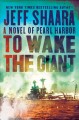 In 1941, President Franklin D. Roosevelt watches uneasily as the world heads rapidly down a dangerous path. The Japanese have waged an aggressive campaign against China, and they now begin to expand their ambitions to other parts of Asia. As their expansion efforts grow bolder, their enemies know that Japan's ultimate goal is total conquest over the region, especially when the Japanese align themselves with Hitler's Germany and Mussolini's Italy, who wage their own war of conquest across Europe. Meanwhile, the British stand nearly alone against Hitler, and there is pressure in Washington to transfer America's powerful fleet of warships from Hawaii to the Atlantic to join the fight against German U-boats that are devastating shipping. But despite deep concerns about weakening the Pacific fleet, no one believes that the main base at Pearl Harbor is under any real threat. Told through the eyes of widely diverse characters, this story looks at all sides of the drama and puts the reader squarely in the middle. In Washington, Secretary of State Cordell Hull must balance his own concerns between President Roosevelt and the Japanese ambassador, Kichisaburo Nomura, who is little more than a puppet of his own government. In Japan, Admiral Isoroku Yamamoto wins skeptical approval for his outrageous plans in the Pacific, yet he understands more than anyone that an attack on Pearl Harbor will start a war that Japan cannot win. In Hawaii, Commander Joseph Rochefort's job as an accomplished intelligence officer is to decode radio signals and detect the location of the Japanese fleet, but when the airwaves suddenly go silent, no one has any idea why. And from a small Depression-ravaged town, nineteen-year-old Tommy Biggs sees the Navy as his chance to escape and happily accepts his assignment, every sailor's dream: the battleship USS Arizona. With you-are-there immediacy, Shaara opens up the mysteries of just how Japan--a small, deeply militarist nation--could launch one of history's most devastating surprise attacks. In this story of innocence, heroism, sacrifice, and unfathomable blindness, Shaara's gift for storytelling uses these familiar wartime themes to shine a light on the personal, the painful, the tragic, and the thrilling--and on a crucial part of history we must never forget.
- Subjects: War fiction.; Historical fiction.; Pearl Harbor (Hawaii), Attack on, 1941; World War, 1939-1945;
- Available copies: 1 / Total copies: 1
-
unAPI
- The duel : Diefenbaker, Pearson and the making of modern Canada / by Ibbitson, John,author.;
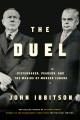 Includes bibliographical references and index."One of Canada's foremost authors and journalists offers a gripping account of the contest between John Diefenbaker and Lester Pearson, two prime ministers who fought each other relentlessly, but who between them created today's Canada. John Diefenbaker has been unfairly treated by history. Although he wrestled with personal demons, his governments launched major reforms in public health care, law reform and immigration. On his watch, First Nations on reserve obtained the right to vote and the federal government began to open up the North. He established Canada as a leader in the struggle against apartheid in South Africa, and took the first steps in making Canada a leader in the fight against nuclear proliferation. And Diefenbaker's Bill of Rights laid the groundwork for the Charter of Rights and Freedoms. He set in motion many of the achievements credited to his successor, Lester B. Pearson. Pearson, in turn, gave coherence to Diefenbaker's piecemeal reforms. He also pushed Parliament to adopt a new, and now much-loved, Canadian flag against Diefenbaker's fierce opposition. Pearson understood that if Canada were to be taken seriously as a nation, it must develop a stronger sense of self. Pearson was superbly prepared for the role of prime minister: decades of experience at External Affairs, respected by leaders from Washington to Delhi to Beijing, the only Canadian to win the Nobel Prize for Peace. Diefenbaker was the better politician, though. If Pearson walked with ease in the halls of power, Diefenbaker connected with the farmers and small-town merchants and others left outside the inner circles. Diefenbaker was one of the great orators of Canadian political life; Pearson spoke with a slight lisp. Diefenbaker was the first to get his name in the papers, as a crusading attorney: Diefenbaker for the Defence, champion of the little man. But he struggled as a politician, losing five elections before making it into the House of Commons, and becoming as estranged from the party elites as he was from the Liberals, until his ascension to the Progressive Conservative leadership in 1956 through a freakish political accident. As a young university professor, Pearson caught the attention of the powerful men who were shaping Canada's first true department of foreign affairs, rising to prominence as the helpful fixer, the man both sides trusted, the embodiment of a new country that had earned its place through war in the counsels of the great powers: ambassador, undersecretary, minister, peacemaker. Everyone knew he was destined to be prime minister. But in 1957, destiny took a detour. Then they faced each other, Diefenbaker v Pearson, across the House of Commons, leaders of their parties, each determined to wrest and hold power, in a decade-long contest that would shake and shape the country. Here is a tale of two men, children of Victoria, who led Canada into the atomic age: each the product of his past, each more like the other than either would ever admit, fighting each other relentlessly while together forging the Canada we live in today. To understand our times, we must first understand theirs"--
- Subjects: Biographies.; Personal narratives.; Diefenbaker, John G., 1895-1979.; Pearson, Lester B.; Prime ministers;
- Available copies: 1 / Total copies: 1
-
unAPI
- Aquello que nos da calor / by Gaiman, Neil.; Gómez Calvo, Ignacio.; Riddell, Chris.; Davies, Benji.; Gwilym, Yuliya.; Kaadan, Nadine.; Smy, Pam.; Egnéus, Daniel.; Horáček, Petr.; Suzanna, Beth.; Ibatoulline, Bagram.; Harel, Marie-Alice.; Adin, Majid.; Jones, Richard,1977-; Jeffers, Oliver.;
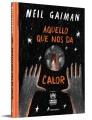 Un nuevo libro poderoso y necesario de Neil Gaiman, publicado en colaboración con ACNUR, para hablar de conflictos, desplazamientos forzados y la importancia de acoger. A veces solo necesitamos que alguien reafirme que tenemos derecho a estar aquí. En 2019, Neil Gaiman preguntó a sus seguidores de Twitter: qué les recuerda a la calidez? Su pregunta reveló nuestro deseo compartido de sentirnos seguros, bienvenidos y cálidos en un mundo que a menudo puede ser hostil. Más de 1.000 respuestas después, Neil comenzó a entretejer respuestas de todo el mundo en un poema en apoyo al llamamiento por el frío extremo de ACNUR. Aquello que nos da calor es una exploración del desplazamiento y la huida del conflicto a través de los objetos y recuerdos que representan la calidez.During the coldest season, when the world feels scary--what do you remember about being warm? Baked potatoes. Trust. A kettle on the stove. Blankets. A smile. And, most of all, the reassurance that you belong. In his powerful and moving poem, featuring illustrations from thirteen extraordinary artists, bestselling author and UNHCR Goodwill Ambassador Neil Gaiman draws together many different memories to answer the question, what do you need to be warm?
- Subjects: Poetry.; Picture books.; Emigration and immigration; Poverty; Refugees; Refugee children; Homelessness; Human comfort; Spanish language materials.;
- Available copies: 1 / Total copies: 1
-
unAPI
Results 51 to 55 of 55 | « previous