Results 31 to 40 of 545 | « previous | next »
- The period brain : the new science of why we PMS and how to fix it : a manifesto for women / by Hill, Sarah E.,author.;
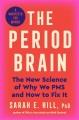 Includes bibliographical references and index.Do you feel like you're riding a premenstrual roller coaster every month that leaves you feeling hungry, tired, angry, sad, and unsexy? Leading researcher and women's hormone expert Dr. Sarah E. Hill explains why we feel so universally icky before our periods -- and what to do about it. The problem isn't that women are hormonal; the problem is that the second half of the menstrual cycle -- the luteal phase, when the hormone progesterone rises and estrogen decreases -- has been systematically ignored by science and medicine. Progesterone is at the heart of every feeling we associate with PMS: it affects our daily sleep and calorie needs (hello, cravings!); whom we're attracted to; our sex drive; and -- as every woman can attest -- our mood. Because the luteal phase is understudied, every bit of health, diet, and relationship advice you've followed is based on that first, estrogen-glow half of the month or, worse, was designed for men. The rules that work for us in the first two weeks of the cycle don't always fit in the second, causing most of us to spend half the month following advice that is completely at odds with the way our bodies work at this time. It's no wonder we feel awful! The Period Brain is a science-tested roadmap to understanding PMS and PMDD. It's time we demand a better month, every month -- and usher in a new era in women's health. Period.
- Subjects: Hormones; Menstruation.; Menstrual cycle.; Menstruation disorders.; Premenstrual syndrome.; Women;
- Available copies: 1 / Total copies: 1
-
unAPI
- Birds on the brain / by Krishnaswami, Uma,1956-; Swaney, Julianna.;
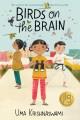 Reeni is wild about birds! So when she and her best friend, Yasmin, have to pick a survey topic for a school project, asking their neighbors what they know about birds is an obvious choice. They are shocked to learn that no one -- not one single person! -- has heard about Bird Count India and the major event it is about to launch all over the country. Thousands of birdwatchers will be out counting birds as part of a global movement. Global means world, and isn't this city part of the world? How come people don't seem to care about the threats to city birds? And why is the mayor intentionally thwarting their city's bird count event? Reeni and Yasmin enlist help from Book Uncle, Reeni's family and even their school bus driver. They must get people interested in the bird count, get them to ask the city government to support the event. After all, what's good for the birds is good for all of us ... right?
- Subjects: Birds; Children; Communities;
- Available copies: 1 / Total copies: 2
-
unAPI
- Birds on the Brain [electronic resource] : by Krishnaswami, Uma.aut; Swaney, Julianna.ill; cloudLibrary;
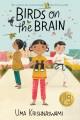 The sequel to the award-winning Book Uncle and Me features bird lover Reeni and her quest to save her city’s bird count event when the mayor tries to shut it down. Reeni is wild about birds! So when she and her best friend, Yasmin, have to pick a survey topic for a school project, asking their neighbors what they know about birds is an obvious choice. They are shocked to learn that no one — not one single person! — has heard about Bird Count India and the major event it is about to launch all over the country. Thousands of birdwatchers will be out counting birds as part of a global movement. Global means world, and isn’t this city part of the world? How come people don’t seem to care about the threats to city birds? And why is the mayor intentionally thwarting their city’s bird count event? Reeni and Yasmin enlist help from Book Uncle, Reeni’s family and even their school bus driver. They must get people interested in the bird count, get them to ask the city government to support the event. After all, what’s good for the birds is good for all of us … right? A funny, triumphant story about learning to advocate for both the human and non-human inhabitants of your community. Key Text Features chapters dialogue illustrations   Correlates to the Common Core State Standards in English Language Arts: CCSS.ELA-LITERACY.RL.5.2 Determine a theme of a story, drama, or poem from details in the text, including how characters in a story or drama respond to challenges or how the speaker in a poem reflects upon a topic; summarize the text. CCSS.ELA-LITERACY.RL.5.6 Describe how a narrator's or speaker's point of view influences how events are described. CCSS.ELA-LITERACY.RL.6.3 Describe how a particular story's or drama's plot unfolds in a series of episodes as well as how the characters respond or change as the plot moves toward a resolution.Children/juvenile.
- Subjects: Electronic books.; Birds; Environment;
- © 2024., Groundwood Books Ltd,
-
unAPI
- The ageless brain : how to sharpen and protect your mind for a lifetime / by Bredesen, Dale E.,author.;
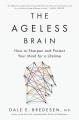 Includes bibliographical references and index.From the author of The End of Alzheimer's, Dr. Dale Bredesen, comes a revolutionary new approach to preventing the onset of neurodegenerative disease and creating sustained brain health. In recent decades, advances in medicine have changed the way we think about our health. Chronic diseases like obesity, heart disease, and diabetes can be prevented or reversed. Cancer treatment has become targeted and personalized. Gene editing will allow us to eradicate many inherited disorders. But there is one class of conditions that continues to elude researchers and cause tremendous suffering: neurodegenerative disease. More than six million Americans live with Alzheimer's disease; by 2050, this number is projected to reach thirteen million. An additional one in ten people over the age of sixty-five have dementia, while 22 percent of older adults live with some form of cognitive impairment. And it isn't just the elderly who are afflicted; diagnosis rates are rising in younger adults, with women at a higher risk than men. For many -- especially those with a genetic predisposition -- this fate has seemed inevitable. Until now. Dr. Dale Bredesen is a pioneer in the field of neurodegenerative research. Lauded for his integrative protocol, he has, in clinical studies, reversed the symptoms of Alzheimer's and dementia. But Dr. Bredesen doesn't want to only treat the symptoms of this devastating illness. He wants to prevent it from developing in the first place. In The Ageless Brain, Dr. Bredesen will share the latest, cutting-edge science on neurodegeneration, including how misunderstandings of the disease have hindered our efforts to treat it, as well as a preventative program that readers of all ages can put into practice to optimize their cognitive health now and sustain it for years to come. This is a book for everyone who cares about their ability to stay sharp and independent for a lifetime, for those who have witnessed family members decline, and for the many readers who are beginning to experience moments of brain fog or fatigue in middle age, and are concerned about what the future may hold. Dr. Bredesen has written the only book readers need to retain their vibrant minds -- and thrive for a lifetime.
- Subjects: Alzheimer's disease; Brain; Nervous system;
- Available copies: 1 / Total copies: 1
-
unAPI
- Brain games for dogs / by Arrowsmith, Claire.;
 LSC
LSC- Subjects: Games for dogs.; Dogs; Dogs;
- © 2010., Firefly Books,
- Available copies: 1 / Total copies: 1
-
unAPI
- The transcendent brain : spirituality in the age of science / by Lightman, Alan P.,1948-author.;
 Includes bibliographical references."Modern science teaches us that anything can be explained in terms of atoms and forces, including the inner workings of the brain. But certain personal experiences can challenge the idea that there's nothing beyond inert matter. Communing with nature, working through a complex problem, or experiencing a piece of art, we sometimes feel a powerful sense of transcendence, of connecting with a cosmic unity that may seem unexplainable by science. But according to acclaimed physicist and novelist Alan Lightman, we can embrace these spiritual experiences without letting go of our scientific worldview. Lightman draws on a rich intellectual history to explore this fascinating intersection between religion and science. Philosopher Moses Mendelssohn's rational arguments for the soul foreground our thinking about non-materiality; Roman poet and philosopher Lucretius' ideas predict how strict materialism might explain elusive phenomena; Neuroscientist Christof Koch lays the foundation for the material basis of consciousness; and social psychologist Cynthia Frantz provides a scientific explanation of our deep connection to nature and things larger than ourselves. Lightman weaves these ideas together to argue for a concept he calls "spiritual materialism"-the view that while spiritual experiences may arise from atoms and molecules like everything else, the physical laws of the universe may not be able to fully capture the first-person experience of transcendence. Spirituality, in this sense, is not only compatible with a strictly scientific view, but remains at the core of what it means to be human"--
- Subjects: Religion and science.; Spirituality.;
- Available copies: 1 / Total copies: 1
-
unAPI
- The nocturnal brain : nightmares, neuroscience, and the secret world of sleep / by Leschziner, Guy,author.;
 Includes bibliographical references and index.Insomnia, narcolepsy, night terrors, apnea, and sleepwalking are just a sampling of conditions afflicting sufferers who cannot sleep - and their experiences in trying are the stuff of nightmares. Demoniac hallucinations frighten people into paralysis, or in more extreme cases, while in a state of sleep, people get dressed, unlock their car, and drive for several miles before returning to bed. In 'The Nocturnal Brain', renowned neurologist Guy Leschziner shares the true stories of people who are unable to sleep and explores the symptoms and syndromes behind these sleep disorders.
- Subjects: Sleep deprivation.; Sleep disorders.;
- Available copies: 1 / Total copies: 1
-
unAPI
- The grieving brain : the surprising science of how we learn from love and loss / by O'Connor, Mary-Frances,author.;
 Includes bibliographical references and index."From grief expert and neuroscientist Mary-Frances O'Connor PhD, The Grieving Brain utilizes cutting-edge research to guide us through how our brains process love and loss-and how we can learn to heal"--
- Subjects: Bereavement; Grief.; Neuropsychology.;
- Available copies: 1 / Total copies: 1
-
unAPI
- The menopause brain : new science empowers women to navigate the pivotal transition with knowledge and confidence. by Mosconi, Lisa.;
 "Menopause and perimenopause are still a black box to most doctors, leaving patients exasperated as they grapple with symptoms ranging from hot flashes to insomnia and brain fog. As a leading neuroscientist and women's brain health specialist, Dr. Lisa Mosconi unravels the mystery by revealing how menopause doesn't just impact the ovaries--but it's a hormonal show in which the brain takes center stage. The decline of the hormone estrogen during menopause influences everything from body temperature to mood and memory, potentially paving the way for cognitive decline later in life. To conquer these successfully, Mosconi brings us the latest approaches--from cutting-edge hormone replacement therapies like "designer estrogens" to the role of hormonal contraception, and key lifestyle changes encompassing diet, exercise, self-care, and self-talk. Best of all, Mosconi dispels the myth that menopause signifies an end, demonstrating that it's actually a transition. Contrary to popular belief, if we know how to take care of ourselves during menopause, we can emerge with a renewed, enhanced brain--ushering in a meaningful and vibrant new chapter of life"--Library Bound Incorporated
- Subjects: HEALTH & FITNESS / Diet & Nutrition / Nutrition; HEALTH & FITNESS / Menopause; HEALTH & FITNESS / Women's Health;
- Available copies: 0 / Total copies: 1
-
unAPI
- The Menopause Brain New Science Empowers Women to Navigate the Pivotal Transition with Knowledge and Confidence [electronic resource] : by Mosconi, Lisa.aut; Shriver, Maria.; CloudLibrary;
 An instant New York Times bestseller! The New York Times bestselling author of The XX Brain shows women how to navigate menopause successfully and come out the other side with an even better brain. Menopause and perimenopause are still a black box to most doctors, leaving patients exasperated as they grapple with symptoms ranging from hot flashes to insomnia to brain fog. As a leading neuroscientist and women’s brain health specialist, Dr. Mosconi unravels these mysteries by revealing how menopause doesn’t just impact the ovaries—it’s a hormonal show in which the brain takes center stage. The decline of the hormone estrogen during menopause influences everything from body temperature to mood to memory, potentially paving the way for cognitive decline later in life. To conquer these challenges successfully, Dr. Mosconi brings us the latest approaches—explaining the role of cutting-edge hormone replacement therapies like “designer estrogens,” hormonal contraception, and key lifestyle changes encompassing diet, exercise, self-care, and self-talk. Best of all, Dr. Mosconi dispels the myth that menopause signifies an end, demonstrating that it’s actually a transition. Contrary to popular belief, if we know how to take care of ourselves during menopause, we can emerge with a renewed, enhanced brain—ushering in a meaningful and vibrant new chapter of life.
- Subjects: Electronic books.; Women's Health; Nutrition;
- © 2024., Penguin Publishing Group,
-
unAPI
Results 31 to 40 of 545 | « previous | next »