Results 161 to 170 of 288 | « previous | next »
- But everyone feels this way : how an autism diagnosis saved my life / by Layle, Paige,author.;
 Includes bibliographical references.""For far too long, I was told I was just like everyone else. All my struggles and feelings were supposedly universal, and the real difference was that I was just a weak, manipulative, selfish, emotional baby. I had to toughen up. But as much as everyone tried to convince me, I knew it couldn't be true. Living just seemed so much harder for me than everyone else. Whilst the people around me seemed to have no problem being calm and happy, I had panic attacks multiple times a day, where my hyperventilating made my legs numb and sometimes I lost consciousness. I cried almost every day from stress, frustration, exhaustion, or all three at once. This wasn't okay. This wasn't normal. This wasn't functioning. And it certainly wasn't fine." Paige Layle was normal. She lived in the countryside with her mom, dad, and brother Graham. She went to school, hung out with friends, and all the while everything seemed so much harder than it needed to be. A break in routine threw off the whole day. If her teacher couldn't answer "why" in class, she dissolved into tears, unable to articulate her own confusion or explain her lack of control. But Paige was normal. She smiled in photos, picked her feet up when her mom needed to vacuum instead of fleeing the room, and received high grades. She was popular and well-liked. And until she had a full mental breakdown, no one believed her when she claimed that she was not okay. In "But Everyone Feels This Way," Paige Layle shares her story as an autistic woman diagnosed late. Women are frequently diagnosed with autism much later than men - in their late teens or early twenties. Armed with the phrase "Autism Spectrum Disorder" (ASD), Paige set out to learn how to live her authentic, autistic life. She challenges stigmas, taboos, and stereotypes so that everyone can see themselves. Along the way, her online activism has spread awareness, acceptance, and self-recognition in millions of others"--
- Subjects: Biographies.; Autobiographies.; Personal narratives.; Layle, Paige.; Autistic people; Autistic women;
- Available copies: 1 / Total copies: 1
-
unAPI
- The good allies : how Canada and the United States fought together to defeat fascism during the Second World War / by Cook, Tim,1971-author.;
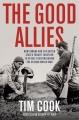 Includes bibliographical references and index."From our country's most important war historian, a gripping account of the turbulent relationship between Canada and the US during the Second World War. The two nations entered the war amidst rivalry and mutual suspicion, but learned to fight together before emerging triumphant and bound by an alliance that has lasted to this day. When the Second World War broke out in 1939, it set in motion a deadly struggle between the Axis powers and the Allies, but also fraught negotiations between and among the allies. On questions of diplomacy, economic policy, industrial might, military capabilities, and even national sovereignty, thousands of lives and the fate of the free world depended on back-room deals and desperate trade-offs between soldiers, diplomats, and leaders. In North America, Canada and the US strained to forge a new military alliance to guard their coasts and fend off German U-boats and the menace of a Japanese invasion. Wartime economies were entwined to produce a staggering contribution of weapons to keep Britain and other allies in the war. The defence of North America against enemy threats was essential before the US and Canada could send armies, navies, and air forces overseas. In his trademark style, Tim Cook employs eyewitness accounts to vividly lay bare the brutality of combat and the courage of North Americans under fire. Behind the fighting fronts, the charged and often secret communications between national leaders, Churchill, Roosevelt, and King, reveals how their personalities shaped the outcome of history's most destructive war, the fate of the British Empire, and the North American alliance that lives on to this day. The Good Allies is a masterful account of how Canadians and Americans made the transition from wary rivals to steadfast allies, and how Canada thrived in the shadow of the military and global superpower. In exploring this complex and crucial dimension of the Second World War and its legacy, Cook recounts two nations' story of cooperation, sacrifice, and of bleeding together to save the world from the fascist threat"--
- Subjects: World War, 1939-1945; World War, 1939-1945;
- Available copies: 0 / Total copies: 1
-
unAPI
- Must love cowboys / by Bloom, Carly.;
 Must love cowboys -- Big bad cowboy.Beau Montgomery is living his best life . . . until he's left in charge of Rancho Cañada Verde. With his dyslexia, he'd choose a saddle over spreadsheets any day. His best hope is to ask the town librarian for tutoring. Only he's had a crush on the book-loving beauty since his junior high days--and despite being a smooth talker, he can't help getting tongue-tied every time they meet. Alice Martin doesn't regret putting her career above personal relationships--but when Beau comes to her for help, Alice decides to see what she's been missing. She'll improve Beau's reading skills if the handsome cowboy teaches her how to flirt and agrees to be her date to an upcoming wedding. But when the town's gossip mill gets going, they're forced into a fake romance to keep their deal a secret. Soon Alice is seeing Beau in a whole new way . . . can she turn their imaginary story into a real-life happy-ever-after?
- Subjects: Romance fiction.; Western fiction.; Librarians; Man-woman relationships; Ranchers;
- Available copies: 1 / Total copies: 1
-
unAPI
- Unbroken : my fight for survival, hope, and justice for Indigenous women and girls / by Sterritt, Angela,author.;
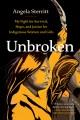 Includes bibliographical references and index."Unbroken is a remarkable work of memoir and investigative journalism focusing on missing and murdered Indigenous women and girls, written by an award-winning Gitxsan journalist who survived life on the streets against all odds. As a Gitxsan teenager navigating life on the streets, Angela Sterritt wrote in her journal to help her survive and find her place in the world. Now an acclaimed journalist, she writes for major news outlets to push for justice and to light a path for Indigenous women, girls, and survivors. In her brilliant debut, Sterritt shares her memoir alongside investigative reporting into cases of missing and murdered Indigenous women in Canada, showing how colonialism and racism led to a society where Sterritt struggled to survive as a young person, and where the lives of Indigenous women and girls are ignored and devalued. Growing up, Sterritt was steeped in the stories of her ancestors: grandparents who carried bentwood boxes of berries, hunted and trapped, and later fought for rights and title to that land. But as a vulnerable young woman, kicked out of the family home and living on the street, Sterritt inhabited places that, today, are infamous for being communities where women have gone missing or been murdered: Vancouver's Downtown Eastside, and, later on, Northern BC's Highway of Tears. Sterritt faced darkness: she experienced violence from partners and strangers and saw friends and community members die or go missing. But she navigated the street, group homes, and SROs to finally find her place in journalism and academic excellence at university, relying entirely on her own strength, resilience, and creativity along with the support of her ancestors and community to find her way. "She could have been me," Sterritt acknowledges today, and her empathy for victims, survivors, and families drives her present-day investigations into the lives of missing and murdered Indigenous women. In the end, Sterritt steps into a place of power, demanding accountability from the media and the public, exposing racism, and showing that there is much work to do on the path towards understanding the truth. But most importantly, she proves that the strength and brilliance of Indigenous women is unbroken, and that together, they can build lives of joy and abundance."--
- Subjects: Biographies.; Personal narratives.; Sterritt, Angela.; Indigenous peoples; Indigenous women; Indigenous women; Investigative reporting; Missing persons; Murder victims; Murder; Racism against Indigenous peoples.; Women journalists; Indigenous journalists;
- Available copies: 1 / Total copies: 2
-
unAPI
- PAW patrol. [videorecording] / by Entertainment One (Firm : Canada); KaBOOM! Entertainment.; Phase 4 Films (Firm); Spin Master PAW Productions, Inc. (firm);
 Pups save the day -- Pups turn on the lights -- Pups save a super pup -- Pups and the trouble with turtles -- Pups take the cake -- Pups and the great race.Drew Davis, Devan Cohen, Gage Munroe.Originally broadcast as episodes of the television program in 2013.Whenever there's a problem in Adventure Bay, you can count on Ryder and his team of pups to save the day. No job is too big for Marshall, Chase and the rest of the pups. Paw Patrol is ready for action and on a roll!Canadian Home Video Rating: G.DVD ; widescreen presentation (16x9); Dolby digital 5.1, 2.0.
- Subjects: Animal rescue; Animated television programs.; Children's television programs.; Dogs; Video recordings for children.;
- For private home use only.
- Available copies: 1 / Total copies: 1
-
unAPI
- My stories, my times / by Chrétien, Jean,1934-author.; translation of:Chrétien, Jean,1934-Mes histoires.English.; Fischman, Sheila,translator.; Winkler, Donald,translator.;
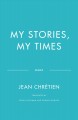 "One of the most popular Canadian Prime Ministers in recent history, elected to government for three consecutive majority terms, Jean Chrétien has some stories to tell. Recounted with warmth, insight and his distinctive sense of humour, these brief and candid essays feature many behind-the-scenes stories from a long, distinguished and colourful career. October 2018 marks twenty-five years since Jean Chrétien took the helm as Prime Minister. In this collection of short essays, he has picked up his pen to reminisce about his long years in the public eye, and the many luminaries he met and worked with. Readers will learn why his commonsense judgment continues to influence our lives to this day, in ways both profound and subtle: from forging long-lasting relationships with foreign countries to making it easy to identify our national airline when we travel. He recalls a memorable trip with the royal family to the Northwest Territories in 1970, and how Ross Perot tried to influence his views on free trade in 1992. Of course, many familiar names figure into these stories, including George W. Bush, Boris Yeltsin, Tony Blair, Jacques Chirac, Pierre Trudeau, and Bill and Hillary Clinton. There are reflections on the many different posts over Chrétien's career, including becoming Canada's first-ever francophone finance minister. He pays tribute to old friends and colleagues, where the values of honour and dedication to public service transcend political views. He reserves his greatest admiration for his wife of more than sixty years, Aline, whom he calls his Rock of Gibraltar. These stories offer his unique perspective: we are at the Prime Minister's side on 9/11 when he is asked to give authorization to shoot down a passenger airliner that has not responded to identification requests. We learn how he attempted to correct the record as explained in his grandson's history book on the so-called "Night of the Long Knives" (Despite having special access to an eyewitness to history, his grandson got a failing grade on his paper.) There are even glimpses of the young Jean, as a teen canvassing with his father, and as a young man who dared complain personally to Premier Maurice Duplessis about the food at his seminary. Survival in politics requires stamina, creativity and toughness, as well as the ability to share a laugh now and again: qualities that the self-described "little guy from Shawinigan" never lost. In these days of "alternative facts" and politics-by-Tweet, these stories are a necessary antidote, told by a leader who always held fast to his vision of what Canada was and what it could be."--
- Subjects: Autobiographies.; Biographies.; Chrétien, Jean, 1934-; Prime ministers; Prime ministers;
- Available copies: 1 / Total copies: 1
-
unAPI
- Every child matters / by Webstad, Phyllis.; Harvey, Karlene.;
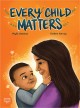 Learn the meaning behind the phrase, 'Every Child Matters.' Orange Shirt Day founder, Phyllis Webstad, offers insights into this heartfelt movement. Every Child Matters honours the history and resiliency of Indigenous Peoples on Turtle Island and moves us all forward on a path toward Truth and Reconciliation. If you're a Residential School Survivor or an Intergenerational Survivor - you matter. For the children who didn't make it home - you matter. The child inside every one of us matters. Every Child Matters.
- Subjects: Indigenous peoples; Indigenous peoples;
- Available copies: 1 / Total copies: 1
-
unAPI
- If you see a bluebird / by Rahman, Bahram,1984-; Grimard, Gabrielle.;
 Although his family is safe in their new country, Ali finds himself wishing he could go back to Afghanistan. A day spent picking blackberries with Nana reminds him of their old house with the mulberry tree he loved, and the day the soldiers came. He recalls their nighttime flight and the crowded buses and airplane that took him to this beautiful but unfamiliar place. When Ali and Nana spot a bluebird, she tells him to make a wish. Ali wishes to go home, but, as he comes to learn, home is not a place. Home is the love his family has for each other. In If You See a Bluebird, Bahram Rahman, author of ALA Schneider Family Book Award Honor Book A Sky-Blue Bench, reflects on the experience of former refugees as they learn to adapt and embrace a new country and a new home. Award-winning illustrator Gabrielle Grimard incorporates rich and varied colour palettes to capture Ali's two worlds. A story of family togetherness that redefines the meaning of home.
- Subjects: Picture books.; Afghans; Refugees; Immigrant families;
- Available copies: 0 / Total copies: 1
-
unAPI
- The eleventh hour / by Goldstyn, Jacques.; Mahoney, Anne Louise.;
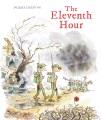 Jules and Jim are best friends. They play together. They go to school together. They grow up together. Through it all, Jim is always a little ahead of Jules-a little faster, a little stronger. So, when Canada goes to war against Germany in 1914, Jim is the first to volunteer, but Jules is right behind him. They fight together. They battle the cold and the mud of the trenches together. But in the end, only one of them will see the Armistice begin at the eleventh hour of the eleventh day of the eleventh month. A poignant tale of friendship, The Eleventh Hour is also a story about life, death, and the horrors and futility of war.LSC
- Subjects: Male friendship; World War, 1914-1918;
- Available copies: 0 / Total copies: 1
-
unAPI
- Battle of the Atlantic : gauntlet to victory / by Barris, Ted,author.;
 Includes bibliographical references and index.The Battle of the Atlantic, Canada's longest continuous military engagement of the Second World War, lasted 2,074 days, claiming the lives of more than 4,000 men and women in the Royal Canadian Navy, the Royal Canadian Air Force and the Canadian merchant navy The years 2019 to 2025 mark the eightieth anniversary of the longest battle of the Second World War, the Battle of the Atlantic. It also proved to be the war's most critical and dramatic battle of attrition. For five and a half years, German surface warships and submarines attempted to destroy Allied trans-Atlantic convoys, most of which were escorted by Royal Canadian destroyers and corvettes, as well as aircraft of the Royal Canadian Air Force. Throwing deadly U-boat "wolf packs" in the paths of the convoys, the German Kriegsmarine almost succeeded in cutting off this vital lifeline to a beleaguered Great Britain. In 1939, the Royal Canadian Navy went to war with exactly thirteen warships and about 3,500 regular servicemen and reservists. During the desperate days and nights of the Battle of the Atlantic, the RCN grew to 400 fighting ships and over 100,000 men and women in uniform. By V-E Day in 1945, it had become the fourth largest navy in the world. The story of Canada's naval awakening from the dark, bloody winters of 1939-1942, to be "ready, aye, ready" to challenge the U-boats and drive them to defeat, is a Canadian wartime saga for the ages. While Canadians think of the Great War battle of Vimy Ridge as the country's coming of age, it was the Battle of the Atlantic that proved Canada's gauntlet to victory and a nation-building milestone.
- Subjects: Canada. Royal Canadian Navy; World War, 1939-1945; World War, 1939-1945;
- Available copies: 1 / Total copies: 1
-
unAPI
Results 161 to 170 of 288 | « previous | next »