Results 21 to 28 of 28 | « previous
- Unflinching : the making of a Canadian sniper / by Mitic, Jody,author.; Lefko, Perry.;
-
- Subjects: Mitic, Jody.; Canada. Canadian Armed Forces; Afghan War, 2001-; City council members; Disabled veterans; Snipers;
- Available copies: 1 / Total copies: 1
-
unAPI
-
Review the CFAT! : complete Canadian Forces Aptitude Test study guide and practice test questions.
 "Over 250 practice questions to help you pass the CFAT. This study guide will help you: Learn faster. Practice with 2 complete practice question sets (over 250 questions). Identify your strengths and weaknesses quickly. Concentrate your study time. Increase your score with multiple choice strategies from exam experts."
- Subjects: Canada. Canadian Armed Forces; Soldiers; Soldiers; Soldiers; Occupational aptitude tests;
- Available copies: 1 / Total copies: 1
-
unAPI
- For king and Kanata : Canadian Indians and the First World War / by Winegard, Timothy C.(Timothy Charles),1977-author.;
 Includes bibliographical references and index."The first comprehensive history of the Aboriginal First World War experience on the battlefield and the home front. When the call to arms was heard at the outbreak of the First World War, Canada's First Nations pledged their men and money to the Crown to honour their long-standing tradition of forming military alliances with Europeans during times of war, and as a means of resisting cultural assimilation and attaining equality through shared service and sacrifice. Initially, the Canadian government rejected these offers based on the belief that status Indians were unsuited to modern, civilized warfare. But in 1915, Britain intervened and demanded Canada actively recruit Indian soldiers to meet the incessant need for manpower. Thus began the complicated relationships between the Imperial Colonial and War Offices, the Department of Indian Affairs, and the Ministry of Militia that would affect every aspect of the war experience for Canada's Aboriginal soldiers. In his groundbreaking new book, For King and Kanata,Timothy C. Winegard reveals how national and international forces directly influenced the more than 4,000 status Indians who voluntarily served in the Canadian Expeditionary Force between 1914 and 1919 -- a per capita percentage equal to that of Euro-Canadians -- and how subsequent administrative policies profoundly affected their experiences at home, on the battlefield, and as returning veterans"--
- Subjects: Canada. Canadian Armed Forces; Indigenous peoples; First Nations; World War, 1914-1918;
- Available copies: 1 / Total copies: 1
-
unAPI
- Indigenous peoples in the world wars / by Rose, Simon,1961-;
 Includes bibliographical references and index.Examines the role of Canada's Indigenous soldiers during World War I and World War II.LSC
- Subjects: World War, 1914-1918; World War, 1939-1945; Native peoples; World War, 1914-1918; World War, 1939-1945; Indian veterans; Native peoples;
- Available copies: 1 / Total copies: 1
-
unAPI
- Tragedy at Dieppe : Operation Jubilee, August 19, 1942 / by Zuehlke, Mark.;
 Includes bibliographical references and index.
- Subjects: Dieppe Raid, 1942.; World War, 1939-1945;
- © c2012., Douglas & McIntyre,
- Available copies: 1 / Total copies: 1
-
unAPI
- Better off dead : post-traumatic stress disorder and the Canadian Armed Forces / by Doucette, Fred.;
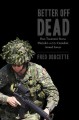 Fred Doucette always wanted to be a soldier. In the 1960s he joined the Canadian Armed Forces and served in Cyprus in the 1970s and <U+2019>80s and Bosnia in the 1990s. When he returned home to New Brunswick in 1999 after his last overseas tour, he was diagnosed with severe chronic post-traumatic stress disorder. Eventually released from the army, Fred found a position with the Operational Stress Injury Social Support (OSISS) program, where he supported serving soldiers and veterans for ten years. Better Off Dead chronicles Fred's efforts in helping to rehabilitate and support soldiers and veterans suffering from what the military terms "operational stress injuries." We meet Ted, saved from a suicide attempt by a timely phone call; Bob, at wit's end and reluctantly seeking help to overcome severe PTSD; Roger, caught in a cycle of violence and drug and alcohol abuse; and Jane, diagnosed with PTSD after having been sexually assaulted while on a tour of duty in Afghanistan. These accounts are raw, desperate, and often angry, but as Doucette shows, there is hope and real progress for those able to obtain proper diagnosis and treatment. Fred Doucette is the author of the memoir Empty Casing, He lives in Fredericton, New Brunswick.LSC
- Subjects: Doucette, Fred.; War neuroses; Post-traumatic stress disorder; Psychic trauma; Veterans; Soldiers; Veterans; Soldiers; Medicine, Military;
- Available copies: 1 / Total copies: 1
-
unAPI
- Punching Above Our Weight The Canadian Military at War Since 1867 [electronic resource] : by Borys, David A..aut; cloudLibrary;
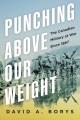 “Quick-paced, well-researched and well-illustrated, this is the first new history of Canada’s armed forces in decades.” — J. L. Granatstein, author of Canada’s Army Punching Above Our Weight takes readers on a riveting exploration spanning one hundred and fifty years of Canadian forces. This photograph-rich history of 150 years of the Canadian military traces the evolution of the country’s armed forces from a small, underfunded, poorly trained militia to the modern, effective military it is today. From the Red River Resistance and the Boer War to modern peacekeeping and the long war in Afghanistan, David A. Borys details the conflicts and operations that Canadian soldiers have served in. He highlights the key battles, decisive moments, and significant people that came to define Canada’s participation and helped cement its global reputation. Borys also explores the challenges that the Canadian nation and its military have faced over those years, including major cultural and demographic shifts, a continual struggle for resources from generally disinterested governments, battlefield failures, notorious and shocking scandals, along with ever-changing global threats. Punching Above Our Weight brings to light a new perspective on the Canadian military and its place in the world over the past one hundred and fifty years.General adult.
- Subjects: Electronic books.; Canada; Post-Confederation (1867-); Canadian;
- © 2024., Dundurn Press,
-
unAPI
- Operation Medusa : the furious battle that saved Afghanistan from the Taliban / by Fraser, David(Major-General),author.; Hanington, Brian,author.;
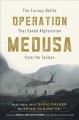 Includes bibliographical references."David Fraser, the Canadian in charge of the joint military command in Kandahar Province in Afghanistan, tells the real on-the-ground story of one of NATO's bloodiest, most decisive and misunderstood operations: The battle of Panjwayi, the defining moment of "Operation Medusa." In 2006, David Fraser was the Canadian general in charge of the joint military command in Kandahar Province, Afghanistan. Like the troops under his command, he was in no way ready for what happened on Friday, September 1st of that year. He had been woken the night before by his intelligence officers who informed him that the Taliban were amassing on all fronts for an all-out battle. The NATO Alliance was about to engage the enemy in the greatest and bloodiest battle of their 70-year history. And they were grossly outnumbered. The facts of Operation Medusa have themselves been the casualties of war. At first deliberately withheld as classified, then muddied by imprecise and isolated personal accounts, exaggerated by rumour, misstated by ambition, or just rejected outright as irrelevant, the details of these events are still unknown by citizens of Canada and her allies. And yet the truth about those 15 agonizing days between September 2 and 17 is astounding. The secret agreements made in those two weeks, the expected death toll of Canadian soldiers, the wholesale changes to tactics made after the first engagement, the strafing of Charles Company by an American A-10, the contribution of the Afghan police, the genius of the Dutch artillery, the discovery of drugs, the extent of unreported civilian casualties, and even Canadian and Allied reliance on the insights of village elders were classified and kept from public knowledge. And yet in international military circles, the Battle of Panjwayi was quickly hailed as the defining moment of Operation Medusa. Canadians were credited with nothing less than saving Afghanistan from falling under Taliban rule. Our military's strategy and tactics were soon studied in warfare colleges in the U.S., and practiced by NATO troops in exercises around the world. Canada's reputation as a contributor to allied defence was once again revered. There is no one architect of Operation Medusa, a theme deeply embedded in David Fraser's first-hand account, but if anyone really had to point to the one person who could tell this incredible story, it is the Canadian General in charge of the joint military command"--
- Subjects: International Security Assistance Force (Afghanistan); North Atlantic Treaty Organization; Operation Medusa, 2006.; Afghan War, 2001-;
- Available copies: 1 / Total copies: 1
-
unAPI
Results 21 to 28 of 28 | « previous