Results 21 to 30 of 33 | « previous | next »
- Finding Otipemisiwak : the people who own themselves / by Currie, Andrea(Andrea M.),author.;
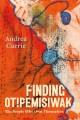 Includes bibliographical references."Otipemisiwak is a Plains Cree word describing the Métis, meaning "the people who own themselves." Andrea Currie was born into a Métis family with a strong lineage of warriors, land protectors, writers, artists, and musicians -- all of which was lost to her when she was adopted as an infant into a white family with no connection to her people. It was 1960, and the Sixties Scoop was in full swing. Together with her younger adopted brother, also Métis, she struggled through her childhood, never feeling like she belonged in that world. When their adoptions fell apart during their teen years, the two siblings found themselves on different paths, yet they stayed connected. Currie takes us through her journey, from the harrowing time of bone-deep disconnection, to the years of searching and self-discovery, into the joys and sorrows of reuniting with her birth family. Finding Otipemisiwak weaves lyrical prose, poetry, and essays into an incisive commentary on the vulnerability of Indigenous children in a white supremacist child welfare system, the devastation of cultural loss, and the rocky road some people must walk to get to the truth of who they are. Her triumph over the state's attempts to erase her as an Indigenous person is tempered by the often painful complexities of re-entering her cultural community while bearing the mark of the white world in which she was raised. Finding Otipemisiwak is the story of one woman's fight -- first to survive, then to thrive as a fully present member of her Nation and of the human family."--
- Subjects: Biographies.; Personal narratives.; Currie, Andrea (Andrea M.); Currie, Andrea (Andrea M.); Métis; Sixties Scoop, Canada, 1951-ca. 1980.;
- Available copies: 1 / Total copies: 1
-
unAPI
- A place called home : a memoir / by Ambroz, David,author.;
 "As a child, David Ambroz was raised homeless in New York City, the home of Wall Street and more than 100,000 homeless children. For David and his two siblings, their mother's diagnosis of paranoid schizophrenia sets them in motion for a life of poverty, violence and instability as they travel across New York and New England seeking shelter. For eleven years, home for David means living in train stations, subway cars, 24-hour diners, and wherever is safe and warm; bathing in public restrooms; and stealing food to quell his hunger. When he gets into foster care, it feels like salvation, but it soon proves to be just as unsafe for young people--more of his foster siblings are put on a prison pipeline than college-bound. Surmounting violence, continued poverty and physical and emotional abuse at the hands of his caregivers, David harnesses an inner grit to escape the inevitable outcome for kids like him. He takes shelter and finds hope on his own in libraries, schools, and in the occasional adult angel. Through hard work and unwavering resolve, he is able to get into Vassar College, the first significant step out from the yolk of poverty, and later graduates UCLA School of Law. This heart-wrenching and inspiring story about young people pulls back the curtain on homelessness and poverty in the lives of children and shines a pivotal light on generations of kids that have been systematically ignored and overlooked. A Place Called Home is both David's powerful personal account through the lens of a child surviving it daily. And as the go-to child welfare advocate for the Obama administration and major U.S. companies, A Place Called Home is a beckoning call to our national conscience to move from pity to action"--
- Subjects: Biographies.; Autobiographies.; Personal narratives.; Ambroz, David.; Foster children; Homeless children;
- Available copies: 1 / Total copies: 1
-
unAPI
- To the Moon and back : a novel / by Ramage, Eliana,author.;
 "Steph Harper is on the run. When she was five, her mother fled an abusive husband -- with Steph and her younger sister in tow -- to Cherokee Nation, where she hoped they might finally belong. In response, Steph sets her sights as far away from Oklahoma as she can get, vowing that she will let nothing get in the way of pursuing the rigorous physical and academic training she knows she will need to be accepted by NASA, and ultimately, to go to the moon. Spanning three decades and several continents, To the Moon and Back encompasses Steph's turbulent journey, along with the multifaceted and intertwined lives of the three women closest to her: her sister Kayla, an artist who goes on to become an Indigenous social media influencer, and whose determination to appear good takes her life to unexpected places; Steph's college girlfriend Della Owens, who strives to reclaim her identity as an adult after being removed from her Cherokee family through a challenge to the Indian Child Welfare Act; and Hannah, Steph and Kayla's mother, who has held up her family's tribal history as a beacon of inspiration to her children, all the while keeping her own past a secret. In Steph's certainty that only her ambition can save her, she will stretch her bonds with each of these women to the point of breaking, at once betraying their love and generosity, and forcing them to reconsider their own deepest desires in her shadow. Told through an intricately woven tapestry of narrative, To the Moon and Back is an astounding and expansive novel of mothers and daughters, love and sacrifice, alienation and heartbreak, terror and wonder. At its core, it is the story of the extraordinary lengths to which one woman will go to find space for herself."--
- Subjects: Bildungsromans.; Novels.; Astronauts; Belonging; Cherokee women; Identity (Psychology); Mothers and daughters; Sexual minorities; Sisters;
- Available copies: 1 / Total copies: 1
-
unAPI
- To the Moon and back [sound recording] : a novel / by Ramage, Eliana,author.; Standingcloud, Nathalie,narrator.; Minter, Kamali,1979-narrator.; Parenteau, Tanis,narrator.; Blackstone Audio, Inc.,publisher.;
 Read by Nathalie Standingcloud, Kamali Minter, Tanis Parenteau."Steph Harper is on the run. When she was five, her mother fled an abusive husband -- with Steph and her younger sister in tow -- to Cherokee Nation, where she hoped they might finally belong. In response, Steph sets her sights as far away from Oklahoma as she can get, vowing that she will let nothing get in the way of pursuing the rigorous physical and academic training she knows she will need to be accepted by NASA, and ultimately, to go to the moon. Spanning three decades and several continents, To the Moon and Back encompasses Steph's turbulent journey, along with the multifaceted and intertwined lives of the three women closest to her: her sister Kayla, an artist who goes on to become an Indigenous social media influencer, and whose determination to appear good takes her life to unexpected places; Steph's college girlfriend Della Owens, who strives to reclaim her identity as an adult after being removed from her Cherokee family through a challenge to the Indian Child Welfare Act; and Hannah, Steph and Kayla's mother, who has held up her family's tribal history as a beacon of inspiration to her children, all the while keeping her own past a secret. In Steph's certainty that only her ambition can save her, she will stretch her bonds with each of these women to the point of breaking, at once betraying their love and generosity, and forcing them to reconsider their own deepest desires in her shadow. Told through an intricately woven tapestry of narrative, To the Moon and Back is an astounding and expansive novel of mothers and daughters, love and sacrifice, alienation and heartbreak, terror and wonder. At its core, it is the story of the extraordinary lengths to which one woman will go to find space for herself."--
- Subjects: Audiobooks.; Bildungsromans.; Novels.; Astronauts; Belonging; Cherokee women; Identity (Psychology); Mothers and daughters; Sexual minorities; Sisters;
- Available copies: 1 / Total copies: 1
-
unAPI
- To the Moon and Back (Reese's Book Club) A Novel [electronic resource] : by Ramage, Eliana.aut; CloudLibrary;
 A REESE’S BOOK CLUB PICK: “A breathtaking debut about family, identity, and love across generations.” —REESE WITHERSPOON “Eliana Ramage will break your heart and take you to the stars. From painfully accurate depictions of adolescence to effortless jumps through time and space—I loved it all.” —KILEY REID In this dazzlingly powerful story of family, ambition and belonging, one young woman’s obsessive quest to become the first Cherokee astronaut irrevocably alters the fates of the people she loves most. Steph Harper is on the run. She has been all her life, ever since her mother drove five-year-old Steph and her younger sister through the night to Cherokee Nation, a place they had never been, but where she hoped they might finally belong. In response to the turmoil, Steph sets her sights as far away from Oklahoma as she can get, vowing that she will let nothing get in the way of pursuing the rigorous physical and academic training she knows she will need to be accepted by NASA, and ultimately, to go to the moon. Spanning three decades and several continents, To the Moon and Back encompasses Steph’s turbulent journey, along with the multifaceted and intertwined lives of the three women closest to her: her sister Kayla, an artist who goes on to become an Indigenous social media influencer, and whose determination to appear good takes her life to unexpected places; Steph’s college girlfriend Della Owens, who strives to reclaim her identity as an adult after being removed from her Cherokee family through a challenge to the Indian Child Welfare Act; and Hannah, Steph and Kayla’s mother, who has held up her family’s tribal history as a beacon of inspiration to her children, all the while keeping her own past a secret. In Steph’s certainty that only her ambition can save her, she will stretch her bonds with each of these women to the point of breaking, at once betraying their love and generosity, and forcing them to reconsider their own deepest desires in her shadow. Told through an intricately woven tapestry of narrative, To the Moon and Back is an astounding and expansive novel of mothers and daughters, love and sacrifice, alienation and heartbreak, terror and wonder. At its core, it is the story of the extraordinary lengths to which one woman will go to find space for herself.
- Subjects: Electronic books.; Literary; Coming of Age; Native American & Aboriginal;
- © 2025., Simon & Schuster,
-
unAPI
- This bright future : a memoir / by Hall, Bobby,author.;
 "A raw and unfiltered journey into the life and mind of Bobby Hall, who emerged from the wreckage of a horrifically abusive childhood to become an era-defining artist ... A self-described orphan with parents, Bobby Hall began life as Sir Robert Bryson Hall II, the only child of an alcoholic, mentally ill mother on welfare and an absent, crack-addicted father. After enduring seventeen years of abuse and neglect, Bobby ran away from home and--with nothing more than a discarded laptop and a ninth-grade education--he found his voice in the world of hip-hop and a new home in a place he never expected: the untamed and uncharted wilderness of the social media age"--
- Subjects: Biographies.; Autobiographies.; Hall, Bobby.; Adult child abuse victims; Adult children of alcoholics; Adult children of drug addicts; Adult children of dysfunctional families; Internet personalities; Rap musicians;
- Available copies: 1 / Total copies: 1
-
unAPI
- The skin we're in : [Book Club Set] / by Cole, Desmond,1982-author.;
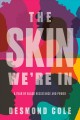 Includes bibliographical references."In May 2015, the cover story of Toronto Life magazine shook Canada's largest city to its core. Desmond Cole's "The Skin I'm In" exposed the racist practices of the Toronto police force, detailing the dozens of times Cole had been stopped and interrogated under the controversial practice of carding. The story quickly came to national prominence, went on to win a number of National Magazine Awards and catapulted its author into the public sphere. Cole used his newfound profile to draw insistent, unyielding attention to the injustices faced by Black Canadians on a daily basis: the devastating effects of racist policing; the hopelessness produced by an education system that expects little of its black students and withholds from them the resources they need to succeed more fully; the heartbreak of those vulnerable before the child welfare system and those separated from their families by discriminatory immigration laws. Both Cole's activism and journalism find vibrant expression in his first book, The Skin We're In. Puncturing once and for all the bubble of Canadian smugness and naïve assumptions of a post-racial nation, Cole chronicles just one year-- 2017-- in the struggle against racism in this country. It was a year that saw calls for tighter borders when African refugees braved frigid temperatures to cross into Manitoba from the States, racial epithets used by a school board trustee, a six-year-old girl handcuffed at school. The year also witnessed the profound personal and professional ramifications of Desmond Cole's unwavering determination to combat injustice. In April, Cole disrupted a Toronto police board meeting by calling for the destruction of all data collected through carding. Following the protest, Cole, a columnist with the Toronto Star, was summoned to a meeting with the paper's opinions editor and was informed that his activism violated company policy. Rather than limit his efforts defending Black lives, Cole chose to sever his relationship with the publication. Then in July, at another TPS meeting, Cole challenged the board publicly, addressing rumours of a police cover-up of the brutal beating of Dafonte Miller by an off-duty police officer and his brother. When Cole refused to leave the meeting until the question was publicly addressed, he was arrested. The image of Cole walking, handcuffed and flanked by officers, out of the meeting fortified the distrust between the city's Black community and its police force. In a month-by-month chronicle, Cole locates the deep cultural, historical and political roots of each event so that what emerges is a personal, painful and comprehensive picture of entrenched, systemic inequality. Urgent, controversial and unsparingly honest, The Skin We're In is destined to become a vital text for anti-racist and social justice movements in Canada, as well as a potent antidote to the all-too-present complacency of many white Canadians."-- Provided by publisher.
- Subjects: Black Canadians; Discrimination in criminal justice administration; Discrimination in law enforcement; Minorities; Police brutality; Police misconduct; Police-community relations; Race discrimination;
- Available copies: 0 / Total copies: 12
-
unAPI
- The skin we're in : a year of Black resistance and power / by Cole, Desmond,1982-author.;
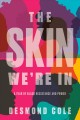 Includes bibliographical references."In May 2015, the cover story of Toronto Life magazine shook Canada's largest city to its core. Desmond Cole's "The Skin I'm In" exposed the racist practices of the Toronto police force, detailing the dozens of times Cole had been stopped and interrogated under the controversial practice of carding. The story quickly came to national prominence, went on to win a number of National Magazine Awards and catapulted its author into the public sphere. Cole used his newfound profile to draw insistent, unyielding attention to the injustices faced by Black Canadians on a daily basis: the devastating effects of racist policing; the hopelessness produced by an education system that expects little of its black students and withholds from them the resources they need to succeed more fully; the heartbreak of those vulnerable before the child welfare system and those separated from their families by discriminatory immigration laws. Both Cole's activism and journalism find vibrant expression in his first book, The Skin We're In. Puncturing once and for all the bubble of Canadian smugness and naïve assumptions of a post-racial nation, Cole chronicles just one year-- 2017-- in the struggle against racism in this country. It was a year that saw calls for tighter borders when African refugees braved frigid temperatures to cross into Manitoba from the States, racial epithets used by a school board trustee, a six-year-old girl handcuffed at school. The year also witnessed the profound personal and professional ramifications of Desmond Cole's unwavering determination to combat injustice. In April, Cole disrupted a Toronto police board meeting by calling for the destruction of all data collected through carding. Following the protest, Cole, a columnist with the Toronto Star, was summoned to a meeting with the paper's opinions editor and was informed that his activism violated company policy. Rather than limit his efforts defending Black lives, Cole chose to sever his relationship with the publication. Then in July, at another TPS meeting, Cole challenged the board publicly, addressing rumours of a police cover-up of the brutal beating of Dafonte Miller by an off-duty police officer and his brother. When Cole refused to leave the meeting until the question was publicly addressed, he was arrested. The image of Cole walking, handcuffed and flanked by officers, out of the meeting fortified the distrust between the city's Black community and its police force. In a month-by-month chronicle, Cole locates the deep cultural, historical and political roots of each event so that what emerges is a personal, painful and comprehensive picture of entrenched, systemic inequality. Urgent, controversial and unsparingly honest, The Skin We're In is destined to become a vital text for anti-racist and social justice movements in Canada, as well as a potent antidote to the all-too-present complacency of many white Canadians."-- Provided by publisher.
- Subjects: Black Canadians; Discrimination in criminal justice administration; Discrimination in law enforcement; Minorities; Police brutality; Police misconduct; Police-community relations; Race discrimination;
- Available copies: 2 / Total copies: 2
-
unAPI
- Death in the family / by Chipman, John,author.;
 Includes bibliographical references and index."In a work of vigorous reporting, careful analysis, deep compassion and unerring integrity, award-winning journalist and documentarian John Chipman investigates the lives left ruined in the wake of Dr. Charles Smith's ignominious career. In the mid-'90s, the Ontario Coroner's office decided that death investigation teams needed to "think dirty." They wanted coroners, pathologists and police to be more suspicious--to "assume that all deaths are homicides until satisfied that they are not." They were particularly concerned about pediatric deaths, which historically had been exceedingly difficult to investigate. There were usually no witnesses; no evidence to gather at the scene; no outward signs of trauma on the body. If the pathologist did not discover the truth of what had happened, child abuse could go uncovered. Among those charged to "think dirty" was Dr. Charles Smith, Ontario's top pediatric forensic pathologist at the time. But with virtually no training in forensics, Dr. Smith was ill prepared for his work. Instead of basing his judgments on forensic evidence found during autopsies, he allowed himself to be swayed by circumstantial evidence. The defendants were often single mothers--some on welfare, some struggling with substance abuse. And they made for easy targets. Dr. Smith made dangerous assumptions, and the results were catastrophic. Numerous individuals were pronounced guilty, and incarcerated, on his shaky evidence. This penetrating investigative work explores the wide ripples of destruction caused when the justice system fails, the burden felt by ethical individuals working within that system and the importance of its victims finally being heard."--
- Subjects: Smith, Charles (Charles Randal); Coroners; Death; Forensic pathology; Judicial error; Justice, Administration of;
- Available copies: 1 / Total copies: 1
-
unAPI
- Lost birds / by Hillerman, Anne,1949-author.;
 Joe Leaphorn may be long retired from the Navajo Tribal Police, but his detective skills are still sharp, honed by his work as a private detective. His experience will be essential in solving a compelling new case: finding the birth parents of a woman who was raised by a bilagáana family but believes she is Diné. Her suspicion is based on one solid clue, an old photograph with a classic Navajo child's blanket. Leaphorn discovers that his client's adoption was questionable, and her adoptive family is not what they seem. His quest for answers takes him to an old trading post and leads him to a mysterious cache of long-buried family secrets. As that case grows more complicated, Leaphorn receives an unexpected call from a person he met decades earlier. Cecil Bowleg's desperation is clear in his voice, but before he can explain, the call is cut off by an explosion and Cecil disappears. True to his nature, Leaphorn is determined to find the truth even as the situation grows dangerous. When Officer Bernadette Manuelito investigates the explosion, who discovers a body and an unexpected link to Cecil's missing wife. Bernie also is involved in a troubling investigation of her own: an elderly weaver whose prize-winning sheep have been ruthlessly killed by feral dogs.
- Subjects: Detective and mystery fiction.; Novels.; Manuelito, Bernie (Fictitious character); Adoption; Animal welfare; Chee, Jim (Fictitious character); Leaphorn, Joe, Lt. (Fictitious character); Police; Private investigators; Indigenous policing; Navajo;
- Available copies: 2 / Total copies: 2
-
unAPI
Results 21 to 30 of 33 | « previous | next »