Results 71 to 80 of 96 | « previous | next »
- Daughters of the deer / by Daniel, Danielle,author.;
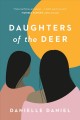 "In this haunting, groundbreaking, historical novel, Danielle Daniel imagines the lives of her ancestors in the Algonquin territories of the 1600s, a story inspired by her family link to a girl murdered near Trois-Rivières in the early days of French settlement. Marie, an Algonquin woman of the Weskarini Deer Clan, lost her first husband and her children to an Iroquois raid. In the aftermath of another lethal attack, her chief begs her to remarry for the sake of the clan. Marie is a healer who honours the ways of her people, and Pierre, the green-eyed ex-soldier from France who wants her for his bride, is not the man she would choose. But her people are dwindling, wracked by white men's diseases and nearly starving every winter as the game retreats away from the white settlements. If her chief believes such a marriage will cement their alliance with the French against the Iroquois and the British, she feels she has no choice. Though she does it reluctantly, and with some fear--Marie is trading the memory of the man she loved for a man she doesn't understand at all, and whose devout Catholicism blinds him to the ways of her people. This beautiful, powerful novel brings to life women who have literally fallen through the cracks of settler histories. Especially Jeanne, the first child born of the new marriage, neither white nor Weskarini, but caught between worlds. As she reaches adolescence, it becomes clear she is two-spirited. In her mother's culture, she would have been considered blessed, her nature a sign of special wisdom. But to the settlers of New France, and even to her own father, Jeanne is unnatural, sinful--a woman to be shunned, and worse. And so, with the poignant story of Jeanne, Danielle Daniel imagines her way into the heart and mind of a woman at the origin of the long history of violence against Indigenous women and the deliberate, equally violent, disruption of First Nations culture--opening a door long jammed shut, so all of us can enter"--
- Subjects: Historical fiction.; Novels.; Arranged marriage; First Nations women; First Nations; Algonquin;
- Available copies: 1 / Total copies: 1
-
unAPI
- The wisdom of plagues : lessons from 25 years of covering pandemics / by McNeil, Donald G.,Jr.,author.;
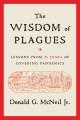 Includes bibliographical references and index."For a certain class of American's, Donald McNeil was a comforting voice when the Covid-19 pandemic broke out. He was the regular reporter on the New York Times's popular Daily podcast, and he was telling folks to prepare for the worst. A generation of NYT readers went out and stocked up on food and PPE stuff because of his clear advice. He'd covered public health for the Times for 25 years and understood what he was seeing out of China. THE WISDOM OF PLAGUES is his account of what he learned over a quarter-century of reporting on public health in over 60 countries: part-memoir, part history, and part activism. Many science reporters understand the basics of diseases--how a virus works, for example, or what goes into making a vaccine. But very few understand the psychology of how small outbreaks turn into pandemics: How everyone from hunters to farmers to guano-diggers gets exposed to animal diseases. How diseases spread through networks of similar people and by "mass-gathering" events. How surveillance fails. How countries respond slowly or even cover up outbreaks. Why people refuse to believe they're at risk, or why they reject protective measures like quarantine or vaccines. How wild rumors spring up and scare people away from common sense responses. How greedy makers of false remedies spread confusion. Why public health agencies fumble and let things spiral out of control. The Covid pandemic was the story McNeil had trained his whole life to cover. His experience and deep bench of sources let him make many accurate predictions in 2020 about the course that a deadly new respiratory virus in Wuhan, China, would take and how different countries would respond. By the time McNeil wrote his last Times stories about the Covid-19 pandemic he had not lost his compassion, but he had grown far more stone-hearted about how he thought governments should react. He had witnessed so many failures and read enough history to realize that while every epidemic is different, failure was the one constant. Again and again, containable outbreaks ballooned into catastrophes because weak leaders were mired in denial. Citizens refused to make even minor sacrifices for the common good and were encouraged in that by money-hungry entrepreneurs and power-hungry populists. Science was ignored, obvious truths were denied, and the innocent too often died. THE WISDOM OF PLAGUES is ultimately about what we can do to improve global health and be better prepared for the next pandemic, which is coming"--
- Subjects: COVID-19 (Disease); Epidemiology.; Pandemics.; Public health surveillance.; Public health;
- Available copies: 1 / Total copies: 1
-
unAPI
- Charm City [videorecording] / by Barksdale, Dante,on-screen participant.; Brown, Monique,on-screen participant.; Chevigny, Katy,television producer.; Griffin, T.,composer.; Guyton, Clayton,on-screen participant.; Latrell, Tia,on-screen participant.; Ness, Marilyn,television producer,television director.; Bigmouth Productions,production company.; Motto Pictures,production company.; PBS Distribution (Firm),distributor.; Public Broadcasting Service (U.S.),production company.;
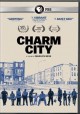 Composer, T. Griffin.Featuring Dante Barksdale, Monique Brown, Clayton "Mr. C." Guyton, Tia Latrell.Delivering a candid portrait of citizens, police, community advocates, and government officials on the frontlines during three years of unparalleled, escalating violence in Baltimore. The film highlights the positive actions undertaken by groups and individuals, who come together to rebuild, heal, and forge a better way forward.E.DVD ; widescreen presentation ; 5.1 surround.AFI Docs 2018, official selection; Tribeca Film Festival 2018; Maryland Film Festival 2018, official selection
- Subjects: Nonfiction television programs.; Video recordings for the hearing impaired.; Documentary television programs.; Gray, Freddie, 1989-2015; Community development; Murder; Social change; Social problems; Violent crimes;
- For private home use only.
- Available copies: 1 / Total copies: 1
-
unAPI
- The end of October / by Wright, Lawrence,1947-author.;
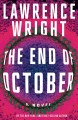 "In this propulsive medical thriller--from the Pulitzer Prize winner and best-selling author--Dr. Henry Parsons, an unlikely but appealing hero, races to find the origins and cure of a mysterious new killer virus as it brings the world to its knees. At an internment camp in Indonesia, within one week, forty-seven people are pronounced dead with acute hemorrhagic fever. When the microbiologist and epidemiologist Henry Parsons travels there on behalf of the World Health Organization to investigate, what he finds will soon have staggering repercussions across the globe: an infected man is on his way to join the millions of worshippers in the annual Hajj to Mecca. Now, Henry joins forces with a Saudi doctor and prince in an attempt to quarantine the entire host of pilgrims in the holy city. Matilda Nachinsky, deputy director of U. S. Homeland Security, scrambles to mount a response to what may be an act of biowarfare. Already-fraying global relations begin to snap, one by one, in the face of a pandemic. Henry's wife Jill and their children face diminishing odds of survival in Atlanta and the disease slashes across the United States, dismantling institutions--scientific, religious, governmental--and decimating the population. As packed with suspense as it is with the riveting history of viral diseases, Lawrence Wright has given us a full-tilt, electrifying, one-of-a-kind thriller"--
- Subjects: Thrillers (Fiction); Medical fiction.; Political fiction.; Epidemics; Virus diseases; Arenavirus diseases; Hemorrhagic fever; Epidemiologists;
- Available copies: 1 / Total copies: 1
-
unAPI
- EMF*D : 5G, Wi-Fi & cell phones--hidden harms and how to protect yourself / by Mercola, Joseph,author.;
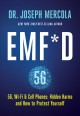 Includes bibliographical references and index."The hazards of electronic pollution may once have been the stuff of science fiction, but now we know they're all too real. And with the advent of 5G ultra-wideband technology, the danger is greater than ever. Dr. Joseph Mercola, one of the world's foremost authorities on alternative health, has mined the scientific literature to offer a radical new understanding of how electromagnetic fields impact your body and mind. In this first-of-its-kind guide, he reveals: What EMFs (electromagnetic fields) actually are, where you find them in your daily life, and how they affect you The toll that EMFs have been proven to take in diseases such as TK and TK Why you've been largely kept in the dark about this threat to your health How you can actually repair the damage done by EMFs at a cellular level Practical strategies to protect yourself and your loved ones from EMFs at home, at work, and out in the world The coming 5G technology will be pervasive and powerful. It will also be one of the largest public-health experiments in history-with no way of opting out. That's why you need to read this book. Now"--
- Subjects: Electromagnetic fields; Electromagnetic fields; Health behavior.; Self-care, Health.;
- Available copies: 1 / Total copies: 1
-
unAPI
- Travelers to unimaginable lands : stories of dementia, the caregiver, and the human brain / by Kiper, Dasha,author.; Doidge, Norman,writer of foreword.;
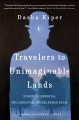 Includes bibliographical references and index."These compelling case histories meld science and storytelling to illuminate the complex relationship between the mind of someone with dementia and the mind of the person caring for them. After getting a master's degree in clinical psychology, Dasha Kiper became the live-in caregiver for a Holocaust survivor with Alzheimer's disease. For a year, she endured the emotional strain of looking after a person whose condition disrupts the rules of time, order, and continuity. Inspired by her own experience and her work counseling caregivers in the subsequent decade, Kiper offers an entirely new way to understand the symbiotic relationship between patients and those tending to them. Her book is the first to examine how the workings of the "healthy" brain prevent us from adapting to and truly understanding the cognitively impaired one. In these poignant but unsentimental stories of parents and children, husbands and wives, Kiper explores the existential dilemmas created by this disease: A man believes his wife is an impostor. A woman's imaginary friendships drive a wedge between herself and her devoted husband. Another woman's childhood trauma emerges to torment her son. A man's sudden Catholic piety provokes his wife. Why is taking care of a family member with dementia so difficult? Why do caregivers succumb to behaviors--arguing, blaming, insisting, taking symptoms personally--they know are counterproductive? Exploring the healthy brain's intuitions and proclivities, Travelers to Unimaginable Lands reveals the neurological obstacles to caregiving, enumerating not only the terrible pressures the disease exerts on our closest relationships but offering solace and perspective as well."--
- Subjects: Case studies.; Informational works.; Alzheimer's disease.; Brain; Caregivers.; Dementia; Dementia.; Memory disorders.;
- Available copies: 1 / Total copies: 1
-
unAPI
- Shutdown : how COVID shook the world's economy / by Tooze, J. Adam,author.;
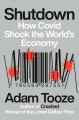 Includes bibliographical references and index."Deftly weaving finance, politics, business, and the global human experience into one tight narrative, a tour-de-force account of 2020, the year that changed everything--from the acclaimed author of Crashed. The shocks of 2020 have been great and small, disrupting the world economy, international relations and the daily lives of virtually everyone on the planet. Never before has the entire world economy contracted by 20 percent in a matter of weeks nor in the historic record of modern capitalism has there been a moment in which 95 percent of the world's economies were suffering all at the same time. Across the world hundreds of millions have lost their jobs. And over it all looms the specter of pandemic, and death. Adam Tooze, whose last book was universally lauded for guiding us coherently through the chaos of the 2008 crash, now brings his bravura analytical and narrative skills to a panoramic and synthetic overview of our current crisis. By focusing on finance and business, he sets the pandemic story in a frame that casts a sobering new light on how unprepared the world was to fight the crisis, and how deep the ruptures in our way of living and doing business are. The virus has attacked the economy with as much ferocity as it has our health, and there is no vaccine arriving to address that. Tooze's special gift is to show how social organization, political interests, and economic policy interact with devastating human consequences, from your local hospital to the World Bank. He moves fluidly from the impact of currency fluctuations to the decimation of institutions--such as health-care systems, schools, and social services--in the name of efficiency. He starkly analyzes what happened when the pandemic collided with domestic politics (China's party conferences; the American elections), what the unintended consequences of the vaccine race might be, and the role climate change played in the pandemic. Finally, he proves how no unilateral declaration of 'independence" or isolation can extricate any modern country from the global web of travel, goods, services, and finance"--
- Subjects: COVID-19 (Disease); Economic history; Financial crises; COVID-19 (Disease);
- Available copies: 1 / Total copies: 1
-
unAPI
- COVID-19 : the pandemic that never should have happened and how to stop the next one / by MacKenzie, Debora,author.;
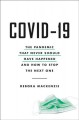 Includes bibliographical references."Over the last 30 years of epidemics and pandemics, we learned every lesson needed to stop this coronavirus outbreak in its tracks. We heeded almost none of them. The result is a pandemic on a scale never before seen in our lifetimes. In this captivating, authoritative, and eye-opening book, science journalist Debora MacKenzie lays out the full story of how and why it happened: the previous viruses that should have prepared us, the shocking public health failures that paved the way, the failure to contain the outbreak, and most importantly, what we must do to prevent future pandemics. Debora MacKenzie has been reporting on emerging diseases for more than three decades, and she draws on that experience to explain how COVID-19 went from a potentially manageable outbreak to a global pandemic. Offering a compelling history of the most significant recent outbreaks, including SARS, MERS, H1N1, Zika, and Ebola, she gives a crash course in Epidemiology 101--how viruses spread and how pandemics end--and outlines the lessons we failed to learn from each past crisis. In vivid detail, she takes us through the arrival and spread of COVID-19, making clear the steps that governments knew they could have taken to prevent or at least prepare for this. Looking forward, MacKenzie makes a bold, optimistic argument: this pandemic might finally galvanize the world to take viruses seriously. Fighting this pandemic and preventing the next one will take political action of all kinds, globally, from governments, the scientific community, and individuals--but it is possible. No one has yet brought together our knowledge of COVID-19 in a comprehensive, informative, and accessible way. But that story can already be told, and Debora MacKenzie's urgent telling is required reading for these times and beyond. It is too early to say where the COVID-19 pandemic will go, but it is past time to talk about what went wrong and how we can do better"--
- Subjects: COVID-19 (Disease); Coronaviruses.; Coronavirus infections; Communicable diseases; Communicable diseases; Epidemics; Emerging infectious diseases;
- Available copies: 1 / Total copies: 1
-
unAPI
- The candida cure : the 90-day program to balance your gut, beat candida, and restore vibrant health / by Boroch, Ann,author.;
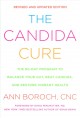 Includes bibliographical references."Foreword by David Pearlmutter, MD, author of Grain Brain, Wellness authority Ann Boroch's cult-classic health book, now revised and updated with a quick start cleanse, easy recipes, and more. It's not news that Americans are sicker than ever. Seventy million of us suffer from digestive problems like acid reflux, irritable bowel syndrome (IBS), or gastro esophageal reflex disorder (GERD). Another forty million have been diagnosed with anxiety and/or depression and a staggering fifty million Americans live with an autoimmune disease. But what is newsworthy is that all of these conditions share a common thread you've probably never heard of: candida. "Candida" is the term for a group of yeast organisms that have lived in our digestive tract for millennia, in harmony with the other thousands of bacteria, viruses, and archaea that make up our microbiome. But due to poor diets, processed foods, overuse of antibiotics, environmental toxins, and increased stress, our microbiome has been under steady and constant attack for decades. Yeast are of a heartier stock than bacterial microbes, and as bacteria die off, yeast begins to overgrow in the digestive tract, a condition known as candidiasis. Mild and moderate cases of candidiasis present with fatigue, IBS, eczema, depression, brain fog, migraines, and weight gain. Severe cases allow the afflicted to develop autoimmune disease (such as Multiple Sclerosis), cancer, and Alzheimer's. Ann Boroch's self-published book, The Candida Cure, has been the #1 resource in candida treatment since 2008. Her program--which she used to heal herself from a life-threatening autoimmune disorder--has stood the test of time, and has become a life-changing resource for more than 65,000 people. Now, in this revised edition, Ann offers her readers even more tools, with updated information and case histories, a quick start cleanse, and all-new recipes and eating plans"--
- Subjects: Candidiasis; Candidiasis; Candidiasis.;
- Available copies: 2 / Total copies: 2
-
unAPI
- Hidden Valley Road : inside the mind of an American family / by Kolker, Robert,author.;
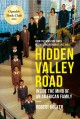 Includes bibliographical references and index."Don and Mimi Galvin seemed to be living the American dream. After World War II, Don's work with the Air Force brought them to Colorado, where their twelve children perfectly spanned the baby boom: the oldest born in 1945, the youngest in 1965. In those years, there was an established script for a family like the Galvins--aspiration, hard work, upward mobility, domestic harmony--and they worked hard to play their parts. But behind the scenes was a different story: psychological breakdown, sudden shocking violence, hidden abuse. By the mid-1970s, six of the ten Galvin boys, one after the other, were diagnosed as schizophrenic. How could all this happen to one family? What took place inside the house on Hidden Valley Road was so extraordinary that the Galvins became one of the first families to be studied by the National Institutes of Mental Health. Their story offers a shadow history of the science of schizophrenia, from the era of institutionalization, lobotomy, and the schizophrenogenic mother, to the search for genetic markers for the disease, always amidst profound disagreements about the nature of the illness itself. And unbeknownst to the Galvins, samples of their DNA informed decades of genetic research that continues today, offering paths to treatment, prediction, and even eradication of the disease for future generations. With clarity and compassion, bestselling and award-winning author Robert Kolker uncovers one family's unforgettable legacy of suffering, love and hope"--
- Subjects: Biographies.; Schizophrenics; Schizophrenia; Schizophrenia; Schizophrenics; Mentally ill;
- Available copies: 1 / Total copies: 1
-
unAPI
Results 71 to 80 of 96 | « previous | next »