Results 641 to 650 of 896 | « previous | next »
- 2020 : one city, seven people, and the year everything changed / by Klinenberg, Eric,author.;
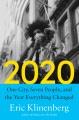 Includes bibliographical references and index."Crisis has a way of laying bare our truest selves: who we trust, which principles and impulses we heed, whose lives we deem expendable. As it ravaged millions of lives, the Covid-19 pandemic revealed and accentuated the dividing lines that had already, for decades, splintered American public life. Against the backdrop of the 2020 presidential election, misinformation regimes, and the transformation of the facemask into a flagrant political symbol, acclaimed sociologist Eric Klinenberg takes careful inventory of how the U.S. and other nations handled the extraordinary challenges of that seminal year. Any autopsy searches for causes, and in this book, Klinenberg uses seven people's piercingly vivid reflections to examine how communities across the globe reckoned with the profound tragedy and loss of 2020-and how they built networks of solidarity in an attempt to survive. We move from the gross negligence in Canadian for-profit nursing homes, to England's gradualist approach to instating robust Covid safety protocols, to early policy innovations in Australia, South Korea, and Taiwan, which dramatically curtailed the virus' spread. According to Klinenberg, our capacity to bear witness to the rampant failures and successful models of resilience of 2020 will help shape our responses to the escalating climate emergency, the ongoing fight for racial justice, and widening global economic disparities. This book is both mirror and roadmap-a reflection of the social divisions that plague our world and a set of principles for how we might approach the next global catastrophe differently"--
- Subjects: Biographies.; Personal narratives.; COVID-19 Pandemic, 2020-; Equality; Presidents; Social history;
- Available copies: 1 / Total copies: 1
-
unAPI
- Knowing what we know : the transmission of knowledge, from ancient wisdom to modern magic / by Winchester, Simon,author.;
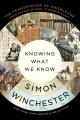 Includes bibliographical references and index."With the advent of the internet, any topic we want to know about is instantly available with the touch of a smartphone button. With so much knowledge at our fingertips, what is there left for our brains to do? At a time when we seem to be stripping all value from the idea of knowing things--no need for math, no need for map-reading, no need for memorization--are we risking our ability to think? As we empty our minds, will we one day be incapable of thoughtfulness? Addressing these questions, Simon Winchester explores how humans have attained, stored, and disseminated knowledge. Examining such disciplines as education, journalism, encyclopedia creation, museum curation, photography, and broadcasting, he looks at a whole range of knowledge diffusion--from the cuneiform writings of Babylon to the machine-made genius of artificial intelligence, by way of Gutenberg, Google, and Wikipedia to the huge Victorian assemblage of the Mundanaeum, the collection of everything ever known, currently stored in a damp basement in northern Belgium. Studded with strange and fascinating details, Knowing What We Know is a deep dive into learning and the human mind. Throughout this fascinating tour, Winchester forces us to ponder what rational humans are becoming. What good is all this knowledge if it leads to lack of thought? What is information without wisdom? Does Rene Descartes's Cogito, ergo sum--'I think therefore I am,' the foundation for human knowledge widely accepted since the Enlightenment--still hold? And what will the world be like if no one in it is wise?"--
- Subjects: Information behavior.; Knowledge, Sociology of.; Thought and thinking.; Information technology; Technology;
- Available copies: 1 / Total copies: 1
-
unAPI
- The guest book [sound recording] / by Blake, Sarah,1960-author.; Cassidy, Orlagh,narrator.; Macmillan Audio (Firm),publisher.;
 Read by Orlagh Cassidy."A novel about past mistakes and betrayals that ripple throughout generations, The Guest Book examines not just a privileged American family, but a privileged America. It is a literary triumph. The Guest Book follows three generations of a powerful American family, a family that "used to run the world." And when the novel begins in 1935, they still do. Kitty and Ogden Milton appear to have everything--perfect children, good looks, a love everyone envies. But after a tragedy befalls them, Ogden tries to bring Kitty back to life by purchasing an island in Maine. That island, and its house, come to define and burnish the Milton family, year after year after year. And it is there that Kitty issues a refusal that will haunt her till the day she dies. In 1959 a young Jewish man, Len Levy, will get a job in Ogden's bank and earn the admiration of Ogden and one of his daughters, but the scorn of everyone else. Len's best friend, Reg Pauling, has always been the only black man in the room--at Harvard, at work, and finally at the Miltons' island in Maine. An island that, at the dawn of the twenty-first century, this last generation doesn't have the money to keep. When Kitty's granddaughter hears that she and her cousins might be forced to sell it, and when her husband brings back disturbing evidence about her grandfather's past, she realizes she is on the verge of finally understanding the silences that seemed to hover just below the surface of her family all her life. An ambitious novel that weaves the American past with its present, Sarah Blake's The Guest Book looks at the racism and power that has been systemically embedded in the U.S. for generations" --
- Subjects: Audiobooks.; Domestic fiction.; Historical fiction.; Family secrets;
- Available copies: 1 / Total copies: 1
-
unAPI
- Wasted : how we squander time, money, and natural resources - and what we can do about it / by Reese, Byron,author.; Hoffman, Scott,author.;
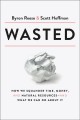 "Waste. We spend a great deal of energy trying to avoid it, but once you train your eyes to look for it, you'll see it all around you-in your home, your business, and your everyday life. In Wasted, futurist Byron Reese and entrepreneur Scott Hoffman take readers on a fascinating journey through this modern world of waste, drawing on science, economics, and human behavior to envision what a world with far less of it-or none of it at all-might look like. Along the way, they explore thought-provoking issues such as why the United States got a higher proportion of its energy from renewable sources in 1950 than it does today, whether the amount of gold in unused consumer electronics can be mined for profit, how switching to water fountains on a single flight from Singapore to Newark could prevent the use of 3,400 plastic bottles, whether the amount of money you save buying goods in bulk is offset by the amount you lose when some spoil. Ultimately, the question of reducing waste is scientific, philosophical, and, most of all, complex. According to Reese and Hoffman, the rush toward simple answers has often led to well-meaning efforts that cause more waste than they save. The only way we can hope to make progress is to treat waste as the complicated issue it is. While the authors don't promise easy answers, in this compelling book they take an important step toward solutions by examining the questions at play, giving actionable steps, and ensuring that you'll never see the world of waste the same way again"--
- Subjects: Environmental ethics.; Recycling (Waste, etc.); Refuse and refuse disposal;
- Available copies: 1 / Total copies: 1
-
unAPI
- The white angel : a mystery / by Gray, John,1946-author.;
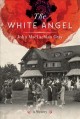 "Vancouver is in an uproar over the death by gunshot of a Scottish nanny, Janet Stewart. An almost deliberately ham-handed police investigation has Constable Hook suspecting a cover-up. The powerful United Council of Scottish Societies is demanding an inquiry. The killing has become a political issue with an election not far away. The city is buzzing with rumours. Miss Stewart's fellow nannies have accused the Chinese houseboy of murder, capitalizing on a wave of anti-Chinese propaganda led by the Asian Exclusion League and enthusiastically supported by the sensational press--not to mention the Ku Klux Klan, which has taken up residence in upperclass Shaughnessy. The White Angel is a work of fiction inspired by the cold case of Janet Smith, who, on July 26, 1924, was found dead in her employer's posh Shaughnessy Heights mansion. A dubious investigation led to the even more dubious conclusion that Smith died by suicide. After a public outcry, the case was re-examined and it was decided that Smith was in fact murdered; but no one was ever convicted, though suspects abounded--from an infatuated Chinese houseboy to a drug-smuggling ring, devil-worshippers from the United States, or perhaps even the Prince of Wales. For Vancouver, the killing created a situation analogous to lifting a large flat rock to expose the creatures hiding underneath. An exploration of true crime through a literary lens, The White Angel draws an artful portrait of Vancouver in 1924 in all its opium-hazed, smog-choked, rain-soaked glory--accurate, insightful and darkly droll."--
- Subjects: Detective and mystery fiction.; Historical fiction.; Biographical fiction.; Smith, Janet, -1924,; Murder; Nannies;
- Available copies: 1 / Total copies: 1
-
unAPI
- Secrets of the sprakkar : Iceland's extraordinary women and how they are changing the world / by Reid, Eliza,author.;
 Includes bibliographical references."Iceland is the best place on earth to be a woman--but why? For the past twelve years, the World Economic Forum's Global Gender Gap Report has ranked Iceland number one on its list of countries closing the gap in equality between men and women. What is it about Iceland that makes many women's experience there so positive? Why has their society made such meaningful progress in this ongoing battle, from electing the world's first female president to passing legislation specifically designed to help even the playing field at work and at home? And how can we learn from what Icelanders have already discovered about women's powerful place in society and how increased fairness benefits everyone? Eliza Reid, the First Lady of Iceland, examines her adopted homeland's attitude toward women--the deep-seated cultural sense of fairness, the influence of current and historical role models, and, crucially, the areas where Iceland still has room for improvement. Reid's own experience as an immigrant from small-town Canada who never expected to become a first lady is expertly interwoven with interviews with dozens of sprakkar ("extraordinary women") to form the backbone of an illuminating discussion of what it means to move through the world as a woman, and how the rules of society play more of a role in who we view as "equal" than we may understand. Secrets of the Sprakkar is a powerful and atmospheric portrait of a tiny country that could lead the way forward for us all"--
- Subjects: Women; Women; Women;
- Available copies: 1 / Total copies: 1
-
unAPI
- Who we are : four questions for a life and a nation / by Sinclair, Murray,1951-author.; Sinclair, Niigaanwewidam James,author.; Sinclair, Sara,author.;
 "Judge, senator, and activist. Father, grandfather, and friend. This is Murray Sinclair's story--and the story of a nation--in his own words, an oral history that forgoes the trappings of the traditional written memoir to center Indigenous ways of knowledge and storytelling. As Canada moves forward into the future of reconciliation, one of its greatest leaders guides us to ask the most important and difficult question we can ask of ourselves: Who are we? For decades, Senator Sinclair has fearlessly educated Canadians about the painful truths of our history. He was the first Indigenous judge in Manitoba, and only the second Indigenous judge in Canadian history. He was the Chair of the Truth and Reconciliation Commission, and remains one of the foremost voices on Reconciliation. And now, for the first time, he will share his full story--and his full vision for our nation--with readers across Canada. Drawing on Senator Sinclair's unique experiences, and his perspectives regarding Indigenous identity, human rights, and justice in Canada, Who We Are will examine the roles of history, resistance, and resilience in the pursuit of finding that path forward, and healing the damaged relationship between Indigenous Peoples and non-Indigenous peoples in Canada. And in doing so, it will reveal Senator Sinclair's life in a new and direct way, exploring how all of these experiences shaped him as an Anishinaabe man, father, and grandfather. Structured around the four questions that have long shaped Senator Sinclair's thinking and worldview--Where do I come from? Where am I going? Why am I here? Who am I?--Who We Are will take readers into the story of his remarkable life as never before, while challenging them to embrace an inclusive vision for our shared future."--
- Subjects: Biographies.; Autobiographies.; Personal narratives.; Sinclair, Murray, 1951-; Indigenous men; Indigenous peoples; Indigenous peoples; First Nations judges; First Nations legislators; First Nations; First Nations; Ojibway;
- Available copies: 1 / Total copies: 1
-
unAPI
- After Life [electronic resource] : by Forman, Gayle.aut; cloudLibrary;
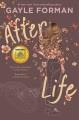 A Good Morning America Book Club YA Pick "Gayle Forman has an uncanny ability to create characters in which we see ourselves, and her latest—which looks at where love goes, after a loss—is an honest, heartbreaking elegy to how memory makes relationships eternal." —Jodi Picoult, #1 New York Times bestselling author "I was consumed by this thought-provoking, deftly written, multilayered novel. Gayle Forman reigns as the queen of breaking hearts with a touch of magic." —Adam Silvera, #1 New York Times bestselling author of They Both Die at the End One spring afternoon after school, Amber arrives home on her bike. It’s just another perfectly normal day. But when Amber’s mom sees her, she screams. Because Amber died seven years ago, hit by a car while on the very same bicycle she’s inexplicably riding now.  This return doesn’t only impact Amber. Her sister, Melissa, now seven years older, must be a new kind of sibling to Amber. Amber’s estranged parents are battling over her. And the changes ripple farther and farther out: Amber’s friends, boyfriend, and even people she met only once have been deeply affected by her life and death. In the midst of everyone’s turmoil, Amber is struggling with herself. What kind of person was she? How and why was she given this second chance? This magnificent tour de force by acclaimed author Gayle Forman brilliantly explores the porous veil between life and death, examines the impact that one person can have on the world, and celebrates life in all its beautiful complexity.Young adult.
- Subjects: Electronic books.; Magical Realism; Family; Girls & Women; Death & Dying;
- © 2025., HarperCollins,
-
unAPI
- The lost sons of Omaha : two young men in an American tragedy / by Sexton, Joe,1959-author.;
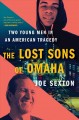 "On May 30, 2020, in Omaha, Nebraska, amid the protests that rocked our nation after George Floyd's death at the hands of police, thirty-eight-year-old white bar owner and Marine veteran Jake Gardner fatally shot James Scurlock, a twenty-two-year-old Black protestor and young father. What followed were two investigations of Scurlock's death, one conducted by the white district attorney Don Kleine, who concluded that Gardner had legally acted in self-defense and released without a trial, and a second grand jury inquiry conducted by African American special prosecutor Fred Franklin that indicted Gardner for manslaughter and demanded he face trial. Days after the indictment, Gardner killed himself with a single bullet to the head. The deaths of both Scurlock and Gardner gave rise to a toxic brew of misinformation, false claims, and competing political agendas. The two men, each with their own complicated backgrounds, were turned into grotesque caricatures. Between the heated debates and diatribes, these twin tragedies amounted to an ugly and heartbreaking reflection of a painfully divided country. Here, Joe Sexton masterfully unpacks the whole twisting, nearly unbelievable chronicle into a meticulously reported and nuanced account of the two deaths, explaining which claims were true and which distorted or simply false. The Lost Sons of Omaha carefully examines some of the most pressing issues facing America today, including our country's dire need for gun control and mental health reform; the dangerous spread of fake news, particularly on social media; and the urgent call to band together in the collective pursuit of truth, fairness, and healing"--
- Subjects: Murder victims; Trials (Manslaughter);
- Available copies: 1 / Total copies: 1
-
unAPI
- Knowing what we know [text (large print)] : the transmission of knowledge, from ancient wisdom to modern magic / by Winchester, Simon,author.;
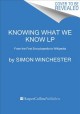 Includes bibliographical references."With the advent of the internet, any topic we want to know about is instantly available with the touch of a smartphone button. With so much knowledge at our fingertips, what is there left for our brains to do? At a time when we seem to be stripping all value from the idea of knowing things--no need for math, no need for map-reading, no need for memorization--are we risking our ability to think? As we empty our minds, will we one day be incapable of thoughtfulness? Addressing these questions, Simon Winchester explores how humans have attained, stored, and disseminated knowledge. Examining such disciplines as education, journalism, encyclopedia creation, museum curation, photography, and broadcasting, he looks at a whole range of knowledge diffusion--from the cuneiform writings of Babylon to the machine-made genius of artificial intelligence, by way of Gutenberg, Google, and Wikipedia to the huge Victorian assemblage of the Mundanaeum, the collection of everything ever known, currently stored in a damp basement in northern Belgium. Studded with strange and fascinating details, Knowing What We Know is a deep dive into learning and the human mind. Throughout this fascinating tour, Winchester forces us to ponder what rational humans are becoming. What good is all this knowledge if it leads to lack of thought? What is information without wisdom? Does Rene Descartes's Cogito, ergo sum--'I think therefore I am,' the foundation for human knowledge widely accepted since the Enlightenment--still hold? And what will the world be like if no one in it is wise?"--
- Subjects: Large print books.; Information behavior.; Knowledge, Sociology of.; Thought and thinking.; Information technology; Technology;
- Available copies: 1 / Total copies: 1
-
unAPI
Results 641 to 650 of 896 | « previous | next »