Results 71 to 80 of 109 | « previous | next »
- Whatever it took : an army paratrooper's D-day, capture, and escape from Nazi concentration camps / by Langrehr, Henry,author.; DeFelice, Jim,1956-author.;
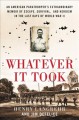 Includes bibliographical references.Published to mark the 75th anniversary of VE Day, an unforgettable never-before-told first-person account of World War II: the true story of an American paratrooper who survived D-Day, was captured and imprisoned in a Nazi work camp, and made a daring escape to freedom. Now at 95, one of the few living members of the Greatest Generation shares his experiences at last in one of the most remarkable World War II stories ever told. As the Allied Invasion of Normandy launched in the pre-dawn hours of June 6, 1944, Henry Langrehr, an American paratrooper with the 82nd Airborne, was among the thousands of Allies who parachuted into occupied France. Surviving heavy anti-aircraft fire, he crashed through the glass roof of a greenhouse in Sainte-Mère-Église. While many of the soldiers in his unit died, Henry and other surviving troops valiantly battled enemy tanks to a standstill. Then, on June 29, Henry was captured by the Nazis. The next phase of his incredible journey was beginning. Kept for a week in the outer ring of a death camp, Henry witnessed the Nazis' unspeakable brutality - the so-called Final Solution, with people marched to their deaths, their bodies discarded like cords of wood. Transported to a work camp, he endured horrors of his own when he was forced to live in unbelievable squalor and labor in a coal mine with other POWs. Knowing they would be worked to death, he and a friend made a desperate escape. When a German soldier cornered them in a barn, the friend was fatally shot; Henry struggled with the soldier, killing him and taking his gun. Perilously traveling westward toward Allied controlled land on foot, Henry faced the great ethical and moral dilemmas of war firsthand, needing to do whatever it took to survive. Finally, after two weeks behind enemy lines, he found an American unit and was rescued. Awaiting him at home was Arlene, who, like millions of other American women, went to work in factories and offices to build the armaments Henry and the Allies needed for victory. Whatever It Took is her story, too, bringing to life the hopes and fears of those on the homefront awaiting their loved ones to return. A tale of heroism, hope, and survival featuring 30 photographs, Whatever It Took is a timely reminder of the human cost of freedom and a tribute to unbreakable human courage and spirit in the darkest of times.
- Subjects: Autobiographies.; Personal narratives.; Biographies.; Langrehr, Henry.; United States. Army; Parachute troops; Concentration camp escapes.; Prisoners of war; World War, 1939-1945; World War, 1939-1945; World War, 1939-1945;
- Available copies: 1 / Total copies: 1
-
unAPI
- Escaping Hitler : heroic true stories of great escapes in Nazi Europe / by Halls, Monty,author.;
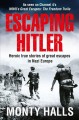 Includes bibliographical references (pages 301-303).Some of the most extraordinary stories of courage and endurance in the Second World War concern the freedom trails, the dangerous escape routes out of Nazi Occupied Europe. Over 5,000 British, Commonwealth and American servicemen made the journey over the Pyrenees, the Slovenian mountains and the Italian alps. Many also died en route, killed by the perilous conditions or caught by the German army. Here, Monty Halls recreates the stories of some of the most charismatic figures of the Second World War, men like Major Gordon Lett who escaped a POW camp in Italy and fought behind enemy lines at the head of the International Brigade. He was joined by an SAS team who took on the German army in Operation Galia and then, exhausted and pursued by the enemy, made a perilous escape across the Apennine mountains in Italy. There's also Australian Ralph Churches who orchestrated the mass escape of 100 POWs from Slovenia - the largest successful Allied escape of the entire war. And Len Harley, a Londoner who owed his life to a young Italian girl called Rosina. Monty also describes the bravery of the local people who sheltered POWs and kept the escape routes open - often paying a terrible price. Andree de Jongh risked her life to smuggle men through occupied France, survived being sent to two concentration camps, and has been described by MI-9 as 'the greatest of our war-time agents'. Mixing new research, interviews with survivors and his own experience of walking the trails, Monty brings the past to life in this dramatic and gripping slice of military history.
- Subjects: Halls, Monty; Escaped prisoners of war; Prisoner-of-war escapes; World War, 1939-1945; World War, 1939-1945;
- Available copies: 1 / Total copies: 1
-
unAPI
- Cassino '44 : the brutal battle for Rome / by Holland, James,1970-author.;
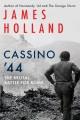 Includes bibliographical references and index."Acclaimed World War II historian James Holland vividly relates the dramatic last months of the Italian Campaign in a masterful volume that brings new awareness to this vital hinge point of the war. As the new year of 1944 began in Italy, the Allied army's momentum had ground to a halt just south of the vaunted German Gustav Line of defense, far short of their initial objective of liberating Rome by Christmas. The fighting up the Italian peninsula had been brutal -- rugged terrain, fierce resistance, terrible weather. While Allied leaders in London prepared for the cross-Channel invasion of France later that spring, the war in the West hinged in Italy. As bestselling historian James Holland relates in his seminal concluding volume on the Italy Campaign, the next five months saw two of World War II's most famous battles -- the four ferocious assaults on Monte Cassino and the fraught landing northwest in the marshes at Anzio -- culminating at last in the liberation of Rome on June 4, merely two days before D-Day. Based on twenty years of research, Cassino '44 offers perspectives and conclusions that differ from the standard narrative. Holland elevates the narrative of war, chronicling the dramatic events primarily through in-the-moment letters and diaries of those who were there. Counterpointing the memories of German soldiers like battalion commander Jurg Kellner with those of British captain John Strick and American corporal Audie Murphy, whose exploits in the field would lead to Hollywood fame, and of Italian citizens and politicians caught up in the maelstrom, Holland vividly recreates their day-to-day encounter with destiny over each bloodily contested mile. General Mark Clark, overall Allied commander in Italy, has been criticized for being overly cautious and needlessly extending the campaign. Holland argues that, given the conditions and constant shortage of materiel held back for the D-Day invasion, Clark and other commanders led a remarkably successful campaign. Well more than 100,000 Allied casualties occurred in the five months leading to Rome, more than in any other campaign of the war. Cassino '44 is the definitive account of a key turning point of World War II and brings our appreciation of the experience of war to a new level"--
- Subjects: Cassino, Battle of, Cassino, Italy, 1944.; World War, 1939-1945;
- Available copies: 1 / Total copies: 1
-
unAPI
- The last million : Europe's displaced persons from World War to Cold War / by Nasaw, David,author.;
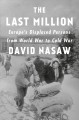 Includes bibliographical references and index."In May of 1945, German forces surrendered to the Allied powers, effectively putting an end to World War II in Europe. But the aftershocks of this global military conflict did not cease with the signing of truces and peace treaties. Millions of lost and homeless POWs, slave laborers, political prisoners, and concentration camp survivors overwhelmed Germany, a country in complete disarray. British and American soldiers gathered the malnourished and desperate foreigners, and attempted to repatriate them to Poland, Estonia, Latvia, Lithuania, Ukraine, and the USSR. But after exhaustive efforts, there remained over a million displaced persons who either refused to go home or, in the case of many, had no home to which to return. They would spend the next three to five years in displaced persons camps, divided by nationalities, temporary homelands in exile, with their own police forces, churches, schools, newspapers, and medical facilities. The international community couldn't agree on the fate of the Last Million, and after a year of fruitless debate and inaction, an International Refugee Organization was created to resettle them in lands suffering from labor shortages. But no nations were willing to accept the 200,000 to 250,000 Jewish men, women, and children who remained trapped in Germany. In 1948, the United States, among the last countries to accept anyone for resettlement, finally passed a Displaced Persons Bill - but as Cold War fears supplanted memories of WWII atrocities, the bill only granted visas to those who were reliably anti-communist, including thousands of former Nazi collaborators, Waffen-SS members, and war criminals, while barring the Jews who were suspected of being Communist sympathizers or agents because they had been recent residents of Soviet-dominated Poland. Only after the passage of the controversial UN resolution for the partition of Palestine and Israel's declaration of independence were the remaining Jewish survivors finally able to leave their displaced persons camps in Germany."--
- Subjects: United Nations Relief and Rehabilitation Administration.; International Refugee Organization.; World War, 1939-1945; Refugees; Refugees; Jewish refugees; Political refugees; Jews; Humanitarianism; World War, 1939-1945;
- Available copies: 1 / Total copies: 1
-
unAPI
- I will come back for you : a family torn apart by war and a son's search to save them / by Huhn, Daniel,author.; Stanyon, Rachel,translator.; translation of:Huhn, Daniel.Rückeroberung.English.;
 Includes bibliographical references.A gripping account of hidden identity, military courage, and an against-all-odds reunion. Four days after Germany's surrender in May 1945, a young British officer took a jeep and headed east into Germany. But this was no ordinary soldier. Manfred Gans was searching for his family. As a Jewish boy in Nazi Germany, Gans had fled to England. As soon as he could, he signed up to fight, serving in the legendary British 'Three Troop', an elite unit made up of German-speaking refugees, and joining in the D-Day Normandy landings. Working undercover, he obtained vital intelligence, helped liberate occupied France and the Netherlands, and saved countless lives on both sides of the front. All the while, he dreamed of being reunited with his family, still trapped behind enemy lines, and with his childhood sweetheart, Anita. As the war ended, chaos reigned in Germany: defeated Wehrmacht soldiers faced columns of American and British soldiers, concentration camp survivors crossed paths with SS guards, and Soviet military roadblocks controlled the route to the east. Manfred overcame all of these, finally reaching the place where his parents had last been seen: Theresienstadt.
- Subjects: Biographies.; Personal narratives.; Gans, Manfred.; Great Britain. Combined Operations Command. Commando, 10th. No. 3 Troop.; Holocaust, Jewish (1939-1945); Jewish refugees; Jewish soldiers; Jews, German; World War, 1939-1945; World War, 1939-1945;
- Available copies: 1 / Total copies: 1
-
unAPI
- The Californians : a novel / by Castleberry, Brian,author.;
 "It's 2024, and Tobey Harlan-college dropout, temporary waiter, recently dumped-steals from the wall of his father's house three paintings by the venerated and controversial artist Di Stiegl. Tobey's just lost everything he owns to a Northern California wildfire, and if he can sell the paintings (albeit in a shady way to an infamous tech bro) he can start life anew in a place no one will ever find him, perhaps even Oregon. A hundred years before, Klaus Aaronsohn-German-Jewish immigrant, resident of the Lower East Side-inveigles his way into a film studio in Astoria, Queens. In love with silent cinema, Klaus restyles himself Klaus von Stiegl, a mysterious aristocratic German film director. In true Hollywood fashion, he will court fame, fortune, romance, and betrayal, and end his career directing Brackett: a radical, notorious 60s-era detective show. Weaving between Tobey and Klaus is the story of Diane "Di" Stiegl: Klaus's granddaughter, raised in Palm Springs, who claws out a career as an artist in gritty '80s NYC. As America yields the presidency to a Hollywood cowboy, as Diane's grifter father and free-spirited mother circle in and out of her life, Diane will reflect America's most urgent and hypocritical years back to itself, uneasily finding critical adoration as well as great fame and wealth. As dazzling as it is moving, The Californians is an ambitious and sweeping journey across a century. Nuanced and textured, gloriously funny, a critical portrait of the collective American consciousness that has brought us to today, it showcases Brian Castleberry as an inventive, stylish storyteller and a sharp observer of the human condition"--
- Subjects: Historical fiction.; Sagas.; Novels.; Families; Intergenerational relations; Interpersonal relations; Women artists;
- Available copies: 1 / Total copies: 1
-
unAPI
- Escape from the edge / by Schnitzer, Morris,author.; Azrieli Foundation,publisher.;
 "Narrow escapes and bold decisions define the life of young Morris Schnitzer during World War II. Fleeing from Nazi Germany after the violence of Kristallnacht, with his father's warning to never set foot in a concentration camp echoing in his mind, Morris resolves to fight--and survive. As he assumes three different false identities and crosses countless borders in search of safety, Morris poses as a farmhand in the Netherlands, is arrested and turned away from safety in Switzerland, is jailed in France, joins the resistance in Belgium, and, ultimately, enlists in the American army, vowing to take revenge for all that he has lost. (Holocaust survivor memoir by a prominent Canadian who was a fellow of the Royal Society of Canada. He grew up in Germany and witnessed Kristallnacht, and escaped from Germany to the Netherlands on a Kindertransport.)"--Provided by publisher.
- Subjects: Biographies.; Autobiographies.; Schnitzer, Morris.; Holocaust, Jewish (1939-1945); Jewish children in the Holocaust; Jews, German; Holocaust survivors;
- Available copies: 1 / Total copies: 1
-
unAPI
- The Alice Network / by Quinn, Kate,author.;
 Includes bibliographical references."It's 1947 and American college girl Charlie St. Clair is pregnant, unmarried, and on the verge of being thrown out of her very proper family. She's also nursing a fervent belief that her beloved French cousin Rose, who disappeared in Nazi-occupied France during the war, might still be alive somewhere. So when Charlie's family banishes her to Europe to have her "little problem" take care of, Charlie breaks free and heads to London determined to find out what happened to the cousin she loves like a sister. In 1915, Eve Gardiner burns to join the fight against the Germans and unexpectedly gets her chance to serve when she's recruited to work as a spy for the English. Sent into enemy-occupied France during The Great War, she's trained by the mesmerizing Lili, the "Queen of Spies", who manages a vast network of secret agents, right under the enemy's nose. Thirty years later, haunted by the betrayal that ultimately tore apart the Alice Network, Eve spends her days drunk and secluded in her crumbling London house. Until a young American barges in uttering a name Eve hasn't heard in decades, and launching them both on a mission to find the truth ... no matter where it leads"--
- Subjects: Historical fiction.; Spy fiction.; War fiction.; Women spies; World War, 1914-1918;
- Available copies: 0 / Total copies: 1
-
unAPI
- Barbieland : the unauthorized history / by Hitt, Tarpley,author.;
 Includes bibliographical references and index.The secret history of Barbie and what Mattel has done to keep her on top. For nearly seven decades, Mattel billed Barbie as the first adult doll -- a revolutionary alternative to the baby dolls before her, which had treated little girls as future mothers rather than future women. But Barbie was no original. She was a knockoff: a nearly identical copy of a German doll now erased from the narrative in favour of Mattel's preferred version of history. It was Barbie's first secret but far from her last. In Barbieland, journalist and The Drift editor Tarpley Hitt exposes the long-hidden backstory of the world's most famous doll. After snuffing out her predecessor, Barbie climbed to the throne of global girlhood and stayed there, fending off rivals with a mix of strategic marketing, government influence, ruthless litigation, and covert tactics worthy of a classic spy novel. This lively, authoritative ride through the underbelly of American business pulls back the curtain on the corporate titans, cultural influencers, and toyland rivals who shaped this icon's world -- from flawed founder Ruth Handler to convicted Wall Street fraudster (and improbable Barbie saviour) Michael Milken to the Bratz doll empire, which once put the brand on life support. Along the way, Hitt delves into the stories of the eccentrics and autocrats who brought Barbie to life through sheer force of will: a pair of ex-Nazi toymakers, a toy mogul friend of J. Edgar Hoover's, a swinging missile designer turned Barbie executive married to Zsa Zsa Gabor, and Mattel's mid-century Freudian marketeer, who saw the doll as a psychosexual skeleton key to controlling the American mind. Through investigative reporting, global archival research, and interviews with key players from across the Barbie extended universe, Barbieland lays bare the unseen -- and so often absurd -- work that made Mattel a multibillion-dollar business and turned Barbie into an institution: a symbol as synonymous with American soft power as Coca-Cola and McDonald's french fries.
- Subjects: Barbie (Fictitious character); Mattel, Inc.; Barbie dolls; Barbie dolls; Feminism.; Popular culture.; Toy industry.;
- Available copies: 0 / Total copies: 1
-
unAPI
- The curse of Pietro Houdini : a novel / by Miller, Derek B.,1970-author.;
 "August, 1943. Fourteen-year-old Massimo is all alone. Newly orphaned and fleeing from Rome after surviving the American bombing raid that killed his parents, Massimo is attacked by thugs and finds himself bloodied at the base of the Montecassino. It is there in the Benedictine abbey's shadow that a charismatic and cryptic man calling himself Pietro Houdini, the self-proclaimed 'Master Artist and confidante of the Vatican,' rescues Massimo and brings him up the mountain to serve as his assistant in preserving the treasures that lay within the monastery walls. But can Massimo believe what Pietro is saying, particularly when Massimo has secrets too? Who is this extraordinary man? When it becomes evident that Montecassino will soon become the front line in the war, Pietro Houdini and Massimo execute a plan to smuggle three priceless Titian paintings to safety down the mountain. They are joined by a nurse concealing a nefarious past, a café owner turned murderer, a wounded but chipper German soldier, and a pair of lovers along with their injured mule, Ferrari. Together they will lie, cheat, steal, fight, kill, and sin their way through battlefields to survive, all while smuggling the Renaissance masterpieces and the bag full of ancient Greek gold they have rescued from the 'safe keeping' of the Germans"--
- Subjects: Bildungsromans.; Historical fiction.; Novels.; Art; Monasteries; Orphans; Painting; Secrecy; Smugglers; World War, 1939-1945;
- Available copies: 1 / Total copies: 1
-
unAPI
Results 71 to 80 of 109 | « previous | next »