Results 241 to 250 of 252 | « previous | next »
- All in her head : the truth and lies early medicine taught us about women's bodies and why it matters today / by Comen, Elizabeth,author.;
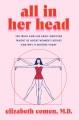 Includes bibliographical references and index.For as long as medicine has been a practice, woman's bodies have been treated like objects to be practiced on: examined and ignored, idealized and sexualized, shamed, subjugated, mutilated, and dismissed. The history of women's healthcare is a story in which women themselves have too often been voiceless-a narrative written from the perspective of men who styled themselves as authorities on the female of the species, uninformed by women's own voices, thoughts, fears, pain, and experiences. This continuing cultural and societal legacy results in the (mis)treatment and care of women. While the modern age has seen significant advancements in the medical field, the notion that female bodies are flawed inversions of the male ideal lingers on-as do the pervasive societal stigmas and ignorance that shape women's health and relationships with their own bodies. Memorial Sloan Kettering oncologist and medical historian Dr. Elizabeth Comen draws back the curtain on the collective medical history of women to reintroduce us to our whole bodies-how they work, the actual doctors and patients whose perspectives and experiences laid the foundation for today's medical thought, and the many oversights that remain unaddressed. With a physician's knowledge and empathy, Dr. Comen follows the road map of the eleven organ systems to share unique and untold stories, drawing upon medical texts and journals, interviews with expert physicians, as well as her own observations from treating thousands of women. Empowering women to better understand themselves and advocate for care that prioritizes healthy and joyful lives-for us and generations to come-'All In Her Head' is written with humor, wisdom, and deep scientific and cultural insight. Eye-opening, sometimes enraging, yet always captivating, this shared memoir of women's medical history is an essential contribution to a holistic understanding and a much-needed reclaiming of women's history and bodies.
- Subjects: Sexism in medicine.; Women's health services; Women; Women;
- Available copies: 1 / Total copies: 1
-
unAPI
- The good allies : how Canada and the United States fought together to defeat fascism during the Second World War / by Cook, Tim,1971-author.;
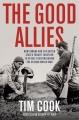 Includes bibliographical references and index."From our country's most important war historian, a gripping account of the turbulent relationship between Canada and the US during the Second World War. The two nations entered the war amidst rivalry and mutual suspicion, but learned to fight together before emerging triumphant and bound by an alliance that has lasted to this day. When the Second World War broke out in 1939, it set in motion a deadly struggle between the Axis powers and the Allies, but also fraught negotiations between and among the allies. On questions of diplomacy, economic policy, industrial might, military capabilities, and even national sovereignty, thousands of lives and the fate of the free world depended on back-room deals and desperate trade-offs between soldiers, diplomats, and leaders. In North America, Canada and the US strained to forge a new military alliance to guard their coasts and fend off German U-boats and the menace of a Japanese invasion. Wartime economies were entwined to produce a staggering contribution of weapons to keep Britain and other allies in the war. The defence of North America against enemy threats was essential before the US and Canada could send armies, navies, and air forces overseas. In his trademark style, Tim Cook employs eyewitness accounts to vividly lay bare the brutality of combat and the courage of North Americans under fire. Behind the fighting fronts, the charged and often secret communications between national leaders, Churchill, Roosevelt, and King, reveals how their personalities shaped the outcome of history's most destructive war, the fate of the British Empire, and the North American alliance that lives on to this day. The Good Allies is a masterful account of how Canadians and Americans made the transition from wary rivals to steadfast allies, and how Canada thrived in the shadow of the military and global superpower. In exploring this complex and crucial dimension of the Second World War and its legacy, Cook recounts two nations' story of cooperation, sacrifice, and of bleeding together to save the world from the fascist threat"--
- Subjects: World War, 1939-1945; World War, 1939-1945;
- Available copies: 1 / Total copies: 1
-
unAPI
- Vanderbilt : the rise and fall of an American dynasty / by Cooper, Anderson,author.; Howe, Katherine,1977-author.;
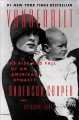 Includes bibliographical references and index.Anderson Cooper chronicles the rise and fall of a legendary American dynasty--his mother's family--the Vanderbilts. When eleven-year-old Cornelius Vanderbilt began to work on his father's small boat ferrying supplies in New York Harbor at the beginning of the nineteenth century, no one could have imagined that one day he would, through ruthlessness, cunning, and a pathological desire for money, build two empires-one in shipping and another in railroads-that would make him the richest man in America. His staggering fortune was fought over by his heirs after his death in 1877, sowing familial discord that would never fully heal. Though his son Billy doubled the money left by "the Commodore," subsequent generations competed to find new and ever more extraordinary ways of spending it. By 2018, when the last Vanderbilt was forced out of The Breakers-the seventy-room summer estate in Newport, Rhode Island, that Cornelius's grandson and namesake had built-the family would have been unrecognizable to the tycoon who started it all. Now, the Commodore's great-great-great-grandson Anderson Cooper, joins with historian Katherine Howe to explore the story of his legendary family and their outsized influence. Cooper and Howe breathe life into the ancestors who built the family's empire, basked in the Commodore's wealth, hosted lavish galas, and became synonymous with unfettered American capitalism and high society. Moving from the hardscrabble wharves of old Manhattan to the lavish drawing rooms of Gilded Age Fifth Avenue, from the ornate summer palaces of Newport to the courts of Europe, and all the way to modern-day New York, Cooper and Howe wryly recount the triumphs and tragedies of an American dynasty unlike any other. Written with a unique insider's viewpoint, this is a rollicking, quintessentially American history as remarkable as the family it so vividly captures.
- Subjects: Biographies.; Vanderbilt family.; Vanderbilt, Cornelius, 1794-1877.; Vanderbilt, Cornelius, 1794-1877; Vanderbilt, Gloria, 1924-2019; Businessmen; Millionaires; Railroads; Rich people; Socialites; Steamboats; Upper class families; Upper class; Wealth;
- Available copies: 1 / Total copies: 1
-
unAPI
- Black ghost of empire : the long death of slavery and the failure of emancipation / by Manjapra, Kris,1978-author.;
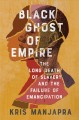 Includes bibliographical references and index."The 1619 Project illuminated the ways in which every aspect of life in the United States was and is shaped by the existence of slavery. Black Ghost of Empire focuses on emancipation and how this opportunity to make right further codified the racial caste system-instead of obliterating it. To understand why the shadow of slavery still haunts society today, we must not only look at what slavery was, but also the unfinished way it ended. One may think of "emancipation" as a finale, leading to a new age of human rights and universal freedoms. But in reality, emancipations everywhere were incomplete. In Black Ghost of Empire, acclaimed historian and professor Kris Manjapra identifies five types of emancipation--explaining them in chronological order--along with the lasting impact these transitions had on formerly enslaved groups around the Atlantic. Beginning in 1770s and concluding in 1880s, different kinds of emancipation processes took place across the Atlantic world. These included the Gradual Emancipations of North America, the Revolutionary Emancipation of Haiti, the Compensated Emancipations of European overseas empires, the War Emancipation of the American South, and the Conquest Emancipations that swept across Sub-Saharan Africa. Tragically, despite a century of abolitions and emancipations, systems of social bondage persisted and reconfigured. We still live with these unfinished endings today. In practice, all the slavery emancipations that have ever taken place reenacted racial violence against Black communities, and reaffirmed commitment to white supremacy. The devil lurked in the details of the five emancipation processes, none of which required atonement for wrongs committed, or restorative justice for the people harmed. Manjapra shows how, amidst this unfinished history, grassroots Black organizers and activists have become custodians of collective recovery and remedy; not only for our present, but also for our relationship with the past. Timely, lucid, and crucial to our understanding of the ongoing "anti-mattering" of Black people, Black Ghost of Empire shines a light into the deep gap between the idea of slavery's end and its actual perpetuation in various forms--exposing the shadows that linger to this day"--
- Subjects: Liberty; Race relations; Slavery;
- Available copies: 1 / Total copies: 1
-
unAPI
- Under assault : interference and espionage in China's secret war against Canada / by Molinaro, Dennis G.,author.;
 Includes bibliographical references and index."National security expert Dennis Molinaro reveals the shocking details of Beijing's five-decades-long effort to influence and interfere in Canadian political life. From cultivating future political leaders at the end of the Cultural Revolution to the foreign-interference scandals that have shaken present-day Ottawa, this definitive book addresses one of the most pressing issues of our time. Amidst heightened tensions between Western nations and China, Canadians have found themselves astonished by hostage crises, cyberattacks, harassment of members of our government, and theft of intellectual property worth untold billions of dollars. From Prime Minister Pierre Trudeau's earliest journeys through the "Middle Kingdom" prior to his election to Parliament in the 1960s, the communist government of the People's Republic of China has perceived Canada as a staging ground for spying on and pressuring its ultimate target, the United States. As Canada's first tech giant, Nortel, was plundered of intellectual property by digital spies; as Canada was manipulated into advocating against the independence of Taiwan, infuriating our closest ally; and as Chinese Canadians were targeted in the country where they thought they'd escaped Mao's terrors, Canada's leaders have too often seen only what they want to see in China: an emerging market of inestimable value, and fertile soil for democratic change for a long-tyrannized people. Generations of Communist leadership have gladly allowed Canada to labour under these misapprehensions, even when the evidence of China's spying, theft, and harassment of Canadian citizens has been happening right before their eyes. The intelligence has always been available, but Canada has rarely allowed itself to believe what the rest of the world has long understood. Thoroughly researched and guided by the author's experience as a historian and China specialist in Canadian intelligence, and informed by numerous interviews with generations of Canadian politicians, diplomats and bureaucrats, as well as members of Canada's Chinese community who have endured this harassment for too long, Shadows of the Dragon is a timely, eye-opening account of a country compromised by its own illusions in a time of rising global conflict"--
- Subjects: Espionage, Chinese;
- Available copies: 1 / Total copies: 1
-
unAPI
- The Lighthouse of Stalingrad : the hidden truth at the heart of the greatest battle of World War II / by MacGregor, Iain,author.;
 Includes bibliographical references and index."A thrilling, vivid, and highly detailed account of the epic siege during one of World War II's most important battles, told by the brilliant British editor-turned-historian and author of Checkpoint Charlie, Iain MacGregor. To the Soviet Union, the sacrifices that enabled the country to defeat Nazi Germany in World War II are sacrosanct. The foundation of the Soviets' hard-won victory was laid during the battle for the city of Stalingrad, resting on the banks of the river Volga. To Russians it was a pivotal landmark of their nation's losses, with more than two million civilians and combatants either killed, wounded, or captured during the bitter fighting from September 1942 to February 1943. Both sides endured terrible conditions in brutal, relentless house-to-house fighting. Within this life-and-death struggle, Soviet war correspondents lauded the fight for a key strategic building in the heart of the city, "Pavlov's House," which was situated on the frontline and codenamed "The Lighthouse." The legend grew of a small garrison of Russian soldiers from the 13th Guards Rifle Division holding out against the Germans of the Sixth Army, which had battled its way to the very center of Stalingrad. A report about the battle in a local Red Army newspaper would soon grow and be repeated on Moscow radio and in countless national newspapers. By the end of the war, the legend would gather further momentum and inspire Russians to rebuild their destroyed towns and cities. This story has become a pillar of the Stalingrad legend and one that can now be analyzed and told accurately. The Lighthouse of Stalingrad sheds new light on this iconic battle through the prism of the two units who fought for the very heart of the city itself. Iain MacGregor traveled to both German and Russian archives to unearth previously unpublished testimonies by soldiers on both sides of the conflict. His riveting narrative lays to rest the questions as to the identity of the real heroes of this epic battle for one of the city's most famous buildings and provides authoritative answers as to how the battle finally ended and influenced the conclusion of the siege of Stalingrad"--
- Subjects: Germany. Heer. Infanterie-Division, 71.; Soviet Union. Raboche-Krestʹi͡anskai͡a Krasnai͡a Armii͡a. Gvardeĭskai͡a strelkovai͡a divizii͡a, 13-i͡a.; Dom Pavlova (Volgograd, Russia); Stalingrad, Battle of, Volgograd, Russia, 1942-1943.; World War, 1939-1945;
- Available copies: 1 / Total copies: 1
-
unAPI
- Chastise : the Dambusters story 1943 / by Hastings, Max,author.;
 Includes bibliographical references and index.A brand new history of the Dambusters raid from best-selling and critically acclaimed military historian, Max Hastings. Operation Chastise, the destruction of the Mohne and Eder dams in northwest Germany by the RAF's 617 Squadron on the night of 16/17 May 1943, was an epic that has passed into Britain's national legend. Max Hastings grew up embracing the story, the classic 1955 movie and the memory of Guy Gibson, the 24-year-old wing-commander who led the raid. In the 21st Century, however, he urges that we should see the dambusters in much more complex shades. The aircrew's heroism was entirely real, as was the brilliance of Barnes Wallis, inventor of the ‘bouncing bombs'. But commanders who promised their young fliers that success could shorten the war fantasised as ruthlessly as they did about the entire bomber offensive. Some 1,400 civilians perished in the biblical floods that swept through the Mohne valley, more than half of them Russian and Polish women, slave labourers. Hastings vividly describes the evolution of Wallis' bomb, and of the squadron which broke the dams. But he also portrays in harrowing detail those swept away by the torrents. He argues that what modern Germans call the Mohnekatastrophe imposed on the Nazi war machine temporary disruption, rather than a crippling blow. Ironically, Air Marshal Sir Arthur ‘Bomber' Harris gained much of the public credit, though he bitterly opposed Chastise as a distraction from his city-burning blitz. Harris also made perhaps the operation's biggest mistake-- failure to launch a conventional attack on the huge post-raid repair operation which could have transformed the impact of the dam breaches on Ruhr industry. Here once again is a dramatic retake on familiar history by a master of the art. Hastings sets the Dams Raid in the big picture of the bomber offensive and of the Second World War, with moving portraits of the young airmen, so many of whom died; of Barnes Wallis; the monstrous Harris; the tragic Guy Gibson, together with superb narrative of the action of one of the most extraordinary episodes in British history.
- Subjects: Great Britain. Royal Air Force. Squadron, 617; Dams; Operation Chastise, 1943.; World War, 1939-1945; World War, 1939-1945;
- Available copies: 1 / Total copies: 1
-
unAPI
- The savage storm : the battle for Italy 1943 / by Holland, James,1970-author.;
 Includes bibliographical references and index."Acclaimed WWII historian James Holland both narrates and reframes the controversial first months of the Italian Campaign and sets a new standard in the chronicling of war. Following victory in Sicily, while the central command planned the spring 1944 invasion of France, Allied troops crossed into southern Italy in September 1943, expecting to drive Axis forces north and liberate Rome by Christmas. Italy quickly surrendered but German divisions fiercely resisted, and the hoped-for quick victory descended into one of the most challenging and protracted battles of the entire war. Chronicling the dramatic opening months of the Italian Campaign in unflinching and insightful detail, The Savage Storm is unlike any campaign history yet written. Holland has always narrated war at ground level, but here goes further by chronicling events almost entirely through the contemporary eyes of those who were there on all sides and at all levels-Allied, Axis, and civilians alike. Weaving together a wealth of letters, diaries, and other documents-from the likes of American General Mark Clark, German battalion commander Georg Zellner, New Zealand lance-corporal Roger Smith, and legendary war reporter Ernie Pyle-Holland traces the battles as they were experienced across plains, over mountains, through shattered villages and cities, in intense heat and, towards the end of December 1943, frigid cold and relentless rain. Such close-up views persuade Holland to recast important aspects of the campaign, reappraising the reputation of Mark Clark himself and other senior commanders of the U.S. Fifth and British Eighth armies. Given the shortage of Allied shipping and materiel allocated to Italy because of the build-up for D-Day, more was expected of Allied troops in Italy than anywhere else, and, as accounts at the time attest, a huge price was paid by everyone for each bloodily contested mile. Putting readers vividly in the moment as events unfolded, with characters made unforgettable by their own words, The Savage Storm is a defining account of the pivotal months leading to Monte Cassino, and a landmark in the writing about war"--
- Subjects: World War, 1939-1945; World War, 1939-1945;
- Available copies: 1 / Total copies: 1
-
unAPI
- The eagle and the hart : the tragedy of Richard II and Henry IV / by Castor, Helen,author.;
 Includes bibliographical references and index."From an acclaimed historian and author comes an epic history: the dual biography of Richard II and Henry IV, two cousins whose lives played out in extraordinary parallel, until Henry deposed the tyrant Richard and declared himself King of England. Richard of Bordeaux and Henry of Bolingbroke, cousins born just three months apart, were ten years old when Richard became king of England. They were thirty-two when Henry deposed him and became king in his place. Now, the story behind one of the strangest and most fateful events in English history (and the inspiration behind Shakespeare's most celebrated history plays) is brought to vivid life by the acclaimed author of Blood and Roses, Helen Castor. Richard had birthright on his side, and a profound belief in his own God-given majesty. But beyond that, he lacked all qualities of leadership. A narcissist who did not understand or accept the principles that underpinned his rule, he was neither a warrior defending his kingdom, nor a lawgiver whose justice protected his people. Instead, he declared that "his laws were in his own mouth," and acted accordingly. He sought to define as treason any resistance to his will and recruited a private army loyal to himself rather than the realm-and he intended to destroy those who tried to restrain him. Henry was everything Richard was not: a leader who inspired both loyalty and friendship, a soldier and a chivalric hero, dutiful, responsible, principled. After years of tension and conflict, Richard banished him and seized his vast inheritance. Richard had been crowned a king but he had become a tyrant, and as a tyrant-ruling by arbitrary will rather than established law-he was deposed by his cousin Henry, the only possible candidate to take his place. Henry was welcomed as a liberator, a champion of the people against his predecessor's paranoid despotism. But within months he too was facing rebellion. Men knew that a deposer could in turn be deposed, and the new king found himself buffeted by unrest and by chronic ill-health until he seemed a shadow of his former self, trapped by political uncertainty and troubled by these signs that God might not, after all, endorse his actions. Captivating, immersive, and highly relevant to today's times, The Eagle and the Hart is a story about what happens when a ruler prioritizes power over the interests of his own people. When a ruler demands loyalty to himself as an individual, rather than duty to the established constitution, and when he seeks to reshape reality rather than concede the force of verifiable truths. Above all, it is a story about how a nation was brought to the brink of catastrophe and disintegration-and, in the end, how it was brought back"--
- Subjects: Biographies.; Personal narratives.; Richard II, King of England, 1367-1400.; Henry IV, King of England, 1367-1413.;
- Available copies: 1 / Total copies: 1
-
unAPI
- Madame Restell : the life, death, and resurrection of old New York's most fabulous, fearless, and infamous abortionist / by Wright, Jennifer,1986-author.;
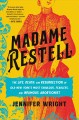 Includes bibliographical references and index."Madame Restell is a sharp, witty Gilded Age medical history which introduces us to an iconic, yet tragically overlooked, feminist heroine: a glamorous women's healthcare provider in Manhattan, known to the world as Madame Restell. A celebrity in her day with a flair for high fashion and public, petty beefs, Restell was a self-made woman and single mother who used her wit, her compassion, and her knowledge of family medicine to become one of the most in-demand medical workers in New York. Not only that, she used her vast resources to care for the most vulnerable women of the city: unmarried women in need of abortions, birth control, and other medical assistance. In defiance of increasing persecution from powerful men, Restell saved the lives of thousands of young women; in fact, in historian Jennifer Wright's own words, "despite having no formal training and a near-constant steam of women knocking at her door, she never lost a patient." Restell was a revolutionary who opened the door to the future of reproductive choice for women, and Wright brings Restell and her circle to life in this dazzling, sometimes dark, and thoroughly entertaining tale. In addition to uncovering the forgotten history of Restell herself, the book also doubles as an eye-opening look into the "greatest American scam you've never heard about": the campaign to curtail women's power by restricting their access to healthcare. Before the 19th century, abortion and birth control were not only legal in the United States, but fairly common, and public healthcare needs (for women and men alike) were largely handled by midwives and female healers. However, after the Birth of the Clinic, newly-minted male MDs wanted to push women out of their space--by forcing women back into the home and turning medicine into a standardized, male-only practice. At the same time, a group of powerful, secular men--threatened by women's burgeoning independence in other fields--persuaded the Christian leadership to declare abortion a sin, rewriting the meaning of "Christian morality" to protect their own interests. As Wright explains, "their campaign to do so was so insidious--and successful--that it remains largely unrecognized to this day, a century and a half later." By unraveling the misogynistic and misleading lies that put women's health in jeopardy, Wright simultaneously restores Restell to her rightful place in history and obliterates the faulty, fractured reasoning underlying the very foundation of what has since been dubbed the "pro-life" movement. Thought-provoking, character-driven, funny, and feminist as hell, Madame Restell is required reading for anyone and everyone who believes that when it comes to women's rights, women's bodies, and women's history, women should have the last word"--
- Subjects: Biographies.; Personal narratives.; Restell, Madame, 1811-1878; Restell, Madame, 1811-1878.; Abortion services; Abortion; Patent medicines; Trials (Abortion); Women in medicine;
- Available copies: 1 / Total copies: 1
-
unAPI
Results 241 to 250 of 252 | « previous | next »