Results 111 to 120 of 3,391 | « previous | next »
- Pests : how humans create animal villains / by Brookshire, Bethany,author.;
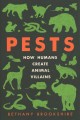 Includes bibliographical references (pages 297-330) and index."A squirrel in the garden. A rat in the wall. A pigeon on the street. Humans have spent so much of our history drawing a hard line between human spaces and wild places. When animals pop up where we don't expect or want them, we respond with fear, rage, or simple annoyance. It's no longer an animal. It's a pest. At the intersection of science, history, and narrative journalism, Pests is not a simple call to look closer at our urban ecosystem. It's not a natural history of the animals we hate. Instead, this book is about us. It's about what calling an animal a pest says about people, how we live, and what we want. It's a story about human nature, and how we categorize the animals in our midst, including bears and coyotes, sparrows and snakes. Pet or pest? In many cases, it's entirely a question of perspective. Bethany Brookshire's deeply researched and entirely entertaining book will show readers what there is to venerate in vermin, and help them appreciate how these animals have clawed their way to success as we did everything we could to ensure their failure. In the process, we will learn how the pests that annoy us tell us far more about humanity than they do about the animals themselves."--Publisher marketing.
- Subjects: Instructional and educational works.; Human-animal relationships.; Pests.;
- Available copies: 1 / Total copies: 1
-
unAPI
- You are weird : your body's peculiar parts and funny functions / by Swanson, Diane,1944-; Boake, Kathy.;
-

- Subjects: Human anatomy; Human body; Human physiology;
- © 2009., Kids Can Press,
- Available copies: 0 / Total copies: 1
-
unAPI
- Why you shouldn't eat your boogers : gross but true things you don't want to know about your body / by Gould, Francesca.; Coovert, J. P.; Gould, Francesca.Why is yawning contagious?;
 LSC
LSC- Subjects: Human body; Human anatomy; Human physiology;
- © c2013., Penguin Group,
- Available copies: 1 / Total copies: 1
-
unAPI
- How to be animal : a new history of what it means to be human / by Challenger, Melanie,author.;
 Includes bibliographical references and index."What makes us human, and why are we so sure we're different from other animals? Humans are the most inquisitive, emotional, imaginative, aggressive and baffling animals on the planet. But how well do we really know ourselves? How to Be Animal rewrites the remarkable human story and argues that at the heart of our psychology is a profound struggle with being animal. Most of our effects on the planet are the consequences of technological improvements and advances in our understanding of natural mechanisms. But why did this cognitive and technological edge come about in the first place and what kind of being has it made us? In How to Be Animal, Challenger brilliantly argues that this dizzying trajectory is the result of a singular characteristic of our species: the struggle with being an animal. Using a combination of memoir, historical texts, interweaving interviews and cultural and environmental history, How to Be Animal is lively and thought-provoking, bursting with ideas. This is a book for anyone who has ever contemplated what humans are and what makes our species so simultaneously brilliant and awful. Even more so, it is a book that asks tantalizing philosophical questions, such as whether and how human life matters. How to Be Animal is a tough-minded but ultimately sympathetic portrait of humanity. It exposes human beings as extraordinary animals defined by a profound struggle. In the third millennium, the way humans respond to being an animal among animals is the greatest and most inspiring challenge we face."--
- Subjects: Human beings; Human-animal relationships.;
- Available copies: 1 / Total copies: 1
-
unAPI
- Fossil men : the quest for the oldest skeleton and the origins of humankind / by Pattison, Kermit,author.;
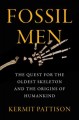 Includes bibliographical references and index."Fossil Men is the riveting science-adventure story of the brilliant team who discovered the "Ardi" skeleton, a human more than a million years older than the famous Lucy, and their 20-year quest to redefine our understanding of human evolution"--
- Subjects: Fossil hominids.; Human evolution.;
- Available copies: 1 / Total copies: 1
-
unAPI
- My body / by McDonald, Jill.;
 Young children are fascinated by their eyes, ears, nose, fingers, and toes. Now here is a board book that teaches toddlers all about the human body, with shapes, sizes, colors, and super-simple facts.LSC
- Subjects: Human body;
- Available copies: 1 / Total copies: 1
-
unAPI
- Book of the body and how it works / by Frith, Alex(Children's author); Stobbart, Darran.; Nilsson, Mia.;
 Follow the owl professor as he takes two children on a tour of a body. But not just any human body - a gigantic factory building built to explain how real bodies work, from cell 'building blocks' to conveyor belts that carry life-giving energy packets and transport defenders to repel germ attacks! This beautifully illustrated book will open children's eyes to the wonder and weirdness of what's going on inside them.
- Subjects: Human body; Human physiology;
- Available copies: 1 / Total copies: 1
-
unAPI
- Energy : a human history / by Rhodes, Richard,1937-author.;
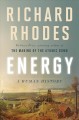 Includes bibliographical references and index.Pulitzer Prize and National Book Award-winning author Richard Rhodes reveals the fascinating history behind energy transitions over time--wood to coal to oil to electricity and beyond. People have lived and died, businesses have prospered and failed, and nations have risen to world power and declined, all over energy challenges. Ultimately, the history of these challenges tells the story of humanity itself. Through an unforgettable cast of characters, Pulitzer Prize-winning author Richard Rhodes explains how wood gave way to coal and coal made room for oil, as we now turn to natural gas, nuclear power, and renewable energy. Rhodes looks back on five centuries of progress, through such influential figures as Queen Elizabeth I, King James I, Benjamin Franklin, Herman Melville, John D. Rockefeller, and Henry Ford. In Energy, Rhodes highlights the successes and failures that led to each breakthrough in energy production; from animal and waterpower to the steam engine, from internal-combustion to the electric motor. He addresses how we learned from such challenges, mastered their transitions, and capitalized on their opportunities. Rhodes also looks at the current energy landscape, with a focus on how wind energy is competing for dominance with coal and natural gas. He also addresses the specter of global warming, and a population hurtling towards ten billion by 2100. Human beings have confronted the problem of how to draw life from raw material since the beginning of time. Each invention, each discovery, each adaptation brought further challenges, and through such transformations, we arrived at where we are today. In Rhodes's singular style, Energy details how this knowledge of our history can inform our way tomorrow.
- Subjects: Energy development; Energy development; Power resources; Power resources;
- Available copies: 1 / Total copies: 1
-
unAPI
- The once and future world : nature as it was, as it is, as it could be / by MacKinnon, J. B.(James Bernard),1970-;
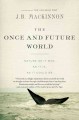 Includes bibliographical references and index.
- Subjects: Human ecology.; Nature; Restoration ecology.;
- © 2013., Random House Canada,
- Available copies: 1 / Total copies: 1
-
unAPI
- Rooted : life at the crossroads of science, nature, and spirit / by Haupt, Lyanda Lynn,author.;
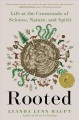 Includes bibliographical references.A beautifully written manifesto for our complex time, 'Rooted' inspires readers to deepen their connection with nature in unexpected ways, and to act powerfully on the earths behalf. From the author of 'Mozart's Starling', 'The Urban Bestiary', and 'Crow Planet'.
- Subjects: Human ecology.; Philosophy of nature.;
- Available copies: 1 / Total copies: 1
-
unAPI
Results 111 to 120 of 3,391 | « previous | next »