Results 31 to 40 of 97 | « previous | next »
- White horse / by Wurth, Erika T.,author.;
 "White Horse is a gritty, vibrant debut from Erika T. Wurth about an Indigenous woman who must face her past when she discovers a bracelet haunted by her mother's spirit. Some people are haunted in more ways than one. Old denim jackets, ripped jeans, Stephen King novels, and the occasional beer at the White Horse Lounge have defined urban Indian Kari James's life so far. But when her cousin Debby finds an old family bracelet that once belonged to Kari's mother, it inadvertently calls up both her mother's ghost and a monstrous entity, and her willful ignorance about her past is no longer sustainable ... Haunted by visions of her mother and hunted by this mysterious creature, Kari must search for what happened to her mother all those years ago. Her father, permanently disabled from a car crash, can't help her. Her Auntie Squeaker seems to know something, but isn't eager to give it all up at once. Debby's anxious to help, but her controlling husband keeps getting in the way. Kari's journey towards a truth long-denied by both her family and law enforcement forces her to confront her dysfunctional relationships, her spiritual beliefs, and her desire for the one thing she's always wanted but could never have"--
- Subjects: Horror fiction.; Ghost stories.; Novels.; Family secrets; Indigenous peoples; Indigenous women;
- Available copies: 1 / Total copies: 1
-
unAPI
- Indigenous peoples and the Second World War : the politics, experiences and legacies of war in the US, Canada, Australia and New Zealand / by Sheffield, R. Scott,author.; Riseman, Noah J.,author.;
 Includes bibliographical references and index."During the Second World War, Indigenous people in the United States, Australia, New Zealand and Canada mobilised en masse to support the war effort, despite withstanding centuries of colonialism. Their roles ranged from ordinary soldiers fighting on distant shores, to soldiers capturing Japanese prisoners on their own territory, to women working in munitions plants on the home front. R. Scott Sheffield and Noah Riseman examine Indigenous experiences of the Second World War across these four settler societies. Informed by theories of settler colonialism, martial race theory and military sociology, they show how Indigenous people and their communities both shaped and were shaped by the Second World War. Particular attention is paid to the policies in place before, during and after the war, highlighting the ways that Indigenous people negotiated their own roles within the war effort at home and abroad"--
- Subjects: Indigenous peoples; Indigenous peoples; World War, 1939-1945; World War, 1939-1945; World War, 1939-1945;
- Available copies: 1 / Total copies: 1
-
unAPI
- An ordinary violence : a novel / by Chartrand, Adriana,author.;
 Dawn hasn't spoken to her brother, Cody, since he was sent to prison for a violent crime seven years ago. Now living in a shiny new Toronto condo, Dawn is haunted by uncanny occurrences, including cryptic messages from her dead mother, that have followed her most of her life. When the life Dawn thought she wanted implodes, she is forced to return to her childhood home and the prairie city that hold so much pain for her and her fractured family. Cody is unexpectedly released from prison with a mysterious new friend by his side, who seems to be the charismatic leader of a dangerous supernatural network. Trying to uncover their plans, Dawn follows increasingly sinister leads until the lines between this world and the next, now and then, and right and wrong begin to blur and dissolve. What unfolds is an eerie, incisive, and at times darkly funny horror novel about a young Indigenous woman reckoning with trauma and violence, loss and reclamation in an unsettling world where spirit realms entwine with the living-and where it is humans who carry out the truly monstrous acts.
- Subjects: Paranormal fiction.; Novels.; Ex-convicts; Homecoming; Indigenous women; Right and wrong; Siblings;
- Available copies: 1 / Total copies: 1
-
unAPI
- When the pine needles fall : Indigenous acts of resistance / by Gabriel, Katsi'tsakwas Ellen,author.; Carleton, Sean,author.;
 Includes bibliographical references and index."There have been many things written about Canada's violent siege of Kanehsatà:ke and Kahnawà:ke in the summer of 1990 (the so-called Oka Crisis), but When the Pine Needles Fall: Indigenous Acts of Resistance is the first book from the perspective of Katsi'tsakwas Ellen Gabriel, who was the Kanien'kehá:ka (Mohawk) spokesperson during the siege. When the Pine Needles Fall, written in a conversational style by Gabriel with historian Sean Carleton, offers an intimate look at Gabriel's life leading up to the 1990 siege, her experiences as spokesperson for her community, and her work since then as an Indigenous land defender, human rights activist, and feminist leader. More than just the memoir of an extraordinary individual, When the Pine Needles Fall offers insight into Indigenous language, history, and philosophy, reflections on our relationship with the land, and calls to action against both colonialism and capitalism as we face the climate crisis. Gabriel's hopes for a decolonial future make clear why protecting Indigenous homelands is vital not only for the survival of Indigenous peoples, but for all who live on this planet"--
- Subjects: Biographies.; Autobiographies.; Personal narratives.; Gabriel, Katsi'tsakwas Ellen.; Government, Resistance to; Indigenous peoples; Indigenous peoples; Indigenous peoples; First Nations activists; First Nations women activists; First Nations; First Nations; First Nations; Kanyen'kehà:ka women; Kanyen'kehà:ka;
- Available copies: 1 / Total copies: 1
-
unAPI
- Blessing of the lost girls [text (large print)] / by Jance, Judith A.,author.;
 "Driven by a compulsion that challenges his self-control, the man calling himself Charles Milton prowls the rodeo circuit, hunting young women. For years, he has been meticulous in his methods, abducting, murdering, and disposing of his victims while leaving no evidence of his crimes--or their identities--behind. Indigenous women have become his target of choice, knowing law enforcement's history of ignoring their disappearances. A cold case has just been assigned to Dan Pardee, a field officer with the newly formed Missing and Murdered Indigenous People's Task Force. Rosa Rios, a young woman of Apache descent and one-time rodeo star, vanished three years ago. Human remains, a homicide victim burned beyond recognition, were discovered in Cochise County around the time she went missing. They have finally been confirmed to be Rosa. With Sheriff Joanna Brady's help, Dan is determined to reopen the case and bring long-awaited justice to Rosa's family. As the orphaned son of a murdered indigenous woman, he feels an even greater, personal obligation to capture this killer. Joanna's daughter Jennifer is also taking a personal interest in this case, having known Rosa from her own amateur rodeo days. Now a criminal justice major, she's unofficially joining the investigation. And as it becomes clear that Rosa was just one victim of a serial killer, both Jennifer and Dan know they're running out of time to catch an elusive predator who's proven capable of getting away with murder"--
- Subjects: Detective and mystery fiction.; Large print books.; Novels.; Brady, Joanna (Fictitious character); Cold cases (Criminal investigation); Indigenous women; Policewomen; Serial murder investigation; Sheriffs;
- Available copies: 0 / Total copies: 1
-
unAPI
- Dog flowers : a memoir / by Geller, Danielle,author.;
 "After Danielle Geller's mother dies of a vicious withdrawal from drugs while homeless, she is forced to return to Florida. Using her training as a librarian and archivist, Geller collects her mother's documents, diaries, and photographs into a single suitcase and begins on a journey of confronting her family, her harrowing past, and the decisions she's been forced to make, a journey that will end at her mother's home--the Navajo reservation. Geller masterfully intertwines wrenching prose with archival documents to create a deeply moving narrative of loss and inheritance that pays homage to our pasts, traditions, heritage, and the family we are given, and the ones we choose"--
- Subjects: Biographies.; Autobiographies.; Geller, Danielle.; Geller, Danielle; Navajo women; Indigenous peoples; Children of drug addicts;
- Available copies: 1 / Total copies: 1
-
unAPI
- The bone thief / by Lillie, Vanessa,author.;
 "When a Native teenager vanishes from her small town-a place with dark ties to an elite historical society-archaeologist Syd Walker is called to investigate ... from bestselling author Vanessa Lillie. In the hours before dawn at a local summer camp, Bureau of Indian Affairs archaeologist Syd Walker receives an alarming call: newly discovered skeletal remains have been stolen. Not only have bones gone missing, but a Native teen girl has disappeared near the camp, and law enforcement dismisses her family's fears. As Syd investigates both crimes, she's drawn into a world of privileged campers and their wealthy parents-most of them members of the Founders Society, an exclusive club whose members trace their lineage to the first colonists and claim ancestral rights to the land, despite fierce objections from the local tribal community. And it's not the first time something-or someone-has gone missing from the camp. The deeper Syd digs, the more she realizes these aren't isolated incidents. A pattern of disappearances stretches back generations, all leading to the Founders Society's doorstep. But exposing the truth means confronting not just the town's most powerful families, but also a legacy of violence that refuses to stay buried."--
- Subjects: Thrillers (Fiction); Novels.; Archaeologists; Indigenous women; Missing persons; Private clubs; Secrecy; Theft; Women archaeologists;
- Available copies: 1 / Total copies: 1
-
unAPI
- The secret pocket / by Janicki, Peggy.; Victor, Carrielynn,1982-;
 The true story of how Indigenous girls at a Canadian residential school sewed secret pockets into their dresses to hide food and survive. Mary was four years old when she was first taken away to the Lejac Indian Residential School. It was far away from her home and family. Always hungry and cold, there was little comfort for young Mary. Speaking Dakelh was forbidden and the nuns and priest were always watching, ready to punish. Mary and the other girls had a genius idea: drawing on the knowledge from their mothers, aunts and grandmothers who were all master sewers, the girls would sew hidden pockets in their clothes to hide food. They secretly gathered materials and sewed at nighttime, then used their pockets to hide apples, carrots and pieces of bread to share with the younger girls. Based on the author's mother's experience at residential school, The Secret Pocket is a story of survival and resilience in the face of genocide and cruelty. But it's also a celebration of quiet resistance to the injustice of residential schools and how the sewing skills passed down through generations of Indigenous women gave these girls a future, stitch by stitch.
- Subjects: Illustrated works.; Off-reservation boarding schools; Carrier Indians; Carrier Indians; Dakelh; Indigenous students; Indigenous peoples;
- Available copies: 2 / Total copies: 2
-
unAPI
- Truth telling : seven conversations about Indigenous life in Canada / by Good, Michelle,author.;
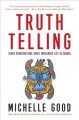 Includes bibliographical references."A bold, provocative examination of Canadian Indigenous issues from advocate, activist and award-winning novelist Michelle Good. Truth Telling is a collection of essays about the contemporary Indigenous experience in Canada. From resistance and reconciliation to the resurgence and reclamation of Indigenous power, Michelle Good explores the issues through a series of personal essays. The collection includes an expansion and update of her highly popular Globe and Mail article about "pretendians," as well as "A History of Violence," an essay that appeared in a book about missing and murdered women. Other pieces deal with topics such as discrimination against Indigenous children; what is meant by meaningful reconciliation; and the importance of the Indigenous literary renaissance of the 1970s. With authority, intelligence and insight, Michelle Good delves into the human cost of colonialism, showing how it continues to underpin social institutions in Canada and prevents meaningful and substantive reconciliation."--
- Subjects: Indigenous peoples; Indigenous peoples; Indigenous peoples; Indigenous peoples; Reconciliation.;
- Available copies: 1 / Total copies: 1
-
unAPI
- Exposure / by Emerson, Ramona,1973-author.;
 "A dual-voice cat-and-mouse thriller, told from the points of view of a killer who has created his own deadly religion and the only person who can stop him, an embattled young detective who sees the ghosts of his Native victims. In Gallup, New Mexico, where violent crime is five times the national average, a serial killer is operating unchecked, his targets indigent Native people whose murders are easily disguised as death by exposure on the frigid winter streets. He slips unnoticed through town, hidden in plain sight by his unassuming nature, while the voices in his head guide him toward a terrifying vision of glory. As the Gallup detectives struggle to put the pieces together, they consider calling in a controversial specialist to help. Rita Todacheene, Albuquerque PD forensic photographer, is at a crisis point in her career. Her colleagues are watching her with suspicion after the recent revelation that she can see the ghosts of murder victims. Her unmanageable caseload is further complicated by the fact that half the department has blacklisted her for ratting out a corrupt fellow cop. And back home in Tohatchi on the Navajo reservation, Rita's grandma is getting older. Maybe it's time for her to leave policework behind entirely-if only the ghosts will let her"--
- Subjects: Thrillers (Fiction); Ghost stories.; Novels.; Ghosts; Indigenous women; Legal photography; Murder; Navajo women; Police; Serial murderers; Women photographers;
- Available copies: 1 / Total copies: 1
-
unAPI
Results 31 to 40 of 97 | « previous | next »