Results 51 to 60 of 97 | « previous | next »
- What she said : conversations about equality / by Renzetti, Elizabeth,author.;
 Includes bibliographical references."A passionate advocate for gender equity, and one of our most respected journalists, explores the most pressing issues facing women in Canada today. The fight for women's rights was supposed to have been settled. Or, to put it another way, women were supposed to have settled -- for what we were grudgingly given, for the crumbs from the table that we had set. For thirty per cent of the seats in Canada's Parliament; for four per cent of the CEO's offices; for a tenth of the salary of male athletes; for the one per cent of sexual assault cases that result in convictions; for tenuous control over our health and bodies. "Aren't we over it yet? No, we're not," Elizabeth Renzetti writes. For more than thirty years, Renzetti was an award-winning journalist at the Globe and Mail. Her columns over the years followed the trajectory of women's rights and were written with humour and with sympathy. In this forcefully argued, accessible book, Renzetti explores a range of issues: the increasingly hostile world of threats that deter young women from seeking a role in public life; the rise of the toxic manosphere; the use of non-disclosure agreements to silence victims of sexual harassment and assault; the inadequacy of access to health care and reproductive justice, especially as experienced by Indigenous and racialized women; the ways in which future technologies must be made more inclusive; the disparity in pay, wealth, and savings, and how women are not yet socialized to be the best financial managers they can be; the imbalanced burden of care, from emotional labour to child care. Renzetti explores the nuance of these issues, so often presented as divisive, in order to unite women at a time when women must work together to protect their fundamental right to exist fully and freely in the world. Exploring too the places where progress is being made, What She Said is a rallying cry for a more just future."--
- Subjects: Equality; Women; Women;
- Available copies: 1 / Total copies: 1
-
unAPI
- The earthspinner : a novel / by Roy, Anuradha,author.;
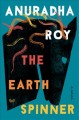 "Sara is studying at a prestigious British university and seeks a reprise from her loneliness by practising the traditional craft she learned in India when she was young: pottery. She recalls her childhood, the lost dog, Chinna, who brings a community together, and the life of her revered pottery teacher, Elango, a Hindu who faced prejudice after falling in love with a Muslim woman. Switching with ease between Sara's diary entries and Elango's life a decade earlier, Roy delivers a searing exploration into the fragility of peace. As fortunes change within one explosive day, and religious extremism brings hurt and violence to a rural village, the consequences of daring to dream against the tide are unleashed. Moving its protagonists between India and Britain, The Earthspinner shows the many ways in which the East encounters the West, fanaticism wars tirelessly against reason, and the individual's creative desires struggle against a populace's basic instinct for destruction."--Provided by publisher.
- Subjects: Psychological fiction.; Social problem fiction.; Novels.; Creative ability; East Indians; Interfaith dating; Women college students; Women potters; Indigenous pottery;
- Available copies: 1 / Total copies: 1
-
unAPI
- Five seasons of Charlie Francis / by Roache, Danica,author.;
 "A bold, refreshing, and darkly funny debut novel about a mixed-ancestry Mi'kmaw woman balancing academia, grief, love, and new motherhood, for fans of Fleabag and Amanda Peters. When the tides in the Cobequid Bay went out and left stretches of mudflats, I could walk halfway to the other shore. Sometimes the mud engulfed my feet, right up to my ankles, and made it hard to move. The longer you stayed stuck, the harder it was to keep going.​​ Charlie Francis's five-year plan has gone to shit. She was supposed to greet the new millennium by diving head-first into a master's degree, but her thesis has ground to a halt, Y2K was a bust, her rambunctious family and claustrophobic hometown are driving her around the bend--and the maybe-love-of-her-life, Adam, keeps joking about her moving home to marry him and have his babies. When Charlie's beloved uncle--the same person who told her to get out of town and never look back--dies suddenly, Charlie leans into her independence, breaking Adam's heart and rushing headlong into an academic career despite the baked-in racism of the predominantly white institution. When she unexpectedly becomes pregnant, she has to navigate being a (mostly) single mother on top of everything else. Charlie finds herself at a crossroads--and only so much stress-baking can keep reality at bay. How can she reconcile being a student of history within the colonial system that exploited her ancestors? How can she be a good mother when she can barely afford groceries? And how can she be a proud Mi'kmaw woman when the world seems determined to keep her down? Maybe it's time for a new five-year plan. With grit, humour, a lovable cast, and the nostalgia of the early aughts, this bold and refreshing novel from a powerful new voice in Indigenous fiction explores grief, the complex bonds of family, and cultural identity."--
- Subjects: Bildungsromans.; Domestic fiction.; Psychological fiction.; Novels.; Grief; Identity (Psychology); Indigenous women; Single mothers; Women college teachers; Mi'kmaq;
- Available copies: 0 / Total copies: 1
-
unAPI
- War at the margins : Indigenous experiences in World War II / by Poyer, Lin,1953-author.;
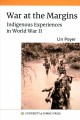 Includes bibliographical references (pages 259-306) and index."War at the Margins offers a broad comparative view of the impact of World War II on Indigenous societies. Using historical and ethnographic sources, Lin Poyer examines how Indigenous communities emerged from the trauma of the wartime era with social forms and cultural ideas that laid the foundations for their twenty-first century emergence as players on the world's political stage. With a focus on Indigenous voices and agency, a global overview reveals the enormous range of wartime activities and impacts on these groups, connecting this work with comparative history, Indigenous studies, and anthropology. The distinctiveness of Indigenous peoples offers a valuable perspective on World War II, as those on the margins of Allied and Axis empires and nation-states were drawn in as soldiers, scouts, guides, laborers, and victims. Questions of loyalty and citizenship shaped Indigenous combat roles-from integration in national armies to service in separate ethnic units to unofficial use of their special skills, where local knowledge tilted the balance in military outcomes. Front lines crossed Indigenous territory most consequentially in northern Europe, Southeast Asia, and the Pacific Islands, but the impacts of war go well beyond combat. Like others around the world, Indigenous civilian men and women suffered bombing and invasion, displacement, forced labor, military occupation, and economic and social disruption. Infrastructure construction and demand for key resources affected even areas far from front lines. World War II dissolved empires and laid the foundation for the postcolonial world. Indigenous people in newly independent nations struggled for autonomy, while other veterans returned to home fronts still steeped in racism. National governments saw military service as evidence that Indigenous peoples wished to assimilate, but wartime experiences confirmed many communities' commitment to their home cultures and opened new avenues for activism. By century's end, Indigenous Rights became an international political force, offering alternative visions of how the global order might make room for greater local self-determination and cultural diversity. In examining this transformative era, War at the Margins adds an important contribution to both World War II history and to the development of global Indigenous identity"--
- Subjects: Indigenous peoples; World War, 1939-1945; World War, 1939-1945;
- Available copies: 1 / Total copies: 1
-
unAPI
- Daughters of the deer / by Daniel, Danielle,author.;
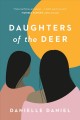 "In this haunting, groundbreaking, historical novel, Danielle Daniel imagines the lives of her ancestors in the Algonquin territories of the 1600s, a story inspired by her family link to a girl murdered near Trois-Rivières in the early days of French settlement. Marie, an Algonquin woman of the Weskarini Deer Clan, lost her first husband and her children to an Iroquois raid. In the aftermath of another lethal attack, her chief begs her to remarry for the sake of the clan. Marie is a healer who honours the ways of her people, and Pierre, the green-eyed ex-soldier from France who wants her for his bride, is not the man she would choose. But her people are dwindling, wracked by white men's diseases and nearly starving every winter as the game retreats away from the white settlements. If her chief believes such a marriage will cement their alliance with the French against the Iroquois and the British, she feels she has no choice. Though she does it reluctantly, and with some fear--Marie is trading the memory of the man she loved for a man she doesn't understand at all, and whose devout Catholicism blinds him to the ways of her people. This beautiful, powerful novel brings to life women who have literally fallen through the cracks of settler histories. Especially Jeanne, the first child born of the new marriage, neither white nor Weskarini, but caught between worlds. As she reaches adolescence, it becomes clear she is two-spirited. In her mother's culture, she would have been considered blessed, her nature a sign of special wisdom. But to the settlers of New France, and even to her own father, Jeanne is unnatural, sinful--a woman to be shunned, and worse. And so, with the poignant story of Jeanne, Danielle Daniel imagines her way into the heart and mind of a woman at the origin of the long history of violence against Indigenous women and the deliberate, equally violent, disruption of First Nations culture--opening a door long jammed shut, so all of us can enter"--
- Subjects: Historical fiction.; Novels.; Arranged marriage; First Nations women; First Nations; Algonquin;
- Available copies: 1 / Total copies: 1
-
unAPI
- Blood sisters / by Lillie, Vanessa,author.;
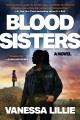 "A powerful mystery about a Native American archaeologist for the Bureau of Indian Affairs who must reckon with her past when she is called back to Oklahoma to investigate both the disappearance of her sister and a new case of a missing Native girl that turns up evidence with her name on it. Syd Walker fled her rural Oklahoma hometown-scarred by abandoned mines and a mounting opioid crisis-and never looked back. Now, she lives in Rhode Island as an archaeologist for the Bureau of Indian Affairs. It's Syd's job to make sure the Indigenous past isn't erased so that their future is preserved, too. When a woman's skull is found by local Indian Affairs authorities and Syd's sister is reported missing, she knows she must return home. She doesn't want her sister, Emma Lou, to become another statistic in the rising number of missing Native women cases that go uninvestigated. But not everyone is glad to have Syd home. After all, she still works for the BIA. Class tensions, land disputes, and the aftermath of a traumatizing act of violence from her youth come roaring back. Syd must battle her own demons and those set on destroying her town and her people if she's ever going to find Emma Lou"--
- Subjects: Thrillers (Fiction); Novels.; Archaeologists; Indigenous women; Missing persons; Secrecy; Sisters; Women archaeologists;
- Available copies: 1 / Total copies: 1
-
unAPI
- Hope is a woman's name : my journey as a Bedouin Palestinian activist in Israel / by El'Sana-Alh'jooj, Amal,author.;
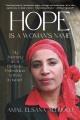 "At birth it was only Amal's father who looked at her and said "I see hope in her face. I want to call her 'Amal' -- meaning 'Hope' -- in the hope that Allah will give us boys after her." The fifth daughter in a patriarchal society and an indigenous Bedouin in a Jewish state, Amal Elsana came into this world fighting for her right to exist. Today she is a key shaper of public opinion on Israel's marginalized minorities. Hope is a Woman's Name tells of Amal's journey navigating interweaving systems of power and oppression -- the patriarchal and the nationalist -- in her fight for justice and equality. As a shepherd at the age of 5, she led her flock across the green mountains of Laqiya, her village in the Negev in southern Israel, and later ran literacy classes for the women in her tribe in her early teens, the beginning of a lifelong career organizing people to promote policy change for Israel's Bedouin, a minority within the Palestinian minority. She later established economic empowerment programs for marginalized women, helping to found an Arab-Jewish school, and creating organizations to promote shared society. Where others come up against obstacles, Amal builds bridges; not by sacrificing her identity, but by embracing it. Each thread of her identity -- Bedouin, Arab, woman, feminist, Palestinian and Israeli -- is woven into the tent of her life, a tent where no one is left out in the sun."--
- Subjects: Biographies.; Autobiographies.; El'Sana-Alh'jooj, Amal.; Bedouins; Feminists; Minorities; Palestinian Arabs; Political activists; Women, Bedouin; Women, Palestinian Arab; Women's rights;
- Available copies: 1 / Total copies: 1
-
unAPI
- We will be jaguars : a memoir of my people / by Nenquimo, Nemonte,author.; Anderson, Mitch,author.;
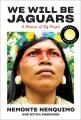 "From a fearless, internationally acclaimed activist, We will be jaguars is an impassioned memoir about an indigenous childhood, a clash of cultures, and the fight to save the Amazon rainforest and protect her people. Born into the Waorani tribe of Ecuador's Amazon rainforest -- one of the last to be contacted by missionaries in the 1950s -- Nemonte Nenquimo had a singular upbringing. She was taught about plant medicines, foraging, oral storytelling, and shamanism by her elders. She played barefoot in the forest and didn't walk on pavement, or see a car, until she was a teenager and left to study with an evangelical missionary group in the city. But after Nemonte's ancestors began appearing in her dreams, pleading with her to return and embrace her own culture, she listened. Nemonte returned to the forest and traditional ways of life and became one of the most forceful voices in climate change activism. She spearheaded an alliance of Indigenous nations across the Upper Amazon and led her people to a landmark victory against Big Oil, protecting over a half million acres of primary rainforest. We Will Be Jaguars is an astonishing memoir by an equally astonishing woman. Nemonte digs into generations of oral history, uprooting centuries of conquest, and hacking away at racist notions of Indigenous peoples. Ultimately, she reveals a life story as rich, harsh, and vital as the Amazon rainforest herself"--
- Subjects: Biographies.; Autobiographies.; Personal narratives.; Nenquimo, Nemonte.; Indigenous peoples; Nature; Rain forest conservation; Rain forests; Women political activists;
- Available copies: 1 / Total copies: 1
-
unAPI
- Ghosts of crook county : an oil fortune, a phantom child, and the fight for Indigenous land / by Cobb, Russell,1974-author.;
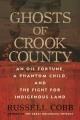 Includes bibliographical references and index."In the early 1900s, at the dawn of the "American Century," few knew the intoxicating power of greed better than white men on the forefront of the black gold rush. When oil was discovered in Oklahoma, these counterfeit tycoons impersonated, defrauded, and murdered Native property owners to snatch up hundreds of acres of oil-rich land. Writer and fourth-generation Oklahoman Russell Cobb sets the stage for one such oilman's chicanery: Tulsa entrepreneur Charles Page's campaign for a young Muscogee boy's land in Creek County. Problem was, "Tommy Atkins," the boy in question, had died years prior -- if he ever lived at all. Ghosts of Crook County traces Tommy's mythologized life through Page's relentless pursuit of his land. We meet Minnie Atkins and the two other women who claimed to be Tommy's "real" mother. Minnie would testify a story of her son's life and death that fulfilled the legal requirements for his land to be transferred to Page. And we meet Tommy himself -- or the men who proclaimed themselves to be him, alive and well in court. Through evocative storytelling, Cobb chronicles with unflinching precision the lasting effects of land-grabbing white men on Indigenous peoples. What emerges are the interconnected stories of unabashedly greedy men, the exploitation of Indigenous land, and the legacy of a boy who may never have existed"--
- Subjects: True crime stories.; Indigenous peoples; Petroleum industry and trade; Racism against Indigenous peoples;
- Available copies: 1 / Total copies: 1
-
unAPI
- Red river girl : the life and death of Tina Fontaine / by Jolly, Joanna,author.;
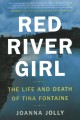 In her debut book, award-winning BBC reporter Joanna Jolly provides an account of the unsolved death of an Indigenous teenager whose body was found in Winnipeg's Red River, and the detective determined to find her killer, set against the backdrop of a troubled city.
- Subjects: Fontaine, Tina, 1999-2014.; Cormier, Raymond (Raymond Joseph); Murder; Murder; Native women;
- Available copies: 1 / Total copies: 1
-
unAPI
Results 51 to 60 of 97 | « previous | next »