Results 11 to 15 of 15 | « previous
- Smartphone nation : why we're all addicted to our screens and what you and your family can do about it / by Regehr, Kaitlyn,author.;
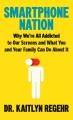 Includes bibliographical references."The compassionate, practical guide for raising -- and becoming -- healthy and informed digital citizens in the age of the smartphone, social media and AI. A must-read for parents of the smartphone generation. We know the dangers of consuming ultra-processed food. But what about the way algorithms are ultra-processing the information we consume online? How do today's parents, who grew up without digital devices and social media, parent a generation who are awash in it? Digital devices are everywhere in young people's lives -- in their schools and in their homes, with their friends and when they're alone. But parents know there is increasing evidence about both the risks and harms associated with online content. This presents an urgent dilemma: a digital-free life isn't realistic, but how can parents keep the risks to their children at bay? How do they help their kids to manage their online activity (not to mention their own)? Some have argued that the only way forward is to disconnect and opt your kids out. But the discourse around banning phones is backwards looking. It's us as geriatric millennials and Gen X-ers nostalgically reminiscing about our Nokias and their supposed innocence. Whether you like it or not, your kids will need to be on the internet, and their lives and careers will be shaped by AI. And it's the kids that understand the harms of technology and know how to navigate them effectively that will thrive. They will be at the front of the line. Smartphone Nation marshals the evidence and gives parents simple takeaways for implementing healthy digital nutrition for their families. This isn't a digital detox book recommending that we throw away our digital devices. This is a book that understands the realities and pressures that parents face. Dr. Kaitlyn Regehr argues that knowledge is power, and that by understanding your own relationship with the internet, social media and AI, you will develop the tools you need to make choices for you and your family"--
- Subjects: Self-help publications.; Digital media; Digital media; Electronics; Internet and children.; Internet; Information society.; Parenting.;
- Available copies: 1 / Total copies: 1
-
unAPI
- The Social Trap. by Jadot, Elisa,film director.; Java Films (Firm),dst; Kanopy (Firm),dst;
 Originally produced by Java Films in 2024.Adolescents who are connected to their smartphone for more than five hours a day are 66% more likely to suffer suicidal symptoms than those who use it for one hour a day. 44 US states are currently suing Meta, blaming it for the malaise of an entire generation. Faced with powerful tech giants like Meta, Tiktok, Snapchat, X and Discord, how can we protect children and their childhood?For the first time in history, state legislators and parents in the US and Europe are joining forces to fight these digital giants. Among them are five women who have chosen to turn their daily lives upside down to fight back against the Big 5: Alexis, Elisabet, Sofia, Laure and Socheata.They are victims, mothers, doctors and lawyers. They’re all behind a movement to change the destiny of future generations. Alexis, a victim of screen addiction, was among the first to take Meta to court, accusing it of “inciting suicide.” Elisabet is a mother of three. In just a few days, over 10,000 parents joined her WhatsApp group to fight for a "phone-free youth." As a result, the state has banned smartphones in schools. Sofia is a psychiatrist and pioneer in the treatment of screen addiction in children, some as young as seven. Socheata has been involved in the fight ever since her son was manipulated by an internet predator. She has joined an organisation that works alongside cybercrime police officers to track down paedophiles. Laure is a lawyer determined to change the laws that protect the Big 5.Through the struggles of these women, we will discover that digital control is a major public health and safety issue that goes well beyond what we imagine.Mode of access: World Wide Web.
- Subjects: Documentary films.; Mass media.; Digital communications.; Health.; Criminal law.; Social sciences.; Science.; Child welfare.; Computer science.; Documentary films.; Mass media and culture.; Women's studies.; Current affairs.; Substance abuse.; Motion pictures--France.; Social media.; Youth.; Women social reformers.; Child psychology.; Self-esteem.; Motion pictures--Europe.;
-
unAPI
- 10 rules for raising kids in a high-tech world : how parents can stop smartphones, social media, and gaming from taking over their children's lives / by Twenge, Jean M.,1971-author.;
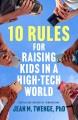 Includes bibliographical references and index."Parenting today often feels like an uphill battle, with technology invading every corner of our kids' lives. From the rise of social media addiction to the growing mental health crisis among children and teens, parents are grappling with how they can create a healthy, balanced relationship with technology for their kids. Bestselling author Jean Twenge provides the much-needed playbook parents have been asking for. Drawing on her decades as a psychologist studying the impact of technology and mental health and her personal experience as the mother of three teenagers, Twenge offers ten actionable rules for raising independent and well-rounded children. From setting "No Social Media Until 16" boundaries to creating no-phone zones like bedrooms and family dinners, these rules are grounded in evidence yet simple enough to incorporate into any family routine. Short, empowering, and timely, this book equips parents with the tools to combat not just immediate harms such as online bullying but also helps to nurture essential life skills, preparing kids and teens to become autonomous adults."--
- Subjects: Child development.; Internet; Parenting.; Social media; Technology and children.;
- Available copies: 1 / Total copies: 1
-
unAPI
- The anxious generation : how the great rewiring of childhood is causing an epidemic of mental illness / by Haidt, Jonathan,author.;
 Includes bibliographical references and index."From New York Times bestselling coauthor of The Coddling of the American Mind, an essential investigation into the collapse of youth mental health-and a plan for a healthier, freer childhood. After more than a decade of stability or improvement, the mental health of adolescents plunged in the early 2010s. Rates of depression, anxiety, self-harm, and suicide rose sharply, more than doubling on most measures. Why? In The Anxious Generation, social psychologist Jonathan Haidt lays out the facts about the epidemic of teen mental illness that hit many countries at the same time. He then investigates the nature of childhood, including why children need play and independent exploration to mature into competent, thriving adults. Haidt shows how the "play-based childhood" began to decline in the 1980s, and how it was finally wiped out by the arrival of the "phone-based childhood" in the early 2010s. He presents more than a dozen mechanisms by which this "great rewiring of childhood" has interfered with children's social and neurological development, covering everything from sleep deprivation to attention fragmentation, addiction, loneliness, social contagion, social comparison, and perfectionism. He explains why social media damages girls more than boys and why boys have been withdrawing from the real world into the virtual world, with disastrous consequences for themselves, their families, and their societies. Most important, Haidt issues a clear call to action. He diagnoses the "collective action problems" that trap us, and then proposes four simple rules that might set us free. He describes steps that parents, teachers, schools, tech companies, and governments can take to end the epidemic of mental illness and restore a more humane childhood. Haidt has spent his career speaking truth backed by data in the most difficult landscapes-communities polarized by politics and religion, campuses battling culture wars, and now the public health emergency faced by Gen Z. We cannot afford to ignore his findings about protecting our children-and ourselves-from the psychological damage of a phone-based life"--
- Subjects: Child development; Child mental health; Children; Internet and children; Social media;
- Available copies: 0 / Total copies: 2
-
unAPI
- The anxious generation [sound recording] : how the great rewiring of childhood is causing an epidemic of mental illness / by Haidt, Jonathan,author,narrator.; Pratt, Sean,narrator.; Blackstone Publishing,publisher.;
 Read by Sean Pratt, Jonathan Haidt."From New York Times bestselling coauthor of The Coddling of the American Mind, an essential investigation into the collapse of youth mental health-and a plan for a healthier, freer childhood. After more than a decade of stability or improvement, the mental health of adolescents plunged in the early 2010s. Rates of depression, anxiety, self-harm, and suicide rose sharply, more than doubling on most measures. Why? In The Anxious Generation, social psychologist Jonathan Haidt lays out the facts about the epidemic of teen mental illness that hit many countries at the same time. He then investigates the nature of childhood, including why children need play and independent exploration to mature into competent, thriving adults. Haidt shows how the "play-based childhood" began to decline in the 1980s, and how it was finally wiped out by the arrival of the "phone-based childhood" in the early 2010s. He presents more than a dozen mechanisms by which this "great rewiring of childhood" has interfered with children's social and neurological development, covering everything from sleep deprivation to attention fragmentation, addiction, loneliness, social contagion, social comparison, and perfectionism. He explains why social media damages girls more than boys and why boys have been withdrawing from the real world into the virtual world, with disastrous consequences for themselves, their families, and their societies. Most important, Haidt issues a clear call to action. He diagnoses the "collective action problems" that trap us, and then proposes four simple rules that might set us free. He describes steps that parents, teachers, schools, tech companies, and governments can take to end the epidemic of mental illness and restore a more humane childhood. Haidt has spent his career speaking truth backed by data in the most difficult landscapes-communities polarized by politics and religion, campuses battling culture wars, and now the public health emergency faced by Gen Z. We cannot afford to ignore his findings about protecting our children-and ourselves-from the psychological damage of a phone-based life"--
- Subjects: Audiobooks.; Child development; Child mental health; Children; Internet and children; Social media;
- Available copies: 1 / Total copies: 1
-
unAPI
Results 11 to 15 of 15 | « previous