Results 81 to 90 of 90 | « previous
- Blanket toss under midnight sun : portraits of everyday life in eight Indigenous communities / by Seesequasis, Paul,author.;
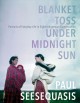 Includes bibliographical references.In 2015, writer and journalist Paul Seesequasis found himself grappling with the devastating findings of Canada's Truth and Reconciliation Commission report on the residential school system. He sought understanding and inspiration in the stories of his mother, herself a residential school survivor. Gradually, Paul realized that another, mostly untold history existed alongside the official one: that of how Indigenous peoples and communities had held together during even the most difficult times. He embarked on a social media project to collect archival photos capturing everyday life in First Nations, Metis and Inuit communities from the 1920s through the 1970s. As he scoured archives and libraries, Paul uncovered a trove of candid images and began to post these on social media, where they sparked an extraordinary reaction. Friends and relatives of the individuals in the photographs commented online, and through this dialogue, rich histories came to light for the first time. Blanket Toss Under Midnight Sun collects some of the most arresting images and stories from Paul's project. While many of the photographs live in public archives, most have never been shown to the people in the communities they represent. As such, Blanket Toss is not only an invaluable historical record, it is a meaningful act of reclamation, showing the ongoing resilience of Indigenous communities, past, present-- and future.
- Subjects: Native peoples; Native peoples; Native peoples; Native peoples; Native peoples; Native peoples; Native peoples; Native peoples;
- Available copies: 1 / Total copies: 1
-
unAPI
- Knowing, The An Indigenous Lens on Canadian History [electronic resource] : by Talaga, Tanya.aut; Talaga, Tanya.nrt; cloudLibrary;
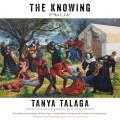 From Tanya Talaga, the critically acclaimed and award-winning author of Seven Fallen Feathers, comes a riveting exploration of her family’s story and a retelling of the history of the country we now call Canada For generations, Indigenous People have known that their family members disappeared, many of them after being sent to residential schools, “Indian hospitals” and asylums through a coordinated system designed to destroy who the First Nations, Métis and Inuit people are. This is one of Canada’s greatest open secrets, an unhealed wound that until recently lay hidden by shame and abandonment. The Knowing is the unfolding of Canadian history unlike anything we have ever read before. Award-winning and bestselling Anishinaabe author Tanya Talaga retells the history of this country as only she can—through an Indigenous lens, beginning with the life of her great-great grandmother Annie Carpenter and her family as they experienced decades of government- and Church-sanctioned enfranchisement and genocide. Deeply personal and meticulously researched, The Knowing is a seminal unravelling of the centuries-long oppression of Indigenous People that continues to reverberate in these communities today.  Whether you're a history buff, a sociology teacher, or simply interested in learning more about Indigenous rights and social justice, The Knowing is a gift that will deepen your understanding of the world we live in. HarperCollins 2024
- Subjects: Audiobooks.; Canada; Native American; Indigenous Studies;
- © 2024., HarperCollins,
-
unAPI
- Me tomorrow : Indigenous views on the future / by Taylor, Drew Hayden,1962-editor.;
 Includes bibliographical references."First Nations, Métis and Inuit artists, activists, educators and writers, youth and elders come together to envision Indigenous futures in Canada and around the world. Discussing everything from language renewal to sci-fi, this collection is a powerful and important expression of imagination rooted in social critique, cultural experience, traditional knowledge, activism and the multifaceted experiences of Indigenous people on Turtle Island. In Me Tomorrow ... Darrel J. McLeod, Cree author from Treaty-8 territory in Northern Alberta, blends the four elements of the Indigenous cosmovision with the four directions of the medicine wheel to create a prayer for the power, strength and resilience of Indigenous peoples. Autumn Peltier, Anishinaabe water-rights activist, tells the origin story of her present and future career in advocacy--and how the nine months she spent in her mother's womb formed her first water teaching. When the water breaks, like snow melting in the spring, new life comes. Lee Maracle, acclaimed Stó:lō Nation author and educator, reflects on cultural revival--imagining a future a century from now in which Indigenous people are more united than ever before. Other essayists include Cyndy and Makwa Baskin, Norma Dunning, Shalan Joudry, Shelley Knott-Fife, Tracie Léost, Stephanie Peltier, Romeo Saganash, Drew Hayden Taylor and Raymond Yakeleya. For readers who want to imagine the future, and to cultivate a better one, Me Tomorrow is a journey through the visions generously offered by a diverse group of Indigenous thinkers."--
- Subjects: Indigenous peoples; Indigenous peoples; Indigenous peoples; Future, The.;
- Available copies: 1 / Total copies: 1
-
unAPI
- All our relations : finding the path forward / by Talaga, Tanya,author.;
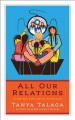 Includes bibliographical references."Every single year in Canada, one-third of all deaths among Indigenous youth are due to suicide. Studies indicate youth between the ages of ten and nineteen, living on reserve, are five to six times more likely to commit suicide than their peers in the rest of the population. Suicide is a new behaviour for First Nations people. There is no record of any suicide epidemics prior to the establishment of the 130 residential schools across Canada. Bestselling and award-winning author Tanya Talaga argues that the aftershocks of cultural genocide have resulted in a disturbing rise in youth suicides in Indigenous communities in Canada and beyond. She examinees the tragic reality of children feeling so hopeless they want to die, of kids perishing in clusters, forming suicide pacts, or becoming romanced by the notion of dying - a phenomenon that experts call "suicidal ideation." She also looks at the rising global crisis, as evidenced by the high suicide rates among the Inuit of Greenland and Aboriginal youth in Australia. Finally, she documents suicide prevention strategies in Nunavut, Seabird Island, and Greenland; Facebook's development of AI software to actively link kids in crisis with mental health providers; and the push by First Nations leadership in Northern Ontario for a new national health strategy that could ultimately lead communities towards healing from the pain of suicide. Based on her Atkinson Fellowship in Public Policy series, Tanya Talaga's 2018 Massey Lectures is a powerful call for action and justice for Indigenous communities and youth."--
- Subjects: Native youth; Native peoples; Native youth; Native peoples; Native youth; Native peoples; Native youth; Native peoples;
- Available copies: 1 / Total copies: 1
-
unAPI
- Searching for Franklin : new answers to the great Arctic mystery / by McGoogan, Ken,author.;
 Includes bibliographical references and index."Arctic historian Ken McGoogan approaches the legacy of nineteenth-century explorer Sir John Franklin from a contemporary perspective and offers a surprising new explanation of an enduring Northern mystery. Two of Arctic explorer Sir John Franklin's expeditions were monumental failures--the last one leading to more than a hundred deaths, including his own. Yet many still see the Royal Navy man as a heroic figure who sacrificed himself to discovering the Northwest Passage. This book, McGoogan's sixth about Arctic exploration, challenges that vision. It rejects old orthodoxies, incorporates the latest discoveries, and interweaves two main narratives. The first treats the Royal Navy's Arctic Overland Expedition of 1819, a harbinger-misadventure during which Franklin rejected the advice of Dene and Metis leaders and lost eleven of his twenty-one men to exhaustion, starvation, and murder. The second discovers a startling new answer to that greatest of Arctic mysteries: what was the root cause of the catastrophe that engulfed Franklin's last expedition? The well-preserved wrecks of Erebus and Terror--located in 2014 and 2016--promise to yield more clues about what cost the lives of the expedition members, some of whom were reduced to cannibalism. Contemporary researchers, rejecting theories of lead poisoning and botulism, continue to seek conclusive evidence both underwater and on land. Drawing on his own research and Inuit oral accounts, McGoogan teases out many intriguing aspects of Franklin's expeditions, including the explorer's lethal hubris in ignoring the expert advice of the Dene leader Akaitcho. Franklin disappeared into the Arctic in 1845, yet people remain fascinated with his final doomed voyage: what happened? McGoogan will captivate readers with his first-hand account of traveling to relevant locations, visiting the graves of dead sailors, and experiencing the Arctic--one of the most dramatic and challenging landscapes on the planet."-- Provided by publisher.
- Subjects: Biographies.; Personal narratives.; Franklin, John, 1786-1847.; Great Britain. Royal Navy.; John Franklin Arctic Expedition (1845-1851); Explorers;
- Available copies: 1 / Total copies: 1
-
unAPI
- Vanished Beyond the Map The Mystery of Lost Explorer Hubert Darrell [electronic resource] : by Shoalts, Adam.aut; CloudLibrary;
 Canada’s greatest modern-day explorer sets out into the arctic wilderness to solve a mystery more than 100 years old. In November 1910, explorer Hubert Darrell vanished in the uncharted wilds of the Northwest Territories. A prospector who had been swept up in the Klondike Gold Rush, Darrell later made his name as an expert guide, trapper, and restless wanderer who ventured where few others dared. At a time when travel by dogsled in the North was the norm, Darrell became legendary for traversing thousands of kilometres alone and on foot; ranging over mountains and across windswept tundra from Alaska to Hudson Bay. During his epic journeys, he helped rescue sailors trapped in sea ice, led Mounties on their patrols, and even guided some of the era’s most famous explorers. Roald Amundsen, the first person to reach the South Pole, held Darrell in awe, remarking once that with men like him, he could go to the moon. Contemporaries regarded Darrell as the hardiest, most competent explorer of his day. Despite clues reported by Inuit trappers and Mounted Police inquiries, his fate remains a mystery. While his disappearance sparked headlines around the world, Darrell’s name would soon also vanish from the history books, ironically, just as surely as he had in the wild. Yet Darrell left behind a trail of letters, journals, and hand-drawn maps. With these faded clues and his zeal for adventure, Adam Shoalts retraces Darrell’s forgotten routes through the wilderness, searching for cabin ruins and old campsites. He unearths water-stained records and tracks down elderly individuals in the hopes that they might remember someone who’d known Darrell. Part detective story, part biography, and part first-person adventure narrative, Vanished Beyond the Map combines expeditions with historical research to solve one of exploration history’s enduring cold cases—the mystery of Hubert Darrell.
- Subjects: Electronic books.; Canada; Expeditions & Discoveries; Historical Geography;
- © 2025., Penguin Canada,
-
unAPI
- Vanished Beyond the Map The Mystery of Lost Explorer Hubert Darrell [electronic resource] : by Shoalts, Adam.aut; Shoalts, Adam.nrt; CloudLibrary;
 Canada’s greatest modern-day explorer sets out into the arctic wilderness to solve a mystery more than 100 years old. In November 1910, explorer Hubert Darrell vanished in the uncharted wilds of the Northwest Territories. A prospector who had been swept up in the Klondike Gold Rush, Darrell later made his name as an expert guide, trapper, and restless wanderer who ventured where few others dared. At a time when travel by dogsled in the North was the norm, Darrell became legendary for traversing thousands of kilometres alone and on foot; ranging over mountains and across windswept tundra from Alaska to Hudson Bay. During his epic journeys, he helped rescue sailors trapped in sea ice, led Mounties on their patrols, and even guided some of the era’s most famous explorers. Roald Amundsen, the first person to reach the South Pole, held Darrell in awe, remarking once that with men like him, he could go to the moon. Contemporaries regarded Darrell as the hardiest, most competent explorer of his day. Despite clues reported by Inuit trappers and Mounted Police inquiries, his fate remains a mystery. While his disappearance sparked headlines around the world, Darrell’s name would soon also vanish from the history books, ironically, just as surely as he had in the wild. Yet Darrell left behind a trail of letters, journals, and hand-drawn maps. With these faded clues and his zeal for adventure, Adam Shoalts retraces Darrell’s forgotten routes through the wilderness, searching for cabin ruins and old campsites. He unearths water-stained records and tracks down elderly individuals in the hopes that they might remember someone who’d known Darrell. Part detective story, part biography, and part first-person adventure narrative, Vanished Beyond the Map combines expeditions with historical research to solve one of exploration history’s enduring cold cases—the mystery of Hubert Darrell.
- Subjects: Audiobooks.; Canada; Expeditions & Discoveries; Historical Geography;
- © 2025., Penguin Random House,
-
unAPI
- Beyond the trees : alone across Canada's Arctic / by Shoalts, Adam,1986-author.;
 "A thrilling odyssey through an unforgiving landscape, and the rich history it reveals. What does it mean to explore and confront the unknown? Beyond the Trees recounts Adam Shoalts's epic, solo crossing of Canada's mainland Arctic in a single season--the first in recorded history. It's also a multilayered story that weaves the narrative of Shoalts's journey into accounts of other adventurers, explorers, First Nations, fur traders, dreamers, eccentrics, and bush pilots to create an unforgettable tale of adventure and exploration. Interspersed with his stories of navigating mazes of shifting ice floes, facing down snarling bears and galloping musk-ox, and portaging along knife-edge cliffs above furious rapids, are the fascinating legends, historic persons, and incredible anecdotes that make up the lore of the North. They include the saga of the Mad Trapper, a man whose feats of endurance and ingenuity were almost as legendary as his violent end; the story of the controversial Vilhjalmur Stefansson, a redoubtable dreamer but also one who was blamed for the deaths of his companions; the tale of the "Lost Patrol" of Mounties who perished in a blinding blizzard; the formidable Tyrell brothers who together charted much of Canada's North; the eerie ruins of Fort Confidence that was built nearly two centuries ago on Great Bear Lake; and the decaying remnants of gold prospector David Douglas's cabin overlooking the Dease River. The North is indeed a perilous place. Also told in the book is the tragedy of John Hornby and his two companions who starved to death on the banks of the Thelon River; their bones are still resting just above the riverbank in shallow graves. Beyond the Trees also discusses folklore about wendigoes, strange lights, and the mystery of Angikuni Lake, where in 1930 an entire Inuit camp supposedly vanished without a trace. These mysteries and wonders are Shoalts's only companions as he sets out on his own path through the adventure of a lifetime."-- Provided by publisher.
- Subjects: Shoalts, Adam, 1986-; Travel.;
- Available copies: 0 / Total copies: 1
-
unAPI
- Arctic patrol : Canada's fight for Arctic sovereignty / by Jamieson, Eric,1949-author.;
 Includes bibliographical references and index."In the 1920s, Canada's claim on the Arctic archipelago was tenuous at best. In 1880, the United Kingdom had handed over control of the area to the expanding dominion, though much of the area was still unoccupied and unexplored. The North-West Mounted Police, later to become the RCMP in 1920, were assigned the territory by the Canadian Government. For years, little was done to assert this control; over time, remote detachments were established throughout the archipelago and annual ship patrols were conducted to resupply these posts as well as to demonstrate to the world that Canada was indeed administering to its Arctic. But the need to reinforce sovereignty--and quickly--was driven by increasing threats on the horizon. The Americans, Danish and Norwegians were particularly active in the Arctic, posing sovereign challenges from both individuals and their nations; Dr. Donald MacMillan, American, went north with an American Naval Aviation Unit in 1925 with a stated objective to search for new land. He had somehow, concerningly, avoided applying for permits to enter the Canadian Arctic. The Danish Anthropologist and polar explorer Knud Rasmussen was rumoured to be populating Ellesmere Island with Greenland Inuit (Inughuit) to the obvious threat of both the Muskox population there as well as Canadian Arctic sovereignty. Meanwhile, the Canadian Government was wrestling with the Norwegian Government, as well as Norwegian explorer Otto Sverdrup, over ownership of the Sverdrup group of islands. Something drastic had to be done. Legendary RCMP Inspector, Alfred Herbert Joy, joined by young but robust recruit Reginald Andrew Taggart of Ireland, as well as the renowned Inughuit guide, Nuqaqpainguaq, embark on an 1,800-mile dogsled patrol to the outer fringes of the archipelago. As tensions rise and negotiations with Norway threaten to escalate, the three men face treacherous conditions and unexpected obstacles on a journey that takes on mythic proportions. In Arctic Patrol, Lieutenant Governor's Medal winner Eric Jamieson uncovers the fascinating history of Canada's fight to secure its Arctic territories in this thrilling tale of international politics, polar exploration, and human endurance"--
- Subjects: Self-determination, National;
- Available copies: 1 / Total copies: 1
-
unAPI
- Erebus : the story of a ship / by Palin, Michael,author.;
 Includes bibliographical references and index."Intrepid voyager, writer and comedian Michael Palin follows the trail of two expeditions made by the Royal Navy's HMS Erebus to opposite ends of the globe, reliving the voyages and investigating the ship itself, lost on the final Franklin expedition and discovered with the help of Inuit knowledge in 2014. The story of a ship begins after the defeat of Napoleon at Waterloo, when Great Britain had more bomb ships than it had enemies. The solid, reinforced hulls of HMS Erebus, and another bomb ship, HMS Terror, made them suitable for discovering what lay at the coldest ends of the earth. In 1839, Erebus was chosen as the flagship of an expedition to penetrate south to explore Antarctica. Under the leadership of the charismatic James Clark Ross, she and HMS Terror sailed further south than anyone had been before. But Antarctica never captured the national imagination; what the British navy needed now was confirmation of its superiority by making the discovery, once and for all, of a route through the North-West Passage. Chosen to lead the mission was Sir John Franklin, at 59 someone many considered too old for such a hazardous journey. Nevertheless, he and his men confidently sailed away down the Thames in April 1845. Provisioned for three winters in the Arctic, Erebus and Terror and the 129 men of the Franklin expedition were seen heading west by two whalers in late July. No one ever saw them again. Over the years there were many attempts to discover what might have happened--and eventually the first bodies were discovered in shallow graves, confirming that it had been the dreadful fate of the explorers to die of hunger and scurvy as they abandoned the ships in the ice. For generations, the mystery of what had happened to the ships endured. Then, on September 9th, 2014, came the almost unbelievable news: HMS Erebus had been discovered thirty feet below the Arctic waters, by a Parks Canada exploration ship. Palin looks at the Erebus story through the different motives of the two expeditions, one scientific and successful, the other nationalistic and disastrous. He examines the past by means of the extensive historical record and travels in the present day to those places where there is still an echo of Erebus herself, from the dockyard where she was built, to Tasmania where the Antarctic voyage began and the Falkland Islands, then on to the Canadian Arctic, to get a sense of what the conditions must have been like for the starving, stumbling sailors as they abandoned their ships to the ice. And of course the story has a future. It lies ten metres down in the waters of Nunavut's Queen Maud Gulf, where many secrets wait to be revealed."--
- Subjects: Erebus (Ship); Scientific expeditions;
- Available copies: 1 / Total copies: 1
-
unAPI
Results 81 to 90 of 90 | « previous