Results 201 to 210 of 339 | « previous | next »
- How the West stole democracy from the Arabs : the Syrian Arab Congress of 1920 and the destruction of its historic liberal-Islamic alliance / by Thompson, Elizabeth F.,author.;
 Includes bibliographical references and index."When Europe's Great War engulfed the Ottoman Empire, Arab nationalists rose in revolt against their Turkish rulers and allied with the British on the promise of an independent Arab state. In October 1918, the Arabs' military leader, Prince Faisal, victoriously entered Damascus and proclaimed a constitutional government in an independent Greater Syria. Faisal won American support for self-determination at the Paris Peace Conference, but other Entente powers plotted to protect their colonial interests. Under threat of European occupation, the Syrian-Arab Congress declared independence on March 8, 1920 and crowned Faisal king of a "civil representative monarchy." Sheikh Rashid Rida, the most prominent Islamic thinker of the day, became Congress president and supervised the drafting of a constitution that established the world's first Arab democracy and guaranteed equal rights for all citizens, including non-Muslims. But France and Britain refused to recognize the Damascus government and instead imposed a system of mandates on the pretext that Arabs were not yet ready for self-government. In July 1920, the French invaded and crushed the Syrian state. The fragile coalition of secular modernizers and Islamic reformers that had established democracy was destroyed, with profound consequences that reverberate still. Using previously untapped primary sources, including contemporary newspaper accounts, reports of the Syrian-Arab Congress, and letters and diaries from participants, How the West Stole Democracy from the Arabs is a groundbreaking account of an extraordinary, brief moment of unity and hope-and of its destruction"--
- Subjects: Muʼtamar al-Sūrī al-ʻĀmm (1919-1920); Arab nationalism;
- Available copies: 1 / Total copies: 1
-
unAPI
- By the ghost light : war, memory, and families / by Thomson, R. H.,author.;
 Includes bibliographical references."From one of Canada's most beloved performing artists comes an audacious work of non-fiction that explores the stories that shape us and the reach that the past can have across generations. Growing up north of Toronto, R.H. Thomson's imagination was captured by romantic notions of war. He spent his days playing with toy soldiers on the carpet of his grandmother's house, recreating the Battle of Britain with model planes in his bedroom, or sitting at the local theatre watching World War II B movies--ones that offered a very clear perspective on who were the heroes and who the villains; which side were the victors and which the vanquished. Yet Thomson's childhood was also shaped by the spirits of real-life warriors in his family, their fates a brutal and more complicated reminder of the true human cost of war. Eight of Robert's great uncles--George, Joe, Jack, Harold, Arthur, Warren, Wildy, and Fred--fought in the First World War, while his great Aunt Margaret served as a wartime surgical nurse in Europe. Five of the great uncles--George, Joe, Fred, Wildy, and Warren--were killed in battle while two others--Jack and Harold--would return home greatly diminished, spending the rest of their lives in and out of sanitariums, their lungs scarred by disease and poison gas. Throughout their lives, the great uncles, as well as great aunts and cousins, were faithful letter writers, their correspondence offering profound insights into their experiences on the front lines to their loved ones back home, a somber record of the sacrifice the family paid. In By the Ghost Light, R.H. Thomson offers an extraordinary look at his family's history while providing a powerful examination of how we understand war and its aftermath. Using his family letters as a starting point, Thomson roams through a century of folly, touching on areas of military history, art, literature, and science, to express the tragic human cost of war behind the order and calm of ceremonial parades, memorials, and monuments. In an urgent call for new ways to acknowledge the dead, R.H. has created "The World Remembers," an ambitious international project to individually name each of the millions killed in the First World War. Epic in its scope and incredibly intimate in its exploration of lives touched by the tragedy of war, By the Ghost Light is a truly original book that will challenge the way we approach our history"--
- Subjects: Biographies.; Personal narratives.; Thomson, R. H.; Thompson family; World War, 1914-1918;
- Available copies: 1 / Total copies: 1
-
unAPI
- Punching Above Our Weight The Canadian Military at War Since 1867 [electronic resource] : by Borys, David A..aut; cloudLibrary;
 “Quick-paced, well-researched and well-illustrated, this is the first new history of Canada’s armed forces in decades.” — J. L. Granatstein, author of Canada’s Army Punching Above Our Weight takes readers on a riveting exploration spanning one hundred and fifty years of Canadian forces. This photograph-rich history of 150 years of the Canadian military traces the evolution of the country’s armed forces from a small, underfunded, poorly trained militia to the modern, effective military it is today. From the Red River Resistance and the Boer War to modern peacekeeping and the long war in Afghanistan, David A. Borys details the conflicts and operations that Canadian soldiers have served in. He highlights the key battles, decisive moments, and significant people that came to define Canada’s participation and helped cement its global reputation. Borys also explores the challenges that the Canadian nation and its military have faced over those years, including major cultural and demographic shifts, a continual struggle for resources from generally disinterested governments, battlefield failures, notorious and shocking scandals, along with ever-changing global threats. Punching Above Our Weight brings to light a new perspective on the Canadian military and its place in the world over the past one hundred and fifty years.General adult.
- Subjects: Electronic books.; Canada; Post-Confederation (1867-); Canadian;
- © 2024., Dundurn Press,
-
unAPI
- The Russian Revolution : a new history / by McMeekin, Sean,1974-;
 Includes bibliographical references and index."In The Russian Revolution, historian Sean McMeekin traces the origins and events of the Russian Revolution, which ended Romanov rule, ushered the Bolsheviks into power, and changed the course of world history. Between 1900 and 1920, Russia underwent a complete and irreversible transformation: by the end of these two decades, a new regime was in place, the economy had collapsed, and over 20 million Russians had died during the revolution and what followed. Still, Bolshevik power remained intact due to a remarkable combination of military prowess, violent terror tactics, and the failures of their opposition. And as McMeekin shows, Russia's revolutionaries were aided at nearly every step by countries like Germany and Sweden who sought to benefit-politically and economically-from the chaotic changes overtaking the country. The first comprehensive history of these momentous events in a decade, The Russian Revolution combines cutting-edge scholarship and a fast-paced narrative to shed new light on a great turning point of the twentieth century"--Provided by publisher.LSC
- Available copies: 1 / Total copies: 1
-
unAPI
- Hotel Exile : Paris in the Shadow of War. by Rogoyska, Jane.;
 'Hotel Exile' is the extraordinary story of the Hotel Lutetia in Paris. Once a hub for artists and intellectuals - like James Joyce, Andre Gide, Picasso, and Samuel Beckett - fleeing the Nazis after 1933, it was later commandeered by German military intelligence during the occupation, and finally, after Liberation, became a refuge for survivors returning from concentration camps.Library Bound Incorporated
- Subjects: HISTORY / Holocaust; SOCIAL SCIENCE / Emigration & Immigration;
- Available copies: 0 / Total copies: 1
-
unAPI
- UFOs: Top Secret Alien Files. by The History® Channel (Firm),dst; Kanopy (Firm),dst;
 Originally produced by The History® Channel in 2019.For everyday heroes in law enforcement and the military, their mission to serve and protect is put to the ultimate test when they come face to face with dangerous UFOs.Mode of access: World Wide Web.
- Subjects: Documentary films.; Science.; Astronomy.; Documentary films.; Current affairs.; Outer space.; Conspiracies.; Life on other planets.;
-
unAPI
- Whose streets? by Davis, Damon,1985-film director.; Folayan, Sabaah,film director.; Magnolia Pictures (Firm),dst; Kanopy (Firm),dst;
 Originally produced by Magnolia Pictures in 2017.Told by the activists and leaders who live and breathe this movement for justice, WHOSE STREETS? is an unflinching look at the Ferguson uprising. When unarmed teenager Michael Brown is killed by police and left lying in the street for hours, it marks a breaking point for the residents of St. Louis, Missouri. Grief, long-standing racial tensions and renewed anger bring residents together to hold vigil and protest this latest tragedy. Empowered parents, artists, and teachers from around the country come together as freedom fighters. As the National Guard descends on Ferguson with military grade weaponry, these young community members become the torchbearers of a new resistance. Filmmakers Sabaah Folayan and Damon Davis know this story because they are the story. WHOSE STREETS? is a powerful battle cry from a generation fighting, not for their civil rights, but for the right to live.Mode of access: World Wide Web.
- Subjects: Documentary films.; Brown, Michael, Jr., 1996-2014.; Race riots; Race relations.; Race riots.; Race relations;
-
unAPI
- The last tsar : the abdication of Nicholas II and the fall of the Romanovs / by Hasegawa, Tsuyoshi,1941-author.;
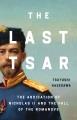 Includes bibliographical references and index."When Tsar Nicholas II fell from power in 1917, Imperial Russia faced a series of overlapping crises, from war to social unrest. Though Nicholas's life is often described as tragic, it was not fate that doomed the Romanovs-it was poor leadership and a blinkered faith in autocracy. Based on a trove of new archival discoveries, The Last Tsar narrates how Nicholas's resistance to reform doomed the monarchy. Encompassing the captivating personalities of the era-the bumbling Nicholas, his spiteful wife Alexandra, the family's faith healer Rasputin-it untangles the dramatic struggle by Russia's aristocratic, military, and legislative elite to reform the monarchy. By rejecting compromise, Nicholas undermined his supporters at crucial moments. His blunders cleared the way for all-out civil war and the eventual rise of the Soviet Union. Definitive and engrossing, The Last Tsar uncovers how Nicholas II stumbled into revolution, taking his family, the Romanov dynasty, and the whole Russian Empire down with him"--
- Subjects: Nicholas II, Emperor of Russia, 1868-1918.; Nicholas II, Emperor of Russia, 1868-1918;
- Available copies: 1 / Total copies: 1
-
unAPI
- Unidentified: Inside America's UFO Investigation: S1. by The History® Channel (Firm),dst; Kanopy (Firm),dst;
 Originally produced by The History® Channel in 2019.UNIDENTIFIED: INSIDE AMERICA'S UFO INVESTIGATION will reveal newly authenticated evidence and footage, interviews from eyewitnesses and former military personnel who have never spoken out before in an effort to build the most indisputable case for the existence and threat of UAP.Mode of access: World Wide Web.
- Subjects: Feature films.; Television series.; Motion pictures.;
-
unAPI
- The last million : Europe's displaced persons from World War to Cold War / by Nasaw, David,author.;
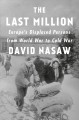 Includes bibliographical references and index."In May of 1945, German forces surrendered to the Allied powers, effectively putting an end to World War II in Europe. But the aftershocks of this global military conflict did not cease with the signing of truces and peace treaties. Millions of lost and homeless POWs, slave laborers, political prisoners, and concentration camp survivors overwhelmed Germany, a country in complete disarray. British and American soldiers gathered the malnourished and desperate foreigners, and attempted to repatriate them to Poland, Estonia, Latvia, Lithuania, Ukraine, and the USSR. But after exhaustive efforts, there remained over a million displaced persons who either refused to go home or, in the case of many, had no home to which to return. They would spend the next three to five years in displaced persons camps, divided by nationalities, temporary homelands in exile, with their own police forces, churches, schools, newspapers, and medical facilities. The international community couldn't agree on the fate of the Last Million, and after a year of fruitless debate and inaction, an International Refugee Organization was created to resettle them in lands suffering from labor shortages. But no nations were willing to accept the 200,000 to 250,000 Jewish men, women, and children who remained trapped in Germany. In 1948, the United States, among the last countries to accept anyone for resettlement, finally passed a Displaced Persons Bill - but as Cold War fears supplanted memories of WWII atrocities, the bill only granted visas to those who were reliably anti-communist, including thousands of former Nazi collaborators, Waffen-SS members, and war criminals, while barring the Jews who were suspected of being Communist sympathizers or agents because they had been recent residents of Soviet-dominated Poland. Only after the passage of the controversial UN resolution for the partition of Palestine and Israel's declaration of independence were the remaining Jewish survivors finally able to leave their displaced persons camps in Germany."--
- Subjects: United Nations Relief and Rehabilitation Administration.; International Refugee Organization.; World War, 1939-1945; Refugees; Refugees; Jewish refugees; Political refugees; Jews; Humanitarianism; World War, 1939-1945;
- Available copies: 1 / Total copies: 1
-
unAPI
Results 201 to 210 of 339 | « previous | next »