Results 31 to 32 of 32 | « previous
- Every valley : the desperate lives and troubled times that made Handel's Messiah / by King, Charles,1967-author.;
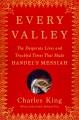 Includes bibliographical references and index."The epic, dramatic story of the 18th century men and women behind the making of Handel's Messiah, one of the world's most beloved works of classical music, from a New York Times bestselling historian and National Book Critics Circle Award finalist. George Frideric Handel's Messiah is arguably the greatest piece of participatory art ever created. Adored by millions, it is performed each year by renowned choirs and orchestras as well as by fans singing along to the lyrics on their cell phones. But this work of triumphant joy was born in an age of anxiety. Britain in the early eighteenth century, the so-called age of Enlightenment, was a time of war, enslavement, political conspiracy, social polarization, and conflicts over everything from the legitimacy of government to the meaning of truth. Contrary to popular belief, the Messiah was not the product of a lone genius scribbling furiously on a musical staff. It came about because of a depressive political dissenter; an actress plagued by an abusive husband; an Atlantic sea captain and penniless philanthropist; an African Muslim man held captive in the American colonies; and Handel himself, once composer to kings but, at midlife, in ill health and straining to keep an audience's attention. Set amid royal intrigue and theatrical scandal, and exploring the rich ideas of its day, Every Valley is a cinematic drama of the entangled lives that shaped a masterpiece"--
- Subjects: Biographies.; Personal narratives.; Handel, George Frideric, 1685-1759; Handel, George Frideric, 1685-1759.; Handel, George Frideric, 1685-1759.;
- Available copies: 1 / Total copies: 1
-
unAPI
- But you don't look Arab : and other tales of unbelonging / by Gorani, Hala,author.;
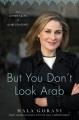 Includes bibliographical references."Emmy Award-winning international journalist Hala Gorani weaves stories from her time as a globe-trotting anchor and correspondent with her own lifelong search for identity as the daughter of Syrian immigrants. What is it like to have no clear identity in a world full of labels? How can people find a sense of belonging when they have never felt part of a "tribe?" And how does a blonde-haired, blue-eyed woman who's never lived in the Middle East honor her Arab Muslim ancestry and displaced family-a family forced to scatter when their home country was torn apart by war? Hala Gorani's path to self-discovery started the moment she could understand that she was "other" wherever she found herself to be. Born of Syrian parents in America and raised mainly in France, she didn't feel at home in Aleppo, Seattle, Paris, or London. She is a citizen of everywhere and nowhere. And like many journalists who've covered wars and conflicts, she felt most at home on the ground reporting and in front of the camera. As a journalist, Gorani has traveled to some of the most dangerous places in the world, covering the Arab Spring in Cairo and the Syrian civil war, reporting on suicide bombers in Beirut and the chemical attacks in Damascus, watching the growth of ISIS and the war in Iraq-sometimes escaping with her life by a hair. But through it all, she came to understand that finding herself meant not only looking inward, but tracing a long family history of uprooted ancestors. From the courts of Ottoman Empire sultans through the stories of the citizens from her home country and other places torn apart by unrest, But You Don't Look Arab combines Gorani's family history with rigorous reporting, explaining-and most importantly, humanizing-the constant upheavals in the Middle East over the last century"--
- Subjects: Biographies.; Autobiographies.; Gorani, Hala.; Television journalists; Women journalists;
- Available copies: 1 / Total copies: 1
-
unAPI
Results 31 to 32 of 32 | « previous