Results 51 to 54 of 54 | « previous
- The fast : the history, science, philosophy, and promise of doing without / by Oakes, John G. H.,author.;
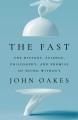 Includes bibliographical references and index."An engaging exploration of the unique history and biology of fasting-an essential component of many traditional health practices, religions, and philosophies, resurging in popularity today-perfect for readers of Breath by James Nestor and Why We Sleepby Matthew Walker. We fast all the time, even when we're not conscious of doing so. A fast manifests the idea of holding back, resisting the animal impulse to charge ahead. Its flip side is similarly everywhere: call it splurging, self-indulgence, or a variant of "self-care." Based on extensive historical, scientific, and cultural research and reporting, The Fast illuminates the numerous facets of this act of self-deprivation. John Oakes interviews doctors, spiritual leaders, activists, and others who guide him through this practice-and embarks on fasts of his own-to deliver a book that supplies readers curious about fasting with profound new understanding, appreciation, and inspiration. Fasting has become increasingly popular for a variety of reasons-from health advocates who see fasting as a method to lose weight or to detox, to the faithful who fast in prayer, to seekers pursuing mindfulness, to activists using hunger strikes as an effective means of peaceful protest. Fasting is central to holy seasons and days such as Lent in Christianity, Ramadan in Islam, and Yom Kippur in Judaism. Advocates for justice who have waged hunger strikes include Gandhi in India, Bobby Sands in Ireland, and the Taxi Workers Alliance in New York City. Whether for philosophical, political, or health-related reasons, fasting marks a departure from daily routine. Fasting involves doing less but doing less in a radical way, reminding us that a slower, more intentional contemplative experience can be more fulfilling. Ultimately, this book shows us that fasting is about much more than food: it is about reconsidering our place in the world"--
- Subjects: Fasting; Fasting; Fasting;
- Available copies: 1 / Total copies: 1
-
unAPI
- Lucid dying : the new science revolutionizing how we understand life and death / by Parnia, Sam,author.;
 Includes bibliographical references."A groundbreaking look at what happens to us when we die, based on the largest-ever research study run on recalled experiences of death. Today, for the first time in history, the scientific exploration of death and what happens when we die is real, active and ongoing. Contrary to popular perceptions, this subject is no longer the remit of philosophy, religion, or personal opinion. Truly remarkable scientific discoveries that will fundamentally affect everyone's lives now and in the future are taking place, yet very few people are aware of them. Most people -- including scientists and doctors-maintain strong beliefs about death and its experience. Those beliefs are rooted in traditional, and often cultural, notions of death. But what if all that we have come to believe about death is fundamentally wrong? What if the paradigm we have been operating within no longer exists? What if death is not the end we thought? Lucid Dying is the first book to share that science. Presenting data derived from multiple groundbreaking studies, Dr. Parnia shows that the entity we refer to as consciousness -- our Self -- does not seem to become annihilated when we die. In fact, during death, our consciousness vastly expands and leads to a vivid experience that follows a very specific narrative arc. These studies support that there really is a universal experience of death that is meaningful, transcendent, positive, and transformative -- not hallucinatory, delusional, or illusory as previously imagined. In his latest book, Dr. Parnia weaves empirical research with gripping stories to show us the truth of how death is not the end we all thought and how anyone can harness the newfound wisdom to lead deeper, more intentional lives."--
- Subjects: Death (Biology); Death; Death.; Future life.; Near-death experiences.; Thanatology.;
- Available copies: 1 / Total copies: 1
-
unAPI
- Question authority : a polemic about trust in five meditations / by Kingwell, Mark,1963-author.;
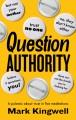 Includes bibliographical references."Philosopher Mark Kingwell thinks about thinking for yourself in an era of radical know-it-all-ism. "Question authority," the popular 1960s slogan commanded. "Think for yourself." But what started as a counter-cultural catchphrase, playful in logic but serious in intent, has become a practical paradox. Yesterday's social critics are the tone-policing tyrants of today, and critical theory that once augured emancipation has hardened into ideological enforcement. The resulting crisis of authority, made worse by rival political factions and chaotic public discourse, has exposed cracks in every facet of shared social life. Politics, academia, journalism, medicine, religion, science -- every kind of institutional claim is now routinely subject to objection, investigation, and outright disbelief. A recurring feature of this comprehensive distrust of authority is the firm, indeed unshakeable, belief in personal righteousness and superiority: what Mark Kingwell calls "addiction to conviction." In this critical survey of the predicament of contemporary authority, Kingwell draws on philosophical argument, personal reflection, and details from the headlines in an attempt to reclaim the democratic spirit of questioning authority and thinking for oneself. Defending a program of compassionate skepticism, Kingwell illuminates the connection between humility about human limits, including the limits of certainty, and the infinite project of justice."--
- Subjects: Authority; Authority; Critical thinking.; Skepticism.; Trust;
- Available copies: 1 / Total copies: 1
-
unAPI
- Karuara, People of the River. by Araoz Cartagena, Miguel,film director.; Boyd, Stephanie,film director.; New Day Films (Firm),dst; Kanopy (Firm),dst;
 Originally produced by New Day Films in 2024.Mariluz Canaquiri says her river is more than just a body of water, it’s a living being. Beneath the surface lies a world of spirits led by the Karuara, which means “people of the river” in her Indigenous language. The film’s stunning hand painted animations take viewers into this magical universe where spirits lounge in hammocks made of boa constrictors and play sardine poker. Behind their playfulness, the Karuara are metaphysical ecologists who maintain the delicate balance of life in the Amazon’s rivers. But Mariluz says the old ways are being forgotten and her people face cultural genocide. While foreign companies earn millions from the Amazon’s resources, Indigenous communities lack basic health care, high schools and clean water. Mariluz leads a federation of Kukama women who win a groundbreaking lawsuit demanding the Peruvian government recognize their river as a legal person, with rights. In a world that puts a price tag on nature, this film reminds us of our sacred connection to water. This artistically beautiful film has won 12 awards, including the LASA award of merit in film, the UNESCO Dolomites award at the Bolzano film festival and the WACC-SIGNIS Human Rights award. Mariluz Canaquiri, who is also one of the film’s producers, was awarded the prestigious Goldman Environmental Prize for Latin America in 2025.Mode of access: World Wide Web.
- Subjects: Documentary films.; Arts.; Social sciences.; Philosophy and religion.; Anthropology.; Motion pictures.; Latin America.; Foreign study.; Documentary films.; Indigenous peoples.; Artists.; Current affairs.; Health.; History.; Animated films.; Spirituality.; Amazon River Region.; Environmental health.; Water.; Peru.; Motion pictures--Latin America.;
-
unAPI
Results 51 to 54 of 54 | « previous