Results 81 to 90 of 141 | « previous | next »
- Shakespeare Behind Bars. by Rogerson, Hank,film director.; Philomath Films (Firm),dst; Kanopy (Firm),dst;
 Originally produced by Philomath Films in 2005.Murderers, Fugitives, Thieves…Shakespeare would have loved these guys. Shakespeare Behind Bars is an unexpectedly delightful documentary that follows the casting, rehearsal, and presentation of Shakespeare's play, The Tempest, by convicted felons inside Kentucky's Luther Luckett Correctional Complex. Winner of eight film festival awards, Shakespeare Behind Bars smashes many of our long held notions about prisoners and criminals as we watch these remarkably unique actors prepare. Ultimately, we get to see the human psyche unfold in all of its complexities, as these men, ostracized from society, reveal their kindness, generosity and faith. In the process, we accompany them as they discover the power of truth, forgiveness and transformation.Shakespeare Behind Bars does not glorify these men or excuse their crimes, but rather attempts to take a more humane look at them as human beings, not merely felons. Over the course of the year and the film, we see these men changed - enriched, challenged, awakened, and fulfilled.Mode of access: World Wide Web.
- Subjects: Documentary films.; Performing arts.; Arts.; Criminal law.; Social sciences.; Sociology.; Documentary films.; Artists.; Shakespeare, William, 1564-1616.; Prisons.; Theater.; Rehabilitation.;
-
unAPI
- Stamped: Racism, Antiracism, and You A Remix of the National Book Award-winning Stamped from the Beginning [electronic resource] : by Reynolds, Jason.aut; Kendi, Ibram X..aut; CloudLibrary;
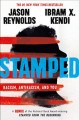 A timely, crucial, and empowering exploration of racism--and antiracism--in America This is NOT a history book. This is a book about the here and now. A book to help us better understand why we are where we are. A book about race. The construct of race has always been used to gain and keep power, to create dynamics that separate and silence. This remarkable reimagining of Dr. Ibram X. Kendi's National Book Award-winning Stamped from the Beginning reveals the history of racist ideas in America, and inspires hope for an antiracist future. It takes you on a race journey from then to now, shows you why we feel how we feel, and why the poison of racism lingers. It also proves that while racist ideas have always been easy to fabricate and distribute, they can also be discredited. Through a gripping, fast-paced, and energizing narrative written by beloved award-winner Jason Reynolds, this book shines a light on the many insidious forms of racist ideas--and on ways readers can identify and stamp out racist thoughts in their daily lives.Young adult.
- Subjects: Electronic books.; United States; Politics & Government; Prejudice & Racism; African American;
- © 2020., Little, Brown Books for Young Readers,
-
unAPI
- The stronger sex : what science tells us about the power of the female body / by Vartan, Starre,author.;
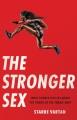 Includes bibliographical references and index."A myth-busting vindication of women's physical strengths. For decades, Starre Vartan -- like most women -- was told that having a woman's body meant being weaker than men. Like many women, she mostly believed it. Following a half decade of research into the newest science, Vartan shows in The Stronger Sex that women's bodies are incredibly powerful, flexible, and resilient in ways men's bodies aren't. Tossing aside the narrow notion of a fully ripped man as the measure of strength, Vartan reveals the ways that women surpass men in endurance, flexibility, immunity, pain tolerance, and the ultimate test of any human body: longevity. In interviews with dozens of researchers from biology, anthropology, physiology, and sports science, plus in-depth conversations with runners, swimmers, wrestlers, woodchoppers, thru-hikers, firefighters, and more, The Stronger Sex squashes outdated ideas about women's bodies. It's a celebration of female strength that doesn't argue "down with men" but "up with us all""--
- Subjects: Muscle strength; Sex differences.; Sex differences; Women;
- Available copies: 1 / Total copies: 1
-
unAPI
- The resilience myth : new thinking on grit, strength, and growth after trauma / by Chemaly, Soraya L.,author.;
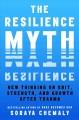 Includes bibliographical references and index.The author of the "must read" (NPR) Rage Becomes Her presents a powerful manifesto for communal resilience based on in-depth investigations into history, social science, and psychology. We are often urged to rely only on ourselves for strength, mental fortitude, and positivity. But with her distinctive "skill, wit, and sharp insight" (Laura Bates, author of Girl Up), Soraya Chemaly challenges us to adapt our thinking about how we survive in a world of sustained, overlapping crises. It is interdependence and nurturing relationships that truly sustain us, she argues. Based on comprehensive research and eye-opening examples from real-life, The Resilience Myth offers alternative visions of relational hardiness by emphasizing care for others and our environments above all.
- Subjects: Adaptability (Psychology); Adjustment (Psychology); Resilience (Personality trait);
- Available copies: 1 / Total copies: 1
-
unAPI
- Close to the Bone. by Thomas, Jared,film director.; McKinnon, Malcolm,film director.; Ronin Films (Firm),dst; Kanopy (Firm),dst;
 Originally produced by Ronin Films in 2022.In September 1852, in South Australia’s Flinders Ranges, the mutilated body of 16-year-old shepherd, James Brown, was found. The next day, a reprisal party of 17 men killed a disputed number of First Nations people. 170 years later, descendants of James Brown’s family return to the Flinders Ranges and reach out to people from some of the Aboriginal groups and share memories of the traumatic early period of European invasion. What happens when stories of violence and conquest on Australia’s colonial frontier are more than just an historical abstraction, with powerful and personal meanings for families and individuals on both sides of the inter-cultural frontier? Can the scars of past atrocities be reconciled and healed through the act of truth-telling? CLOSE TO THE BONE is a practical exercise in ‘truth and reconciliation,’ engaging with culturally and politically challenging material, in an effort to forge shared understandings. The film reveals diverse understandings of historic events, while seeking to resolve a shared path forward. In doing so, the film is informed by Charlie Perkins’ words: ‘We know we cannot live in the past, but the past lives in us.’Mode of access: World Wide Web.
- Subjects: Documentary films.; Social sciences.; Australians.; Foreign study.; History, Modern.; Documentary films.; Indigenous peoples.; Current affairs.; History.; Violence.; Aboriginal Australians.; Australia.;
-
unAPI
- Close to the Bone. by Thomas, Jared,film director.; McKinnon, Malcolm,film director.; Ronin Films (Firm),dst; Kanopy (Firm),dst;
 Originally produced by Ronin Films in 2022.In September 1852, in South Australia’s Flinders Ranges, the mutilated body of 16-year-old shepherd, James Brown, was found. The next day, a reprisal party of 17 men killed a disputed number of First Nations people. 170 years later, descendants of James Brown’s family return to the Flinders Ranges and reach out to people from some of the Aboriginal groups and share memories of the traumatic early period of European invasion. What happens when stories of violence and conquest on Australia’s colonial frontier are more than just an historical abstraction, with powerful and personal meanings for families and individuals on both sides of the inter-cultural frontier? Can the scars of past atrocities be reconciled and healed through the act of truth-telling? CLOSE TO THE BONE is a practical exercise in ‘truth and reconciliation,’ engaging with culturally and politically challenging material, in an effort to forge shared understandings. The film reveals diverse understandings of historic events, while seeking to resolve a shared path forward. In doing so, the film is informed by Charlie Perkins’ words: ‘We know we cannot live in the past, but the past lives in us.’Mode of access: World Wide Web.
- Subjects: Documentary films.; Social sciences.; Australians.; Foreign study.; History, Modern.; Documentary films.; Indigenous peoples.; Current affairs.; History.; Violence.; Aboriginal Australians.; Australia.;
-
unAPI
- The dying citizen : how progressive elites, tribalism, and globalization are destroying the idea of America / by Hanson, Victor Davis,author.;
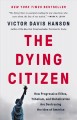 Includes bibliographical references and index."Most of human history is full of the stories of peasants, subjects, or tribes. The concept of the "citizen," an idea we take for granted, is historically quite rare-and was, until recently, amongst America's most profoundly cherished ideals. But without shock treatment, warns historian and conservative political commentator Victor Davis Hanson, American citizenship as we have known it for well over two centuries may soon vanish. In The Dying Citizen, Hanson outlines the forces that have brought us to the twilight of American citizenship, and led to the deeply fractured politics of the present era. Over the last half-century, numerous forces from both above and below have conspired to undermine the value we place in the idea of citizenship-and our vigilance in protecting it. To be self-governing, citizens must be economically autonomous, but the evisceration of the middle class and the rise of inequality have made many Americans dependent on the federal government. Citizenship exists within delineated borders-but open borders and the elite concept of "global citizenship" have rendered meaningless the idea of allegiance to a particular place. Citizenship relies on the renunciation of tribal identity in favor of the state, but identity politics have eradicated the idea of a collective civic sense of self. A vastly expanded unelected bureaucracy has overwhelmed the power of elected officials, thereby destroying the sovereign power of the citizen. Progressive academics and activists lay siege to the institutions and traditions of constitutional citizenship. As in the revolutionary years of 1848, 1917, and 1968, 2020 has ripped away our complacency about the future of our most cherished ideals. Americans are forced to confront the fragility of citizenship-indeed, the fragility of our nation. But this calamitous year may also teach Americans to rebuild and recover what we have lost. The choice is ours"--
- Subjects: Citizenship; Citizenship; Elite (Social sciences); World citizenship.;
- Available copies: 1 / Total copies: 1
-
unAPI
- Finding normal : sex, love, and taboo in our hyperconnected world / by Tsoulis-Reay, Alexa,author.;
 Includes bibliographical references and index."Alexa Tsoulis-Reay's Finding Normal is an author's up close tour of people who are using the Internet to challenge the boundaries of what's taboo and what it means to be normal. Based on a popular series of candid interviews conducted for New York magazine's human science column--"What It's Like"--Finding Normal explores the ways that real people are using the Internet to find community, forge connections, and create identity in ways that challenge a variety of accepted sexual norms. Ranging from the atypical to the shocking, each story in Finding Normal intimately immerses the reader in the world of a person who is grappling with a unique set of circumstances relating to sexuality. Finding Normal at once celebrates the power of our current media moment for helping people rewrite the script for their lives and offers a warning about the danger of that seemingly limitless freedom to find yourself. Finding Normal shows the enduring power of the search for belonging--for humans and society. Like happiness or life purpose, finding normal is perhaps the definitive human struggle"--
- Subjects: Online identities.; Online social networks.; Sex customs.; Sex.; Social norms.; Computer sex;
- Available copies: 1 / Total copies: 1
-
unAPI
- Battling the big lie : how Fox, Facebook, and the MAGA media are destroying America / by Pfeiffer, Dan,author.;
 "In BATTLING THE BIG LIE, bestselling author Dan Pfeiffer returns to lay out how the Right Wing built such a robust and successful disinformation machine, how they have used it to amass power despite representing a dwindling share of the country, and how readers can fight back against disinformation with step-by-step guides on spotting fake news, becoming their own fact checker, and talking to their conspiracy theory-obsessed relatives. Over the last twenty years, the Right Wing has built a massive media apparatus that is weaponizing misinformation for political purposes. The Right Wing media ecosystem personified by Fox and fueled by Facebook is waging war on the very idea of objective truth -- and it's winning. This misinformation campaign is at the root of much that is rotten in America and around the world. Trump is a product of this eco-system as is the immense polarization and division and our inability to deal rationally with immense threats like COVID and Climate Change. Here, Pfeiffer lays bare the tactics used by the Right Wing propaganda machine and how to combat them, including: QAnon and its proponents, from Facebook groups to members of congress ; The optimization of Facebook as the ultimate carrier of Right Wing clickbait ; Educating the Left to "fight fire with fire" and nurture progressive media ; How to have hard conversations with the Fox News-watching, conspiracy theory-believing relative in your life. A functioning democracy depends on a shared understanding of reality. America is teetering on the edge because one of the two parties in our two-party system views truth, facts, and science as their opponent. As BATTLING THE BIG LIE proves, time is running out to fix this problem. There are no easy answers or quick fixes, but something must be done.
- Subjects: Disinformation; Polarization (Social sciences);
- Available copies: 1 / Total copies: 1
-
unAPI
- Wanting : the power of mimetic desire in everyday life / by Burgis, Luke,author.;
 Includes bibliographical references and index."Wanting is a groundbreaking exploration of why we want what we want, and a toolkit for freeing ourselves from chasing unfulfilling desires. As an undergraduate studying philosophy at Stanford, Peter Thiel met French polymath René Girard and was introduced to his theory of "mimetic desire"-the idea that most human wanting comes from imitating what other people desire, rather than from an innate sense of need. Inducted into the Académie Française as the "Darwin of the social sciences," Girard is largely unknown outside academic circles. But because of Girard, Thiel knew that Facebook would thrive because it offered a window into people's curated presentation of the best parts of their lives, thereby satisfying our need to look for "models" who tell us what to desire. According to Girard, each of us is surrounded by people who generate, shape, and manipulate our desires at every turn. Mimetic desire is no mere tool of advertisers but a reality that affects our daily lives in romance, work, fitness, politics, and parenting. Mimetic desire is a secret, unacknowledged, sophisticated form of adult imitation that drives a larger degree of human behavior than anybody ever realized. The consequences of mimetic desire are startling. Because people learn to want what other people want, they are easily drawn into rivalries and conflict. According to Girard, people don't fight because they want different things; they fight because, through mimetic desire, they start to want the same things. But mimetic desire does not have to be in control. We are free to choose. And those who understand mimetic desire have a tremendous advantage over those who don't-they can use it for good or for ill. Drawing on his experience as an entrepreneur, teacher, and student of classical philosophy and theology, Luke Burgis shows how to counteract the mimetic forces of the market by turning blind wanting into intentional wanting-not by trying to rid ourselves of desire, but by desiring differently. Intentional desire is what propels us to create a better world. Burgis shows how to achieve more independence from trends and bubbles, how to feel more in control of the things we want, and ultimately how to find more meaning in our work and life by grounding them in desires that will never fade away"--
- Subjects: Desire.; Imitation.; Basic needs;
- Available copies: 1 / Total copies: 1
-
unAPI
Results 81 to 90 of 141 | « previous | next »