Results 31 to 40 of 55 | « previous | next »
- Indigenous rights in one minute : what you need to know to talk reconciliation / by McIvor, Bruce,author.;
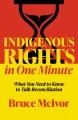 "Internationally renowned as an expert in Aboriginal law and an advocate for Indigenous rights, Bruce McIvor delivers concise, essential information for Canadians committed to truth and reconciliation. A shortage of trustworthy information continues to frustrate Canadians with best intentions to fulfill Canada's commitment to reconciliation with Indigenous Peoples. To meet this demand, lawyer and historian Bruce McIvor provides concise, plain answers to 100 essential questions being asked by Canadians across the country. During his nearly three decades advocating for Indigenous rights and teaching Aboriginal law, McIvor has recorded the fundamental questions that Canadians from all corners of society have asked to advance reconciliation: Why do Indigenous people have special rights? What is the Doctrine of Discovery? Who are the Métis? Why was the Calder decision important? What is reconciliation? McIvor supplies the answers Canadians are looking for by scrapping the technical language that confuses the issues, and speaks directly to everyone looking for straight answers. Throughout, McIvor shares his perspective on why reconciliation as envisioned by the courts and Canadian governments frustrates Indigenous people and what needs to change to overcome the impasse. McIvor's explanations of complex legal issues demonstrate a unique mix of a deep knowledge of the law, the ability to write clearly and concisely, practical experience from the frontlines of advocating for First Nations in courtrooms and at negotiation tables across the country, and a profound passion for justice rooted in his work and personal history. To ensure the country's reconciliation project progresses from rhetoric to reality, ordinary Canadians need straightforward answers to fundamental questions. McIvor provides the answers and context to support a thoughtful and respectful national conversation about reconciliation and the fulfillment of Canada's commitment to a better future for Indigenous people."--
- Subjects: Law for laypersons.; Indigenous peoples; Indigenous peoples; Indigenous peoples; Métis; Métis; Métis; First Nations; First Nations; First Nations; Indigenous title;
- Available copies: 1 / Total copies: 1
-
unAPI
- The killing fields of East New York : the first subprime mortgage scandal, a white-collar crime spree, and the collapse of an American neighborhood / by Horn, Stacy,author.;
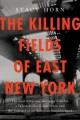 Includes bibliographical references and index."In this groundbreaking work of investigative journalism and true crime, Stacy Horn sheds light on how the subprime mortgage scandal of the 1970s and a long history of white-collar crime slowly devastated East New York, a Brooklyn neighborhood that would come to be known as the Killing Fields. On a warm summer evening in 1991, seventeen-year-old Julia Parker was murdered in the Brooklyn neighborhood of East New York. An area known for an exorbitant level of violence and crime, East New York had come to be known as the Killing Fields. In the six months after Julia Parker's death, 62 more people were murdered in the same area. In the early 1990s, murder rates in the neighborhood climbed to the highest in NYPD history. East New York was dying. But how did this once thriving, diverse, family neighborhood fall into such ruin? The answer can be found two decades earlier. In response to redlining and discriminatory housing practices, the Johnson administration passed the Housing and Urban Development Act in 1968. The Federal Housing Authority aimed to use this piece of legislation to help low-income families of color finally achieve homeownership. But they could never have predicted how banks, lenders, realtors, and corrupt FHA officials themselves would use the newly passed law to make victims of the very people they were trying to help, and the devastation they would leave in their wake. A compulsively readable hybrid of true crimeand investigative journalism, The Killing Fields of East New York reveals how white-collar crime reduced a prospering neighborhood to abandoned buildings and empty lots. Following the dual threads of the hunt for the network of criminals behind the first subprime mortgage scandal and the ensuing downfall of East New York, Stacy Horn weaves a compelling narrative of government failure, a desperate community, and ultimately the largest series of mortgage fraud prosecutions in American history. The Killing Fields of East New York deftly demonstrates how different types of crime are profoundly entangled, and how the crimes committed in nice suits and corner offices are just as destructive as those committed on the street"--
- Subjects: True crime stories.; Criminology.; Fraud investigation.; Murder; Scandals.; White collar crime investigation;
- Available copies: 1 / Total copies: 1
-
unAPI
- The art of clear thinking : a stealth fighter pilot's timeless rules for making tough decisions / by Lee, Hasard,author.;
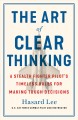 Includes bibliographical references."Based on a career of making high-stakes, split-second decisions as a U.S. fighter pilot, The Art of Clear Thinking teaches readers to apply Hasard Lee's combat-tested techniques in everyday life. The training to become a fighter pilot is among the most competitive and difficult in the world with fewer than one in a thousand succeeding. Pushing a cutting-edge jet to its limits at over 1,000 mph means that every split-second decision can have catastrophic consequences. This extreme environment has forged a group of warriors who for the last fifty years have been considered at the apex of decision-making theory and practice. In The Art of Clear Thinking, Hasard Lee distills what he's learned during his career flying some of the Air Force's most advanced aircraft. With gripping firsthand accounts from his time as a fighter pilot and fascinating turning points throughout history, Hasard reveals powerful decision-making principles that can be used in business and in life, including: * HOW TO LEARN BETTER AND FASTER * CULTIVATING MENTAL TOUGHNESS * DEVELOPING THE SKILLS TO QUICKLY ASSESS, CHOOSE, AND EXECUTE * AND MUCH, MUCH MORE. Hasard has used and taught these techniques across the full spectrum of human endeavors and proven their effectiveness in both the cockpit and the boardroom. Those who have already benefited include CEO's, astronauts, CIA agents, students, parents, and many others. The Art of Clear Thinking is a book that will change how you interact with the world around you"--
- Subjects: Decision making.; Problem solving.;
- Available copies: 1 / Total copies: 1
-
unAPI
- The skin we're in : a year of Black resistance and power / by Cole, Desmond,1982-author.;
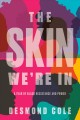 Includes bibliographical references."In May 2015, the cover story of Toronto Life magazine shook Canada's largest city to its core. Desmond Cole's "The Skin I'm In" exposed the racist practices of the Toronto police force, detailing the dozens of times Cole had been stopped and interrogated under the controversial practice of carding. The story quickly came to national prominence, went on to win a number of National Magazine Awards and catapulted its author into the public sphere. Cole used his newfound profile to draw insistent, unyielding attention to the injustices faced by Black Canadians on a daily basis: the devastating effects of racist policing; the hopelessness produced by an education system that expects little of its black students and withholds from them the resources they need to succeed more fully; the heartbreak of those vulnerable before the child welfare system and those separated from their families by discriminatory immigration laws. Both Cole's activism and journalism find vibrant expression in his first book, The Skin We're In. Puncturing once and for all the bubble of Canadian smugness and naïve assumptions of a post-racial nation, Cole chronicles just one year-- 2017-- in the struggle against racism in this country. It was a year that saw calls for tighter borders when African refugees braved frigid temperatures to cross into Manitoba from the States, racial epithets used by a school board trustee, a six-year-old girl handcuffed at school. The year also witnessed the profound personal and professional ramifications of Desmond Cole's unwavering determination to combat injustice. In April, Cole disrupted a Toronto police board meeting by calling for the destruction of all data collected through carding. Following the protest, Cole, a columnist with the Toronto Star, was summoned to a meeting with the paper's opinions editor and was informed that his activism violated company policy. Rather than limit his efforts defending Black lives, Cole chose to sever his relationship with the publication. Then in July, at another TPS meeting, Cole challenged the board publicly, addressing rumours of a police cover-up of the brutal beating of Dafonte Miller by an off-duty police officer and his brother. When Cole refused to leave the meeting until the question was publicly addressed, he was arrested. The image of Cole walking, handcuffed and flanked by officers, out of the meeting fortified the distrust between the city's Black community and its police force. In a month-by-month chronicle, Cole locates the deep cultural, historical and political roots of each event so that what emerges is a personal, painful and comprehensive picture of entrenched, systemic inequality. Urgent, controversial and unsparingly honest, The Skin We're In is destined to become a vital text for anti-racist and social justice movements in Canada, as well as a potent antidote to the all-too-present complacency of many white Canadians."-- Provided by publisher.
- Subjects: Black Canadians; Discrimination in criminal justice administration; Discrimination in law enforcement; Minorities; Police brutality; Police misconduct; Police-community relations; Race discrimination;
- Available copies: 2 / Total copies: 2
-
unAPI
- The skin we're in : [Book Club Set] / by Cole, Desmond,1982-author.;
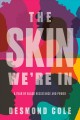 Includes bibliographical references."In May 2015, the cover story of Toronto Life magazine shook Canada's largest city to its core. Desmond Cole's "The Skin I'm In" exposed the racist practices of the Toronto police force, detailing the dozens of times Cole had been stopped and interrogated under the controversial practice of carding. The story quickly came to national prominence, went on to win a number of National Magazine Awards and catapulted its author into the public sphere. Cole used his newfound profile to draw insistent, unyielding attention to the injustices faced by Black Canadians on a daily basis: the devastating effects of racist policing; the hopelessness produced by an education system that expects little of its black students and withholds from them the resources they need to succeed more fully; the heartbreak of those vulnerable before the child welfare system and those separated from their families by discriminatory immigration laws. Both Cole's activism and journalism find vibrant expression in his first book, The Skin We're In. Puncturing once and for all the bubble of Canadian smugness and naïve assumptions of a post-racial nation, Cole chronicles just one year-- 2017-- in the struggle against racism in this country. It was a year that saw calls for tighter borders when African refugees braved frigid temperatures to cross into Manitoba from the States, racial epithets used by a school board trustee, a six-year-old girl handcuffed at school. The year also witnessed the profound personal and professional ramifications of Desmond Cole's unwavering determination to combat injustice. In April, Cole disrupted a Toronto police board meeting by calling for the destruction of all data collected through carding. Following the protest, Cole, a columnist with the Toronto Star, was summoned to a meeting with the paper's opinions editor and was informed that his activism violated company policy. Rather than limit his efforts defending Black lives, Cole chose to sever his relationship with the publication. Then in July, at another TPS meeting, Cole challenged the board publicly, addressing rumours of a police cover-up of the brutal beating of Dafonte Miller by an off-duty police officer and his brother. When Cole refused to leave the meeting until the question was publicly addressed, he was arrested. The image of Cole walking, handcuffed and flanked by officers, out of the meeting fortified the distrust between the city's Black community and its police force. In a month-by-month chronicle, Cole locates the deep cultural, historical and political roots of each event so that what emerges is a personal, painful and comprehensive picture of entrenched, systemic inequality. Urgent, controversial and unsparingly honest, The Skin We're In is destined to become a vital text for anti-racist and social justice movements in Canada, as well as a potent antidote to the all-too-present complacency of many white Canadians."-- Provided by publisher.
- Subjects: Black Canadians; Discrimination in criminal justice administration; Discrimination in law enforcement; Minorities; Police brutality; Police misconduct; Police-community relations; Race discrimination;
- Available copies: 0 / Total copies: 12
-
unAPI
- Data cartels : the companies that control and monopolize our information / by Lamdan, Sarah,author.;
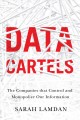 Includes bibliographical references and index."In our digital world, data is power, and information hoarders reign supreme. The practices of these digital pillagers are analogous to those of cartels--they use intimidation, aggression, and force to maintain control and power. Sarah Lamdan brings us into the unregulated underworld of the "data cartels," demonstrating how the entities mining, hoarding, commodifying, and selling our data and informational resources perpetuate social inequalities and threaten the democratic sharing of knowledge. The companies at the center of this book are not household names like Google. They fly under the radar and self-identify as "data analytics" or "business solutions" operations. These companies supply the digital lifeblood that flow through the circulatory system of the internet. With their control over data, they can prevent the free flow of information to places where it is needed, and simultaneously distribute private information to predatory entities. Just a few companies dominate most of our critical informational resources, from scientific research and financial data to the law. They are also data brokers, selling our personal data to law enforcement and other government agencies that determine whether we should be eligible for social services, and they sell "risk" products that insurance companies, employers, landlords, and healthcare systems use to make decisions. Alarmingly, everything they're doing is perfectly legal. Ranging from small information firms to billion-dollar data giants like Thomson Reuters and RELX Group, these companies masterfully exploit outdated information and privacy laws, curating online information in a way that amplifies digital racism and targets marginalized communities. In this book, Lamdan contends that privatization and tech exceptionalism have prevented us from creating effective legal regulation. Lack of legal intervention has allowed oversized information oligopolies to coalesce. In addition to specific legal and market-based solutions, Lamdan calls for treating information like a public good and creating digital infrastructure that supports our democratic ideals"--
- Subjects: Antitrust law; Cartels; Data protection; Freedom of information; Information services industry; Information services industry;
- Available copies: 1 / Total copies: 1
-
unAPI
- Lies he told me / by Patterson, James,1947-author.; Ellis, David,1967-author.;
 "An attorney and mother of two discovers her husband has a secret life-and it might cost them all their lives. Everyone in Hemingway Grove, Illinois, knows David and Marcie Bowers. David owns the local pub. Marcie is a former big-city lawyer who practices family law. When David jumps into Cotton River to save a drowning stranger, he's celebrated as a hero. His muscled physique, shaved head, and piercing blue eyes are broadcast on every news outlet. For most people, newfound fame is a lifeline. For David Bowers, it's a death sentence. For Marcie Bowers, it's a test. A wife knows the difference between a loving family man and a cold-blooded assassin, right?"--
- Subjects: Thrillers (Fiction); Psychological fiction.; Novels.; Assassins; Bar owners; Man-woman relationships; Married people; Secrecy; Truthfulness and falsehood; Women lawyers;
- Available copies: 1 / Total copies: 3
-
unAPI
- Start & run a marijuana dispensary or pot shop : wherever it is legal / by Currie, Jay,1956-author.;
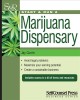 "As laws change, North Americans are gaining greater legal access to marijuana through local dispensaries. But the rise of the dispensary brings a mountain of challenges. This book treats the fledgling industry as a serious prospect and identifies the best practices to start and run a dispensary. From business basics to ensure sufficient cash flow, to science basics to ensure proper sourcing and care of the products, the author walks dispensary owners through the important and subtle steps to a successful and sustainable business. 'Start and Run a Marijuana Dispensary' is a guide to create a business model and an operating plan to legally dispense marijuana and its related products. This is the definitive guide on how to start and run a legal, viable marijuana dispensary."--Provided by publisher.
- Subjects: Marijuana industry.; Marijuana; Dispensaries.; New business enterprises.;
- Available copies: 1 / Total copies: 1
-
unAPI
- Lies he told me [text (large print)] / by Patterson, James,1947-author.; Ellis, David,1967-author.;
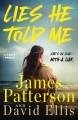 "An attorney and mother of two discovers her husband has a secret life-and it might cost them all their lives. Everyone in Hemingway Grove, Illinois, knows David and Marcie Bowers. David owns the local pub. Marcie is a former big-city lawyer who practices family law. When David jumps into Cotton River to save a drowning stranger, he's celebrated as a hero. His muscled physique, shaved head, and piercing blue eyes are broadcast on every news outlet. For most people, newfound fame is a lifeline. For David Bowers, it's a death sentence. For Marcie Bowers, it's a test. A wife knows the difference between a loving family man and a cold-blooded assassin, right?"--
- Subjects: Thrillers (Fiction); Large print books.; Psychological fiction.; Novels.; Assassins; Bar owners; Man-woman relationships; Married people; Secrecy; Truthfulness and falsehood; Women lawyers;
- Available copies: 1 / Total copies: 1
-
unAPI
- Unstressable : a practical guide to stress-free living / by Gawdat, Mo,author.; Law, Alice,author.;
 Includes bibliographical references (pages 355-358)."Unstressable is a handbook for those who realize stress isn't what happens to you; it's how you handle what happens to you. It's a left brainer's solution to a modern right-brain problem. Mo Gawdat is an engineer. What most of us see as inchoate, insurmountable problems he sees as systems overloads to tackle and solve. Unstressable breaks stress into inputs and effects, classifying human stressors as: stress to the mind, stress to emotions, stress to the body, and stress to the soul. Once classified, Gawdat and co-author Alice Law show readers how stress can be predicted -- with mathematical certainty -- and once predicted, prevented. Unstressable shows readers how most of us deal with the unpleasant, anxiety-producing and even miserable or tragic events in our lives: stress is always a by-product, leading directly to inability to cope, health problems and cratered confidence. Gawdat guides readers to no-woo-woo, all-science-based solutions. He'll train readers to: -- Develop habits and attitudes of listening and learning that limit stress -- Learn the language of de-stressing mind, emotions, body and soul -- Respond, not react -- Release self-criticism, insomnia, and lethargy -- Increase energy, focus and confidence"--
- Subjects: Stress management.;
- Available copies: 1 / Total copies: 1
-
unAPI
Results 31 to 40 of 55 | « previous | next »