Results 51 to 53 of 53 | « previous
- Unrequited infatuations : odyssey of a rock and roll consigliere : (a cautionary tale) / by Van Zandt, Steve,author.; Greenman, Ben,editor.;
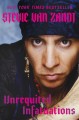 Uncover never-before-told stories in this epic tale of self-discovery by a Rock n Roll disciple and member of the E Street Band. What story begins in a bedroom in suburban New Jersey in the early '60s, unfolds on some of the country's largest stages, and then ranges across the globe, demonstrating over and over again how Rock and Roll has the power to change the world for the better? This story. The first true heartbeat of Unrequited Infatuations is the moment when Stevie Van Zandt trades in his devotion to the Baptist religion for an obsession with Rock and Roll. Groups like the Beatles and the Rolling Stones created new ideas of community, creative risk, and principled rebellion. They changed him forever. While still a teenager, he met Bruce Springsteen, a like-minded outcast/true believer who became one of his most important friends and bandmates. As Miami Steve, Van Zandt anchored the E Street Band as they conquered the Rock and Roll world. And then, in the early '80s, Van Zandt stepped away from E Street to embark on his own odyssey. He refashioned himself as Little Steven, a political songwriter and performer, fell in love with Maureen Santoro who greatly expanded his artistic palette, and visited the world's hot spots as an artist/journalist to not just better understand them, but to help change them. Most famously, he masterminded the recording of "Sun City," an anti-apartheid anthem that sped the demise of South Africa's institutionalized racism and helped get Nelson Mandela out of prison. By the '90s, Van Zandt had lived at least two lives--one as a mainstream rocker, one as a hardcore activist. It was time for a third. David Chase invited Van Zandt to be a part of his new television show, the Sopranos--as Silvio Dante, he was the unconditionally loyal consiglieri who sat at the right hand of Tony Soprano (a relationship that oddly mirrored his real-life relationship with Bruce Springsteen). Underlying all of Van Zandt's various incarnations was a devotion to preserving the centrality of the arts, especially the endangered species of Rock. In the twenty-first century, Van Zandt founded a groundbreaking radio show (Little Steven's Underground Garage), created the first two 24/7 branded music channels on SiriusXM (Underground Garage and Outlaw Country), started a fiercely independent record label (Wicked Cool), and developed a curriculum to teach students of all ages through the medium of music history. He also rejoined the E Street Band for what has now been a twenty-year victory lap. ​Unrequited Infatuations chronicles the twists and turns of Stevie Van Zandt's always surprising life. It is more than just the testimony of a globe-trotting nomad, more than the story of a groundbreaking activist, more than the odyssey of a spiritual seeker, and more than a master class in rock and roll (not to mention a dozen other crafts). It's the best book of its kind because it's the only book of its kind.
- Subjects: Biographies.; Autobiographies.; Van Zandt, Steve.; Rock musicians;
- Available copies: 1 / Total copies: 1
-
unAPI
- Pathogenesis : a history of the world in eight plagues / by Kennedy, Jonathan,author.;
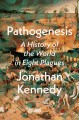 Includes bibliographical references and index."A sweeping look at how the major transformations in history--from the rise of Homo sapiens to the birth of capitalism--have been shaped not by humans but by germs. According to the accepted narrative of progress, humans have thrived thanks to their brains and brawn, collectively bending the arc of history. But in this revelatory book, professor Jonathan Kennedy argues that the myth of human exceptionalism overstates the role that we play in social and political change. Instead, it is the humble microbe that wins wars and topples empires. Drawing on the latest research in fields ranging from genetics and anthropology to archaeology and economics, Pathogenesis takes us through 60,000 years of history, exploring eight major outbreaks of infectious disease that have made the modern world. Bacteria and viruses were protagonists in the demise of the Neanderthals, the growth of Islam, the transition from feudalism to capitalism, the devastation wrought by European colonialism, and the evolution of the United States from an imperial backwater to a global superpower. Even Christianity rose to prominence in the wake of a series of deadly pandemics that swept through the Roman Empire in the second and third centuries: Caring for the sick turned what was a tiny sect into one of the world's major religions. By placing disease at the center of his wide-ranging history of humankind, Kennedy challenges some of the most fundamental assumptions about our collective past--and urges us to view this moment as another disease-driven inflection point that will change the course of history. Provocative and brimming with insight, Pathogenesis transforms our understanding of the human story"--
- Subjects: Diseases and history.; Epidemics; Plague;
- Available copies: 1 / Total copies: 1
-
unAPI
- The fast : the history, science, philosophy, and promise of doing without / by Oakes, John G. H.,author.;
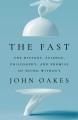 Includes bibliographical references and index."An engaging exploration of the unique history and biology of fasting-an essential component of many traditional health practices, religions, and philosophies, resurging in popularity today-perfect for readers of Breath by James Nestor and Why We Sleepby Matthew Walker. We fast all the time, even when we're not conscious of doing so. A fast manifests the idea of holding back, resisting the animal impulse to charge ahead. Its flip side is similarly everywhere: call it splurging, self-indulgence, or a variant of "self-care." Based on extensive historical, scientific, and cultural research and reporting, The Fast illuminates the numerous facets of this act of self-deprivation. John Oakes interviews doctors, spiritual leaders, activists, and others who guide him through this practice-and embarks on fasts of his own-to deliver a book that supplies readers curious about fasting with profound new understanding, appreciation, and inspiration. Fasting has become increasingly popular for a variety of reasons-from health advocates who see fasting as a method to lose weight or to detox, to the faithful who fast in prayer, to seekers pursuing mindfulness, to activists using hunger strikes as an effective means of peaceful protest. Fasting is central to holy seasons and days such as Lent in Christianity, Ramadan in Islam, and Yom Kippur in Judaism. Advocates for justice who have waged hunger strikes include Gandhi in India, Bobby Sands in Ireland, and the Taxi Workers Alliance in New York City. Whether for philosophical, political, or health-related reasons, fasting marks a departure from daily routine. Fasting involves doing less but doing less in a radical way, reminding us that a slower, more intentional contemplative experience can be more fulfilling. Ultimately, this book shows us that fasting is about much more than food: it is about reconsidering our place in the world"--
- Subjects: Fasting; Fasting; Fasting;
- Available copies: 1 / Total copies: 1
-
unAPI
Results 51 to 53 of 53 | « previous