Results 61 to 70 of 99 | « previous | next »
- The Serviceberry [electronic resource] : by Kimmerer, Robin Wall.aut; Kimmerer, Robin Wall.nrt; cloudLibrary;
 From the #1 New York Times bestselling author of Braiding Sweetgrass, a bold and inspiring vision for how to orient our lives around gratitude, reciprocity, and community, based on the lessons of the natural world. As Indigenous scientist and author of Braiding Sweetgrass Robin Wall Kimmerer harvests serviceberries alongside the birds, she considers the ethic of reciprocity that lies at the heart of the gift economy. How, she asks, can we learn from Indigenous wisdom and the plant world to reimagine what we value most? Our economy is rooted in scarcity, competition, and the hoarding of resources, and we have surrendered our values to a system that actively harms what we love. Meanwhile, the serviceberry’s relationship with the natural world is an embodiment of reciprocity, interconnectedness, and gratitude. The tree distributes its wealth—its abundance of sweet, juicy berries—to meet the needs of its natural community. And this distribution insures its own survival. As Kimmerer explains, “Serviceberries show us another model, one based upon reciprocity, where wealth comes from the quality of your relationships, not from the illusion of self-sufficiency.” As Elizabeth Gilbert writes, Robin Wall Kimmerer is “a great teacher, and her words are a hymn of love to the world.” The Serviceberry is an antidote to the broken relationships and misguided goals of our times, and a reminder that “hoarding won’t save us, all flourishing is mutual.” Robin Wall Kimmerer is donating her advance payments from this book as a reciprocal gift, back to the land, for land protection, restoration, and justice.
- Subjects: Audiobooks.; Plants; Indigenous Studies;
- © 2024., Simon & Schuster,
-
unAPI
- The Serviceberry Abundance and Reciprocity in the Natural World [electronic resource] : by Kimmerer, Robin Wall.aut; Burgoyne, John.ill; cloudLibrary;
 From the #1 New York Times bestselling author of Braiding Sweetgrass, a bold and inspiring vision for how to orient our lives around gratitude, reciprocity, and community, based on the lessons of the natural world. As Indigenous scientist and author of Braiding Sweetgrass Robin Wall Kimmerer harvests serviceberries alongside the birds, she considers the ethic of reciprocity that lies at the heart of the gift economy. How, she asks, can we learn from Indigenous wisdom and the plant world to reimagine what we value most? Our economy is rooted in scarcity, competition, and the hoarding of resources, and we have surrendered our values to a system that actively harms what we love. Meanwhile, the serviceberry’s relationship with the natural world is an embodiment of reciprocity, interconnectedness, and gratitude. The tree distributes its wealth—its abundance of sweet, juicy berries—to meet the needs of its natural community. And this distribution insures its own survival. As Kimmerer explains, “Serviceberries show us another model, one based upon reciprocity, where wealth comes from the quality of your relationships, not from the illusion of self-sufficiency.” As Elizabeth Gilbert writes, Robin Wall Kimmerer is “a great teacher, and her words are a hymn of love to the world.” The Serviceberry is an antidote to the broken relationships and misguided goals of our times, and a reminder that “hoarding won’t save us, all flourishing is mutual.” Robin Wall Kimmerer is donating her advance payments from this book as a reciprocal gift, back to the land, for land protection, restoration, and justice.
- Subjects: Electronic books.; Plants; Indigenous Studies;
- © 2024., Scribner,
-
unAPI
- Sorry/Not Sorry. by Mones, Cara,film director.; Suh, Caroline,film director.; Rodriguez, Aida,actor.; Kirkman, Jen,actor.; Ian Black, Michael,actor.; Schur, Michael,actor.; Greenwich Entertainment (Firm),dst; Kanopy (Firm),dst;
 Aida Rodriguez, Jen Kirkman, Michael Ian Black, Michael SchurOriginally produced by Greenwich Entertainment in 2023.An inside look at Louis C.K.’s public downfall and surprising return to the stage. Featuring interviews with three women -- Jen Kirkman, Abby Schachner, and Megan Koester -- who spoke up about his sexual misconduct, New York Times journalists who broke the story, and fellow comedians and writers such as Michael Ian Black, Michael Schur, and Aida Rodriguez. Invites viewers to question whose stories and whose art we value, and at what cost. A New York Times production.Mode of access: World Wide Web.
- Subjects: Documentary films.; Performing arts.; Arts.; Social sciences.; Gender identity.; Documentary films.; Women's studies.; Artists.; Women artists.; Sexual harassment.; Comedians.; Hollywood (Los Angeles, Calif.).;
-
unAPI
- Mar-a-Lago : inside the gates of power at Donald Trump's presidential palace / by Leamer, Laurence,author.;
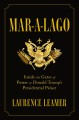 Includes bibliographical references (pages 279-280) and index.To know Donald J. Trump it is best to start in his natural habitat: Palm Beach, Florida. It is here he learned the techniques that took him all the way to the White House. Painstakingly, over decades, he has created a world in this exclusive tropical enclave where he is not just a president but a king. The vehicle for his triumph is Mar-a-Lago, one of the greatest mansions ever built in the United States. The inside story of how he became King of Palm Beach--and how Palm Beach continues to be his spiritual home even as president--is rollicking, troubling, and told with unrivaled access and understanding by Laurence Leamer. In this book, the reader will learn: * How Donald Trump bought a property now valued by some at as much as $500 million for less than three thousand dollars of his own money. * Why Trump was blackballed by the WASP grandees of the island and how he got his revenge. * How Trump joined forces with the National Enquirer, which was headquartered nearby, and engineered his own divorce. * How by turning Mar-a-Lago into a private club, Trump was the unlikely man to integrate Palm Beach's restricted country club scene, and what his real motives were. * What transpires behind the gates of today's Mar-a-Lago during "the season," when President Trump and assorted D.C. power players fly down each weekend. In addition to copious interviews and reporting from inside Mar-a-Lago, Laurence Leamer brings an acute and unparalleled understanding of the society of Palm Beach, where he has lived for twenty-five years. He has written an essential book for understanding Donald Trump's inner character.
- Subjects: Biographies.; Trump, Donald, 1946-; Trump, Donald, 1946-; Rich people; Rich people; Mar-a-Lago (Palm Beach, Fla. : Estate); Presidents;
- Available copies: 1 / Total copies: 1
-
unAPI
- Real self-care : a transformative program for redefining wellness (crystals, cleanses, and bubble baths not included) / by Lakshmin, Pooja,author.;
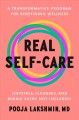 Includes bibliographical references (pages 249-253)."From women's mental health specialist and New York Times contributor Pooja Lakshmin, MD, comes a long-overdue reckoning with the contradictions of the wellness industry and a paradigm-shifting program for practicing real self-care that will empower, uplift, and maybe even start a revolution. You may have noticed that it's nearly impossible to go even a couple days without coming across the term self-care. A word that encompasses any number of lifestyle choices and products -- from juice cleanses to yoga workshops to luxury bamboo sheets-self-care has exploded in our collective consciousness as a panacea for practically all of women's problems. Board-certified psychiatrist Dr. Pooja Lakshmin finds this cultural embrace of self-care incomplete at best and manipulative at worst. Fixing your troubles isn't as simple as buying a new day planner or signing up for a meditation class. These faux self-care practices keep us looking outward -- comparing ourselves with others or striving for a certain type of perfection. Even worse, they exonerate an oppressive social system that has betrayed women and minorities. Real self-care, in contrast, is an internal, self-reflective process that involves making difficult decisions in line with our values, and when we practice it, we shift our relationships, our workplaces, and even our broken systems. In real self-care, Lakshmin helps readers understand what a real practice of caring for yourself could -- and does -- look like. Using case studies from her practice, clinical research, and the down-to-earth style that she's become known for, Lakshmin provides a step-by-step program for real and sustainable change and solace. Packed with actionable strategies to deal with common problems, Real self-care is a complete roadmap for women to set boundaries and move past guilt, treat themselves with compassion, get closer to themselves, and assert their power. The result -- having ownership over one's own life -- is nothing less than a personal and social revolution"--
- Subjects: Self-care, Health.;
- Available copies: 1 / Total copies: 1
-
unAPI
- Hitler's art thief : Hildebrand Gurlitt, the Nazis, and the looting of Europe's treasures / by Ronald, Susan,author.;
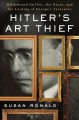 Includes bibliographical references and index."The world was stunned when eighty-year old Cornelius Gurlitt became an international media superstar in November 2013 on the discovery of over 1,400 artworks in his 1,076 square-foot Munich apartment, valued at around $1.35 billion. Gurlitt became known as a man who never was - he didn't have a bank account, never paid tax, never received social security. He simply did not exist. He had been hard-wired into a life of shadows and secrecy by his own father long before he had inherited his art collection built on the spoliation of museums and Jews during Hitler's Third Reich. The ensuing media frenzy unleashed international calls for restitution, unsettled international relations, and rocked the art world. Ronald reveals in this stranger-than-fiction-tale how Hildebrand Gurlitt succeeded in looting in the name of the Third Reich, duping the Monuments Men and the Nazis alike. As an "official dealer" for Hitler and Goebbels, Hildebrand Gurlitt became one of the Third Reich's most prolific art looters. Yet he stole from Hitler too, allegedly to save modern art. This is the untold story of Hildebrand Gurlitt, who stole more than art-he stole lives, too"--Provided by publisher.
- Subjects: Gurlitt, Hildebrand.; Art thefts; Art treasures in war; Art; National socialism and art.; World War, 1939-1945;
- Available copies: 1 / Total copies: 1
-
unAPI
- Psychobabble : viral mental health myths & the truths to set you free / by Nucci, Joe,author.;
 Includes bibliographical references."The popularization of mental health content on social media has led to an epidemic of mental health misinformation. In Psychobabble, licensed psychotherapist Joe Nucci argues that too many of us are self-diagnosing, improperly deploying therapy-speak, and even coaching others to engage in harmful activities under the guise of "self-care." Nucci dismantles 40 popular misconceptions, such as: everyone needs to go to therapy; your feelings are credible; people gaslight you when they disagree; mindfulness is good for everyone; everyone has trauma; the reason you can't focus is ADHD. This dangerous misinformation encourages well-meaning individuals to make consequential life decisions based on false beliefs, half-truths, and the advice of unlicensed armchair experts. It is time for a professional to call this out. Nucci replaces these myths with liberating truths that can help readers avoid misinformation, navigate important philosophical debates, and better maneuver their own mental health journeys. He shares client examples and evidence-based psychological theory, and draws from reputable studies and research. TikTok influencers and "life coaches" create viral videos telling people to cut off their problematic parents, and are cheered on by millions of followers. Recent divorcees proudly declare on Instagram that they are finally healing from their "narcissistic" ex-partner, even though you get the sense they can't actually define that word. Teenage "mental health advocates" lament the struggles of living with autism, but then subtly add that their condition is "self-diagnosed." It is time for a professional to call out the misinformation and absurdity. Psychobabble is a must-read book for anyone who values mental health and cares about others"--
- Subjects: Mental health.; Misinformation.;
- Available copies: 1 / Total copies: 1
-
unAPI
- Fat talk : parenting in the age of diet culture / by Sole-Smith, Virginia,author.;
 Includes bibliographical references and index."By the time they reach kindergarten, most kids have learned that "fat" is bad. As they get older, kids learn to pursue thinness in order to survive in a world that ties our body size to our value. Multibillion-dollar industries thrive on consumers believing that we don't want to be fat. Our weight-centric medical system pushes "weight loss" as a prescription, while ignoring social determinants of health and reinforcing negative stereotypes about the motives and morals of people in larger bodies. And parents today, having themselves grown up in the confusion of modern diet culture, worry equally about the risks of our kids caring too much about being "thin" and about what happens if our kids are fat. Sole-Smith shows how the reverberations of this messaging and social pressures on young bodies continue well into adulthood--and what we can do to fight them. Fat Talk argues for a reclaiming of "fat," which is not synonymous with "unhealthy," "inactive," or "lazy." Talking to researchers and activists, as well as parents and kids across a broad swath of the country, Sole-Smith lays bare how America's focus on solving the "childhood obesity epidemic" has perpetuated a second crisis of disordered eating and body hatred for kids of all sizes. She exposes our society's internalized fatphobia and elucidates how and why we need to stop "preventing obesity" and start supporting kids in the bodies they have. Continuing conversations started by works like Girls & Sex, Under Pressure, and Essential Labor, Fat Talk is a stirring, deeply researched, and groundbreaking book that will help parents learn to reckon with their own body biases, identify diet culture messaging, and ultimately empower their kids to navigate this challenging landscape. Sole-Smith offers an alternative framework for parenting around food and bodies, and a way for us all to work toward a more weight-inclusive world--because it's not our kids, or their bodies, who need fixing"--
- Subjects: Body image in children.; Obesity in children.; Parent and child.; Weight loss;
- Available copies: 1 / Total copies: 1
-
unAPI
- Commanding hope : the power we have to renew a world in peril / by Homer-Dixon, Thomas F.,author.;
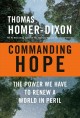 "Calling on history, cutting-edge research, complexity science and even Lord of the Rings, Homer-Dixon lays out the tools we can command to rescue a world on the brink. For three decades, the renowned author of The Upside of Down: Catastrophe, Creativity, and the Renewal of Civilization, and The Ingenuity Gap: Can We Solve the Problems of the Future?, has examined the threats to our future security--predicting a deteriorating global environment, extreme economic stresses, mass migrations, social instability and wide political violence if humankind continued on its current course. He was called The Doom Meister, but we now see how prescient he was. Today just about everything we've known and relied on (our natural environment, economy, societies, cultures and institutions) is changing dramatically--too often for the worse. Without radical new approaches, our planet will become unrecognizable as well as poorer, more violent, more authoritarian. In his fascinating long-awaited new book (dedicated to his young children), he calls on his extraordinary knowledge of complexity science, of how societies work and can evolve, and of our capacity to handle threats, to show that we can shift human civilization onto a decisively new path if we mobilize our minds, spirits, imaginations and collective values. Commanding Hope marshals a fascinating, accessible argument for reinvigorating our cognitive strengths and belief systems to affect urgent systemic change, strengthen our economies and cultures, and renew our hope in a positive future for everyone on Earth."-- Provided by publisher.
- Subjects: Creative ability.; Environmental responsibility.; Social change.;
- Available copies: 1 / Total copies: 1
-
unAPI
- The Psychedelic Revolution. by Curiosity Stream (Firm),dst; Kanopy (Firm),dst;
 Originally produced by Curiosity Stream in 2022.For Americans who came of age in the 1960s, hallucinogenic drugs like LSD and mescaline are inextricably linked to that decade’s counterculture and guru Timothy Leary’s call to “Turn on, tune in, drop out.” More recently, studies have shown significant efficacy for hallucinogens in treating a range of psychiatric illnesses, including depression, anxiety, and—ironically—substance use disorders. Beyond recreational micro-dosing and Michael Pollan’s “ego dissolution,” psilocybin may prove the source of a revolution in mental health. This lecture explores the history of these mind-altering substances, the evidence for their therapeutic value, and the complex ethical and legal issues that keep them out of reach of most Americans. This talk is given by Jacob Appel of Icahn School of Medicine at Mount Sinai.Mode of access: World Wide Web.
- Subjects: Documentary films.; Health.; Criminal law.; Social sciences.; Medicine.; Instructional films.; Mental health.; Documentary films.; Current affairs.; Anxiety disorders.; Drugs.; Alternative Medicine.;
-
unAPI
Results 61 to 70 of 99 | « previous | next »