Results 1 to 10 of 27 | next »
- Regenesis : feeding the world without devouring the planet / by Monbiot, George,1963-author.;
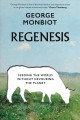 Includes bibliographical references and index."Drawing on advances in soil ecology, George Monbiot reveals how our changing understanding of the world beneath our feet could allow us to grow more food with less farming. He meets the people who are unlocking these methods, from the fruit and vegetable grower revolutionizing our understanding of fertility; through breeders of perennial grains, liberating the land from ploughs and chemicals; to the scientists pioneering new ways to grow protein and fat. Together, they show how to transform not only our food system but our entire relationship to the living world"--
- Subjects: Agricultural ecology.; Diet; Food industry and trade; Food security; Food security.; Food supply; Food supply.; Sustainable agriculture.;
- Available copies: 1 / Total copies: 1
-
unAPI
- The fate of food : what we'll eat in a bigger, hotter, smarter world / by Little, Amanda,1974-author.;
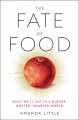 Includes bibliographical references and index."In this fascinating look at the race to secure the global food supply, environmental journalist and professor Amanda Little tells the defining story of the sustainable food revolution as she weaves together stories from the world's most creative and controversial innovators on the front lines of food science, agriculture, and climate change"--
- Subjects: Food supply; Food security.; Sustainable agriculture.;
- Available copies: 1 / Total copies: 1
-
unAPI
- We are eating the Earth : the race to fix our food system and save our climate / by Grunwald, Michael,1970-author.;
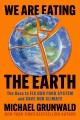 Includes bibliographical references and index.Humanity has cleared a land mass the size of Asia plus Europe to grow food, and our food system generates a third of our carbon emissions. By 2050, we're going to need a lot more calories to fill nearly 10 billion bellies, but we can't feed the world without frying it if we keep tearing down an acre of rainforest every six seconds. We are eating the earth, and the greatest challenge facing our species will be to slow our relentless expansion of farmland into nature. Even if we quit fossil fuels, we'll keep hurtling towards climate chaos if we don't solve our food and land problems. In this rollicking, shocking narrative, Grunwald shows how the world, after decades of ignoring the climate problem at the centre of our plates, has pivoted to making it worse, embracing solutions that sound sustainable but could make it even harder to grow more food with less land. But he also tells the stories of the dynamic scientists and entrepreneurs pursuing real solutions, from a jungle-tough miracle crop called pongamia to genetically-edited cattle embryos, from Impossible Whoppers to a non-polluting pesticide that uses the technology behind the COVID vaccines to constipate beetles to death. It's an often infuriating saga of lobbyists, politicians, and even the scientific establishment making terrible choices for humanity, but it's also a hopeful account of the people figuring out what needs to be done -- and trying to do it.
- Subjects: Agricultural systems.; Climatic changes.; Food security.; Food supply; Human ecology.; Sustainable agriculture.;
- Available copies: 1 / Total copies: 1
-
unAPI
- Saturday at the food pantry / by O'Neill, Diane,1955-; Magro, Brizida.;
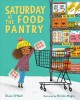 Molly and her mom do not always have enough food, so when they visit their local food pantry Molly she sees her classmate Caitlin who is embarrassed to be there, so Molly helps Caitlin realize everyone needs help sometimes.LSC
- Subjects: Food banks; Hunger; Families; Generosity; Food security;
- Available copies: 1 / Total copies: 1
-
unAPI
- One can / by Button, Lana,1968-; Walters, Eric,1957-; Malenfant, Isabelle,1979-;
 A child donates a can of food to their school food drive. But in an unexpected twist, they come to understand what it means to give and receive. A child is excited to donate a can of their favorite Zoodelicious to the school food drive. Their teacher has explained that the food will be given to people in need, along with mittens from the "mitten tree." In the classroom, there's a carpet with one hundred squares, and the goal is to fill each square with a can of food. When the child places their can of Zoodelicious on square 100, everyone cheers, and the teacher puts a snowflake sticker on top to celebrate. But a few days later, the child finds the same can of Zoodelicious among the groceries their mom has brought home. There's a pair of red mitts, too. "Mom, are we the people in need?" the child asks. The next morning, after having thought of all the people who will receive food from the school and wondering what else they might need, the child donates their too-small blue mittens to the mitten tree at school. Created by an award-winning team, One Can tells a timely and touching story of a child who learns to give and receive-and wants only to give again in return.
- Subjects: Picture books.; Food banks; Food security; Schools; Charities; Mittens;
- Available copies: 1 / Total copies: 1
-
unAPI
- Survival gardening : grow your own emergency food supply from seed to root cellar / by Coffman, Sam,author.;
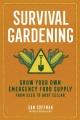 "Learn how to grow your own food supply with advice from a survival skills expert. This essential guide includes how to choose and grow the most nutrient-dense crops without store-bought amendments or fertilizers, how to plan for a nonstop supply, how to store food, and how to create your own seed bank"--
- Subjects: Handbooks and manuals.; Emergency food supply.; Food security.; Organic gardening; Urban homesteading;
- Available copies: 1 / Total copies: 1
-
unAPI
- Food is my teacher [videorecording] / by Soma, Tammara,screenwriter,film director,on-screen participant,film producer.; Yanchyk, Brandy,screenwriter,film director,film producer.; McIntyre Media,film distributor.;
 Tammara Soma, Cease Wyss.In Tammara's first documentary, Food is My Teacher, she delves into the pains of the past, including her own harrowing experience dealing with an eating disorder, to showcase how food can heal communities, body and spirit. This is Tammara's first experience in creating a documentary. She co-wrote and co-directed Food is My Teacher with award-winning filmmaker Brandy Yanchyk, who also produced the film. They travelled across Alberta and British Columbia on a quest to learn how food is healing within different communities.E.DVD.
- Subjects: Documentary films.; Nonfiction films.; Eating disorders; Food; Food industry and trade; Food security; Food habits; Food;
- For private home use only.
- Available copies: 1 / Total copies: 1
-
unAPI
- Sky Wolf's call : the gift of Indigenous knowledge / by Yellowhorn, Eldon,1956-; Lowinger, Kathy.;
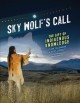 Includes bibliographical references and index.Sky Wolf's call : the gift of indigenous knowledge -- Water knowledge ways -- Fire and smoke knowledge -- Indigenous knowledge and food security -- Healing knowledge ways -- Sky knowledge -- Keeping the knowledge -- Sky Wolf's call.Learns about Indigenous knowledge that comes from centuries of practices, experiences, and ideas gathered by people who have a long history with the natural world and live in harmony with one another.LSC
- Subjects: Ethnoscience; Ethnoscience; Indigenous peoples; Indigenous peoples;
- Available copies: 1 / Total copies: 1
-
unAPI
- Canada's food island : a collection of stories and recipes from Prince Edward Island / by Hickox, Stuart,author.; Bryan, Jennifer,author.; Gallant, Tyler,author.; Harris, Stephen(Photographer),photographer.; McQuaid, Shannon,author.; Polinsky, Haley,author.;
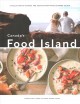 "Prince Edward Islanders are famous for hosting family and friends in the kitchen. Canada's Food Island invites you to celebrate the Island's farm-to-table cooking and meet the farmers, fishers and artisans who make those delicious dishes possible. From preparing the perfect lobster roll in spring and galettes filled with sweet fresh-picked strawberries in summer to making savory potato pizza in fall and roast turkey with an oyster, bacon and wild mushroom stuffing in mid-winter, you're sure to find a favourite recipe to delight guests and satisfy your own cravings. Canada's Food Island combines nearly 100 inspired seasonal recipes with homegrown stories and beautiful photographs to capture the essence of the island's unique food culture--a blend of people, place and locally sourced fresh natural ingredients. You'll learn how mussels and oysters are sustainably raised and harvested, why Island beef is so flavourful and what makes wild blueberries so special. Whether you've spent time on Prince Edward Island or not, you'll want to visit these pages again and again to experience a taste of the Island in the comfort of your own kitchen. Royalties from sales of the book will go to PEI Food Banks with the mission to increase food security for Islanders by supporting Food Banks and the individuals who are in need of their support."-- Provided by publisher.
- Subjects: Cookbooks.; Recipes.; Cooking; Cooking, Canadian; Cooking, Canadian; Local foods; Seasonal cooking;
- Available copies: 1 / Total copies: 1
-
unAPI
- Growing an edible landscape : how to transform your outdoor space into a food garden / by Pilarchik, Gary,author.; D'Amore, Chiara,author.;
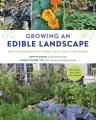 Includes bibliographical references and index.Convert your unproductive lawn and landscape areas into fruitful edible gardens with this practical guide overflowing with ideas, plans, designs, and know-how. Out with the lawn and in with the food! That's the battle cry of millions of modern gardeners who are not only looking to reduce the amount of time and energy they have to spend tending a lawn, but they're also looking to improve the lives of their family, friends, and neighbors by supplying them with fresh, homegrown food. In the United States alone, 46 million acres of land are covered in turfgrass (that's more acreage than corn and soybeans combined!). Imagine all the good that would come if that land were dedicated to growing food instead! Converting unused areas of the landscape into food gardens helps mitigate the effects of climate change, reduces food miles, improves food security, and allows us to be a better steward of our little slice of the planet. But how do you get started? Which plants do you choose? Is there a series of best practices to follow to successfully convert your yard into an edible oasis so that it's not just high-yielding, but it's also attractive? Growing an Edible Landscape is here to help answer all of these questions and many more. Setting up an edible landscape is much more than just placing a few tomato-filled raised beds in the middle of the lawn, though for some gardeners, this might be a logical place to start. The eventual goal, however, is to have a landscape filled with layers of fruitful plants combined together to produce edible harvests for as many months of the year as possible. To reach that end, there's much to plan and do to ensure your success.
- Subjects: Fruit-culture.; Plants, Edible.; Vegetable gardening.;
- Available copies: 1 / Total copies: 1
-
unAPI
Results 1 to 10 of 27 | next »