Results 1 to 5 of 5
- R for data analysis in easy steps / by McGrath, Mike,1956-author.;
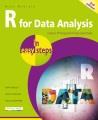 R for Data Analysis in easy steps, 2nd edition contains separate chapters on the major features of the R programming language. There are complete example programs that demonstrate how to create line graphs, bar charts, histograms, scatter graphs, box plots, and more. The code for each R script is listed, together with screenshots that illustrate the actual output when that script has been executed. The free, downloadable example R code is provided for clearer understanding. By the end of this book you will have gained a sound understanding of R programming, and be able to write your own scripts that can be executed to produce graphic visualizations for data analysis. You need have no previous knowledge of any programming language, so it's ideal for the newcomer to computer programming.
- Subjects: R (Computer program language); Mathematical statistics; Mathematical statistics; Statistics; Statistics;
- Available copies: 1 / Total copies: 1
-
unAPI
- Introduction to Probability. by A. Sellers, James,actor.; The Great Courses (Firm),dst; Kanopy (Firm),dst;
 James A. SellersOriginally produced by The Great Courses in 2012.In this episode, learn more about probability, a cousin of statistics and another mathematical field that helps us make sense of the seemingly unexplainable nature of the world.Mode of access: World Wide Web.
- Subjects: Feature films.; Television series.; Motion pictures.;
-
unAPI
- Introduction to Statistics. by A. Sellers, James,actor.; The Great Courses (Firm),dst; Kanopy (Firm),dst;
 James A. SellersOriginally produced by The Great Courses in 2012.Get a solid introduction to statistics, one of the most useful areas of mathematics. Here, focus on the four basic measurements statisticians use: mean, media, mode, and range.Mode of access: World Wide Web.
- Subjects: Feature films.; Television series.; Motion pictures.;
-
unAPI
- Once upon a prime : the wondrous connections between mathematics and literature / by Hart, Sarah B.,author.;
 Includes bibliographical references and index."For fans of Seven Brief Lessons in Physics, an exploration of the many ways mathematics can transform our understanding of literature and vice versa, by the first woman to hold England's oldest mathematical chair. We often think of mathematics and literature as polar opposites, as different as they come. But what if, instead, they were inextricably, even fundamentally, linked? In her clear, insightful, laugh-out-loud funny debut, Once Upon a Prime, Professor Sarah Hart shows us the myriad connections between math and literature, and how understanding those connections can enhance our enjoyment of both. Did you know, for instance, that Moby-Dick is full of sophisticated geometry? That James Joyce's stream-of-consciousness novels are deliberately checkered with mathematical references? That George Eliot was obsessed with statistics? That Jurassic Park is undergirded by fractal patterns? That Sir Arthur Conan Doyle and Chimamanda Ngozi Adichie wrote mathematician characters? From sonnets to fairytales to experimental French literature, Professor Hart shows how math and literature are complementary parts of the same quest, to understand human life and our place in the universe. As the first woman to hold England's oldest mathematical chair, Professor Hart is the ideal tour guide, taking us on an unforgettable journey through the books we thought we knew, revealing new layers of beauty and wonder. As she promises, you're going to need a bigger bookcase"--
- Subjects: Mathematics and literature.; Mathematics in literature.;
- Available copies: 1 / Total copies: 1
-
unAPI
- Games People Play. by P. Stevens, Scott,actor.; The Great Courses (Firm),dst; Kanopy (Firm),dst;
 Scott P. StevensOriginally produced by The Great Courses in 2008.In GAMES PEOPLE PLAY: GAME THEORY IN LIFE, BUSINESS, AND BEYOND, you explore the fundamentals of game theory in an engaging, comprehensible manner. You investigate the field's classic games, encounter its greatest minds, and discover its real-world applications in arenas including corporate negotiations, foreign policy-and your everyday life.Dr. Scott P. Stevens is Professor of Computer Information Systems and Management Science at James Madison University in Harrisonburg, Virginia, where he has taught since 1984. Professor Stevens holds a Ph.D. in Mathematics from The Pennsylvania State University, where he received B.S. degrees in both Mathematics and Physics and graduated first in his class in the College of Science. Honored many times over for his remarkable abilities in the classroom, Professor Stevens has been a recipient of the Carl Harter Award, his university's highest teaching award; been named the outstanding graduate teacher in JMU's M.B.A. program; and has on five occasions been selected by students as the outstanding teacher in JMU's undergraduate business program, the first teacher to be so honored. A frequent consultant in the business arena, Professor Stevens has been published in a broad variety of academic and professional journals, writing or collaborating on subjects as varied as neural network prediction of survival in blunt-injured trauma patients; the effect of private school competition on public schools; standards of ethical computer usage in different countries; automatic data collection in business; and optimization of the purchase, transportation, and deliverability of natural gas from the Gulf of Mexico.Mode of access: World Wide Web.
- Subjects: Documentary films.; Business.; Economic development.; Psychology.; Social sciences.; Current affairs.; Documentary films.; Globalization.; Games.; Competition.; Statistics.; Life skills.;
-
unAPI
Results 1 to 5 of 5