Results 61 to 70 of 191 | « previous | next »
- Girl warrior : on coming of age / by Harjo, Joy,author.;
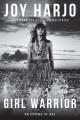 Includes bibliographical references."Informed by her own experiences and those of her ancestors, Harjo offers inspiration and insight for navigating the many challenges of maturation. She grapples with parents, friendships, love, and loss. She guides young readers toward painting, poetry, and music as powerful tools for developing their own ethical sensibility. As Harjo demonstrates, the act of making is an essential part of who we are,a means of inviting the past into the present and a critical tool young women can use to shape a more just future. Lyrical and compassionate, Harjo's call for creativity and empathy is an urgent and necessary work."--
- Subjects: Biographies.; Autobiographies.; Personal narratives.; Harjo, Joy.; Poets, American; Poets, American; Indigenous women authors;
- Available copies: 0 / Total copies: 1
-
unAPI
- Sophia's secret / by Kearsley, Susanna,1966-;
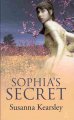 After three hundred years, Sophia's secret must be told. When bestselling author Carrie McClelland visits the windswept ruins of Slains Castle, she is enchanted by the stark and beautiful Scottish landscape. The area is strangely familiar to her, but she puts aside her faint sense of unease to begin her new novel, using the castle as her setting and one of her ancestors, Sophia, as her heroine. Then Carrie realises her writing is taking on a life of its own and the lines between fact and fiction become increasingly blurred. As Sophia's memories draw Carrie more deeply into the intrigue of 1708, she discovers a captivating love story lost in time.
- Subjects: Romantic suspense novels.; Historical fiction; Large type books.; Women authors;
- © 2009., Magna Large Print Books,
- Available copies: 0 / Total copies: 1
-
unAPI
- Never give up : a prairie family's story / by Brokaw, Tom,author.;
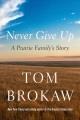 "Tom Brokaw is known as one of the hardest-working, most successful people in broadcast journalism. His success is attributed to his work ethic, his instinct for identifying the significance of the news in the lives of ordinary people, and his reputation for always showing up for others. In this heartfelt family story, Tom shows the values and lessons he absorbed from his ancestors, parents, and others who settled in South Dakota and worked hard to build lives on the prairie during the first half of the twentieth century. At the center of this story is Red Brokaw, Tom's father, who left school in the third grade. At the end of his life, Red surprised his family by recording his memories about the Brokaw ancestors who obtained land in South Dakota under the Lend-Lease plan and started a hotel called the Brokaw House. As a boy Red worked there, and then on construction jobs, developing a talent for machines. At a high school play, he fell in love with the girl playing the lead, Jean, whose father had lost the family farm during the Depression. They married, and struggled financially. Their son Tom was born in 1940, and two other sons followed. Red had a philosophy: Never give up. Never complain. After the war, Red got his big break. The Army Corps of Engineers began to build great projects, including dams across the Missouri River, magnificent structures like the Fort Randall and the Gavins Point dams. Red rose to become a foreman on the dam project, and the Brokaws moved to towns created to house workers, where the family became part of a vibrant community life"--
- Subjects: Biographies.; Brokaw, Red, 1912-1982.; Brokaw, Tom; Broucard family.;
- Available copies: 1 / Total copies: 1
-
unAPI
- Bloodlines of the Slave Trade. by Hancock, Markie,film director.; Video Project (Firm),dst; Kanopy (Firm),dst;
 Originally produced by Video Project in 2023.Examines the lives of two people whose only connection is a genetic link to John Armfield, one of the most notorious slave traders of the 1830s. Rodney Williams, who is Black, and Susanna Grannis, who is white, each trace their ancestry back to their distant ancestor, detailing the diverging paths their lineages took. While their relationship to this past is fundamentally different, and they never meet in the film, they both share in the telling of the horrific domestic slave trade and the ongoing reverberations of slavery.The film also navigates the lesser known "second middle passage" referred to as the "domestic slave trade." Starting in Alexandria, VA, where two of the wealthiest and most infamous slave traders of the mid-19th century were headquartered, Williams journeys along the Natchez Trace where in all likelihood his ancestors walked before him. In Alexandria, John Armfield and Isaac Franklin would either ship or march the enslaved down south to Mississippi or Louisiana for both future sale and brutal work on southern plantations. These cruel transactions involved separation from family members, long and arduous journeys chained together in coffles, and even more brutal working conditions once sold off in Natchez or New Orleans. His path along the trail illuminates the mechanisms and realities of chattel slavery, and illustrates the vast accumulation of wealth created by enslaved people, but held by slaveowners and benefitting their descendants.Mode of access: World Wide Web.
- Subjects: Documentary films.; Enthnology.; Social sciences.; History, Modern.; Human rights.; Americans.; Foreign study.; Documentary films.; Ethnicity.; Current affairs.; History.; African Americans.; United States--History.; Slavery.; Genealogy.;
-
unAPI
- How to sleep like a caveman : ancient wisdom for a better night's rest / by Laar, Merijn van de,author.;
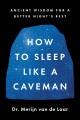 Includes bibliographical references and index."We spend roughly a third of our lives in bed, but for millions of us, not all of that time is spent sleeping. We strive for eight hours per night, only to lie awake thanks to stress, our ever-present devices, a new baby, or that 4 pm coffee you thought you needed. As sleep scientist and recovering insomniac Merijn van de Laar shows, we're hardly the first to experience this. When homo sapiens evolved hundreds of thousands of years ago, when saber-toothed tigers were their biggest nighttime worry, wakefulness served to protect one's tribe at night. Research shows these episodic sleep patterns even gave our ancestors an evolutionary advantage. We can look to their example for guidance in improving our sleep health, too: how our sleep patterns change as we age, the benefits of communal sleep, the importance of environmental factors such as temperature and light. While our myriad gadgets may distinguish us from early humans, understanding the ways our brains evolved to rest can chart the course toward a better night's sleep. Drawing from emerging science, archeological research into our ancestors' habits, and close observation of contemporary hunter-gatherer cultures, How to Sleep Like a Caveman explains everything from why we sometimes jerk awake at night-likely a remnant of having slept in trees-to why our efforts to "optimize" our sleep schedules might just be a fool's errand. The result is a surprising, accessible new framework for thinking about sleep-the way we were designed to"--Provided by publisher.
- Subjects: Sleep.; Sleep; Sleep; Sleep; Circadian rhythms.; Prehistoric peoples;
- Available copies: 0 / Total copies: 1
-
unAPI
- Remember who you are / by Prince, Leona.; Prince, Gabrielle.; General, Sara.;
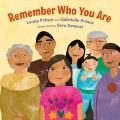 "You are more powerful than you imagine. In this lyrical picture book, young readers are reminded of their cultural roots, the wisdom of their ancestors and their own potential. Each page offers an affirmation about identity, respect, love and truth, encouraging all children to embrace their unique gifts and power. From the resilience flowing through their veins to the knowledge written in the stars, Remember Who You Are inspires children t o see themselves as integral parts of their community, capable of great leadership and great kindness. Perfect for bedtime reading and classroom discussions, this book fosters a deep sense of belonging and pride by celebrating Indigenous heritage and reminding young readers who they truly are."--
- Subjects: Picture books.; Identity (Psychology) in children; Ethnicity; Group identity; Indigenous peoples; Genealogy; Self-actualization (Psychology);
- Available copies: 1 / Total copies: 1
-
unAPI
- The vanished days / by Kearsley, Susanna,1966-author.; prequel to:Kearsley, Susanna,1966-Winter sea.;
 "History has all but forgotten the spring of 1708, when an invasion fleet of French and Scottish soldiers nearly succeeded in landing the exiled James Stewart in Scotland to reclaim his crown. Now, Carrie McClelland hopes to turn that story into her next bestselling novel. Settling herself in the shadow of Slains Castle, she creates a heroine named for one of her own ancestors, and starts to write. But when she discovers her novel is more fact than fiction, Carrie wonders if she might be dealing with ancestral memory ... making her the only living person who can know the truth of what did happen all those years ago--a tale of love and loyalty ... and ultimate betrayal."--
- Subjects: Historical fiction.; Novels.; Anne, Queen of Great Britain, 1665-1714; Jacobites; Kings and rulers; Man-woman relationships; Widows;
- Available copies: 1 / Total copies: 1
-
unAPI
- Walking together / by Marshall, Albert(Albert D.); Zimanyi, Louise.; Kewageshig, Emily.;
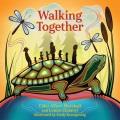 "This innovative picture book introduces readers to the concept of Etuaptmumk--or Two-Eyed Seeing in the Mi'kmaq language--as we follow a group of young children connecting to nature as their teacher. A poetic, joyful celebration of the Lands and Waters as spring unfolds: we watch for Robin's return, listen for Frog's croaking, and wonder at Maple Tree's gift of sap. Grounded in Etuaptmumk, also known as Two-Eyed Seeing, the gift of multiple perspectives, and the Mi'kmaw concept of Netukulimk, meaning to protect Mother Earth for the ancestors, present, and future generations, Walking Together nurtures respectful, reciprocal, responsible relationships with the Land and Water, plant-life, animals and other-than-human beings for the benefit of all."--
- Subjects: Picture books.; Human ecology; Traditional ecological knowledge; Micmac Indians;
- Available copies: 2 / Total copies: 2
-
unAPI
- Dinner with King Tut : how rogue archaeologists are re-creating the sights, sounds, smells, and tastes of lost civilizations / by Kean, Sam,author.;
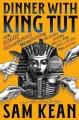 Includes bibliographical references and index."Whether it's the mighty pyramids of Egypt or the majestic temples of Mexico, we have a good idea of what the past looked like. But what about our other senses: The tang of Roman fish sauce and the springy crust of Egyptian sourdough? The boom of medieval cannons and the clash of Viking swords? The frenzied plays of an Aztec ballgame ... and the chilling reality that the losers might also lose their lives? History often neglects the tastes, textures, sounds, and smells that were an intimate part of our ancestors' lives, but a new generation of researchers is resurrecting those hidden details, pioneering an exciting new discipline called experimental archaeology. These are scientists gone rogue: They make human mummies. They investigate the unsolved murders of ancient bog bodies. They carve primitive spears and go hunting, then knap their own obsidian blades to skin the game. They build perilous boats and plunge out onto the open sea -- all in the name of experiencing history as it was, with all its dangers, disappointments, and unexpected delights. Beloved author Sam Kean joins these experimental archaeologists on their adventures across the globe, from the Andes to the South Seas. He fires medieval catapults, tries his hand at ancient surgery and tattooing, builds Roman-style roads -- and, in novelistic interludes, spins gripping tales about the lives of our ancestors with vivid imagination and his signature meticulous research"--
- Subjects: Archaeology; Experimental archaeology.; Senses and sensation.;
- Available copies: 1 / Total copies: 1
-
unAPI
- How to Sleep Like a Caveman Ancient Wisdom for a Better Night's Rest [electronic resource] : by van de Laar, Merijn.aut; CloudLibrary;
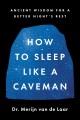 Sapiens meets Why We Sleep in an evolutionary romp through the science of sleep—and how we can get better rest—by one of the world’s leading sleep scientists. We spend roughly a third of our lives in bed, but for millions of us, not all of that time is spent sleeping. We strive for eight hours per night, only to lie awake thanks to stress, our ever-present devices, a new baby, or that 4pm coffee you thought you needed. As sleep scientist and recovering insomniac Merijn van de Laar shows, we’re hardly the first to experience this. When homo sapiens evolved hundreds of thousands of years ago, when saber-toothed tigers were their biggest nighttime worry, wakefulness served to protect one’s tribe at night. Research shows these episodic sleep patterns even gave our ancestors an evolutionary advantage. We can look to their example for guidance in improving our sleep health, too: how our sleep patterns change as we age, the benefits of communal sleep, the importance of environmental factors such as temperature and light. While our myriad gadgets may distinguish us from early humans, understanding the ways our brains evolved to rest can chart the course toward a better night’s sleep. Drawing from emerging science, archeological research into our ancestors’ habits, and close observation of contemporary hunter-gatherer cultures, How to Sleep Like a Caveman explains everything from why we sometimes jerk awake at night—likely a remnant of having slept in trees—to why our efforts to “optimize” our sleep schedules might just be a fool’s errand. The result is a surprising, accessible new framework for thinking about sleep—the way we were designed to. 
- Subjects: Electronic books.; Healthy Living; Evolution; Sleep & Sleep Disorders;
- © 2025., HarperCollins,
-
unAPI
Results 61 to 70 of 191 | « previous | next »