Results 101 to 110 of 121 | « previous | next »
- Commanding hope : the power we have to renew a world in peril / by Homer-Dixon, Thomas F.,author.;
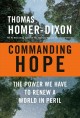 "Calling on history, cutting-edge research, complexity science and even Lord of the Rings, Homer-Dixon lays out the tools we can command to rescue a world on the brink. For three decades, the renowned author of The Upside of Down: Catastrophe, Creativity, and the Renewal of Civilization, and The Ingenuity Gap: Can We Solve the Problems of the Future?, has examined the threats to our future security--predicting a deteriorating global environment, extreme economic stresses, mass migrations, social instability and wide political violence if humankind continued on its current course. He was called The Doom Meister, but we now see how prescient he was. Today just about everything we've known and relied on (our natural environment, economy, societies, cultures and institutions) is changing dramatically--too often for the worse. Without radical new approaches, our planet will become unrecognizable as well as poorer, more violent, more authoritarian. In his fascinating long-awaited new book (dedicated to his young children), he calls on his extraordinary knowledge of complexity science, of how societies work and can evolve, and of our capacity to handle threats, to show that we can shift human civilization onto a decisively new path if we mobilize our minds, spirits, imaginations and collective values. Commanding Hope marshals a fascinating, accessible argument for reinvigorating our cognitive strengths and belief systems to affect urgent systemic change, strengthen our economies and cultures, and renew our hope in a positive future for everyone on Earth."-- Provided by publisher.
- Subjects: Creative ability.; Environmental responsibility.; Social change.;
- Available copies: 1 / Total copies: 1
-
unAPI
- The 30 day sobriety solution : how to cut back or quit drinking in the privacy of your own home / by Canfield, Jack,1944-author.; Andrews, Dave,1972-author.;
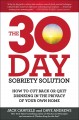 Includes bibliographical references and index."Jack Canfield, the #1 New York Times bestselling author of the Chicken Soup for the Soul; franchise and coauthor of The Success Principles, and Dave Andrews, a recovery expert, join forces to present a revolutionary program to help you cut back or quit drinking entirely--in the privacy of your own home. Alcohol kills one person every ten seconds worldwide, according to the World Health Organization. Thankfully, now, for anyone who feels that alcohol has become a problem--and for the 23.5 million Americans living in recovery and looking to be reinspired--this new program introduces a groundbreaking model for sobriety that you can achieve in your own home. The 30-Day Sobriety Solution grew out of Jack Canfield's decades-long work in self-esteem and success training. Its principles were carefully developed into a program by Dave Andrews and tested by thousands whose amazing stories of recovery are shared throughout the book. Organized into five phases that span 30-day periods, this book guides you through each day with practical exercises that, over time, allow you to more easily make positive choices again and again. "The Sobriety System" is an empowerment program that moves systematically from beliefs (including limiting ones) to feelings and emotions to concrete actions and behaviors that promote better outcomes. Integrating neuroscience, cognitive therapy, proven tools, and teachings, The 30-Day Sobriety Solution is a clear, practical daily program that will help you achieve your goals--whether that's getting sober or just cutting back--and create positive, permanent change in your life"--Provided by publisher.
- Subjects: Alcoholics; Alcoholism; Controlled drinking.;
- Available copies: 1 / Total copies: 1
-
unAPI
- Travelers to unimaginable lands : stories of dementia, the caregiver, and the human brain / by Kiper, Dasha,author.; Doidge, Norman,writer of foreword.;
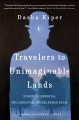 Includes bibliographical references and index."These compelling case histories meld science and storytelling to illuminate the complex relationship between the mind of someone with dementia and the mind of the person caring for them. After getting a master's degree in clinical psychology, Dasha Kiper became the live-in caregiver for a Holocaust survivor with Alzheimer's disease. For a year, she endured the emotional strain of looking after a person whose condition disrupts the rules of time, order, and continuity. Inspired by her own experience and her work counseling caregivers in the subsequent decade, Kiper offers an entirely new way to understand the symbiotic relationship between patients and those tending to them. Her book is the first to examine how the workings of the "healthy" brain prevent us from adapting to and truly understanding the cognitively impaired one. In these poignant but unsentimental stories of parents and children, husbands and wives, Kiper explores the existential dilemmas created by this disease: A man believes his wife is an impostor. A woman's imaginary friendships drive a wedge between herself and her devoted husband. Another woman's childhood trauma emerges to torment her son. A man's sudden Catholic piety provokes his wife. Why is taking care of a family member with dementia so difficult? Why do caregivers succumb to behaviors--arguing, blaming, insisting, taking symptoms personally--they know are counterproductive? Exploring the healthy brain's intuitions and proclivities, Travelers to Unimaginable Lands reveals the neurological obstacles to caregiving, enumerating not only the terrible pressures the disease exerts on our closest relationships but offering solace and perspective as well."--
- Subjects: Case studies.; Informational works.; Alzheimer's disease.; Brain; Caregivers.; Dementia; Dementia.; Memory disorders.;
- Available copies: 1 / Total copies: 1
-
unAPI
- Healing the traumatized brain : coping after concussion and other brain injuries / by Vaishnavi, Sandeep,1973-author.; Rabins, Peter V.,writer of foreword.; Rao, Vani,1958-author.;
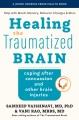 Includes bibliographical references and index."Recovering from a brain injury can be a challenging and prolonged process. Learn how to maximize your recovery from the effects of brain injuries with the guidance of Sandeep Vaishnavi, MD, PhD, and Vani Rao, MBBS, MD, two leading medical experts with extensive experience helping patients recover from concussion and other brain injuries. Healing the traumatized brain explains how the brain works, how injuries affect the brain, and how to use your brain's own power to recover. This detailed guide contains essential information on : the emotional, behavioral, mental, and physical effects following concussion and other brain injuries ; medication options and lifestyle changes ; practical strategies for healing, including stress management, behavioral therapy, and cognitive rehabilitation ; neuroplasticity and nutrition as they affect recovery ; behavioral disorders, balance disorders, and hormonal changes following concussion and other brain injuries ; the effects of coexisting factors such as other medical problems, recreational drug use, the misuse of prescribed medications, and poor sleep hygiene ; the science associated with repeated brain trauma and promising therapies on the horizon"--
- Subjects: Brain damage; Brain damage; Brain damage; Brain; Brain; Head; Head;
- Available copies: 1 / Total copies: 1
-
unAPI
- Counting backwards / by Kirshenbaum, Binnie,author.;
 "A middle-aged couple struggles with the husband's descent into early-onset Lewy Body dementia in this profound and deeply moving novel shot through with Kirshenbaum's lacerating humor. It begins with hallucinations. From their living room window, Leo sees a man on stilts, an acting troupe, a pair of swans paddling on the street. Initially, Leo believes the visions are related to visual impairment-they are something he and his wife, Addie, can joke about. Then, he starts to experience occasional, but fleeting, oddities that mimic myriad brain disorders: aphasia, the inability to perform simple tasks, Capgras Syndrome, audial hallucinations he believes to be real. The doctors have no answers. Leo, a scientist, and Addie, a collage artist, had a loving and happy marriage. But as his periods of lucidity become rarer, Addie finds herself less and less able to cope. Eventually, Leo is diagnosed with Lewy Body disease. Life expectancy ranges from 3 to 20 years. A decidedly uncharacteristic act of violence makes it clear that he cannot come home. He moves first to an assisted living facility and then to a small apartment with a caretaker where, over time, he descends into full cognitive decline. Addie's agony, anger, and guilt result in self-imposed isolation, which mirrors Leo's diminished life. And so for years, all she can do is watch him die-too soon, and yet not soon enough. Kirshenbaum captures the couple's final years, months, and days in short scenes that burn with despair, humor, and rage, tracking the brutal destruction of the disease, as well the moments of love and beauty that still exist for them amid the larger tides of loss"--
- Subjects: Domestic fiction.; Psychological fiction.; Novels.; Dementia; Despair; Lewy body dementia; Love; Married people; Social isolation;
- Available copies: 1 / Total copies: 1
-
unAPI
- The battle for your brain : defending the right to think freely in the age of neurotechnology / by Farahany, Nita A.,author.;
 Includes bibliographical references and index."A rock star academic explores the final frontier of personal privacy: your mind. Imagine a world where your brain can be interrogated to learn your political beliefs, thought crimes are punishable by law, and your own feelings can be used against you. Where perfumers create customized fragrances to perfectly suit your emotions, and social media titans bypass your conscious mind to hook you to their products. A world where people who suffer from epilepsy receive alerts moments before a seizure, and the average person can peer into their own mind to eliminate painful memories or cure addictions. Neuroscience has already made all of the above possible today, and neurotechnology will soon become the "universal controller" for all of our interactions with technology. This can benefit humanity immensely, but without safeguards, it can severely threaten our fundamental human rights to privacy, freedom of thought, and self-determination. Companies, governments, and militaries are all in: from contemplative neuroscience to consumer-based EEG technology, there have never been more ways to hack and track our brains. But access is just the beginning. Our brains can be changed with performance-boosting drugs, electrical stimulation, and even surgical interventions. Soon neuro-cinema, neuro-monitoring, and even cognitive warfare will be commonplace-the brain is the next battleground for humanity. The Battle for Your Brain by Nita A. Farahany dives deeply into the promises and perils of the coming dawn of brain access and alteration. Written by one of the world's foremost experts on neuroscience as it intersects with law and ethics, this highly original book offers a pathway forward to navigate the complex ethical dilemmas that neurotechnology presents, which will fundamentally impact our freedom to understand, shape, and define ourselves"--
- Subjects: Neurosciences; Neurotechnology (Bioengineering);
- Available copies: 1 / Total copies: 1
-
unAPI
- Hidden potential : the science of achieving greater things / by Grant, Adam,1981-author.;
 Includes bibliographical references and index."The #1 New York Times bestselling author of Think Again illuminates how we can elevate ourselves and others to unexpected heights. We live in a world that's obsessed with talent. We celebrate gifted students in school, natural athletes in sports, and child prodigies in music. But admiring people who start out with innate advantages leads us to overlook the distance we ourselves can travel. We underestimate the range of skills that we can learn and the amount of ground that we can gain. When opportunity doesn't knock, there are ways to to build a door. Hidden Potential offers a new framework for reaching aspirations and exceeding expectations. Realizing potential isn't about being a workaholic or a perfectionist. What matters most is not how hard we work, but how well we learn. It's not about being a genius-growth depends more on developing character skills than cognitive skills. The character skills that propel progress include the proactivity to absorb and adapt to new information, the courage to embrace discomfort, and the determination to find the beauty in imperfections. Mastering those skills doesn't require us to find the one perfect mentor or expert coach to guide us. Often we just need to borrow a compass to begin charting our own path. And we can clear the path for more people by building better systems of opportunity in our schools, teams, and workplaces. Many writers have chronicled the habits of superstars who accomplish great things. This book breaks new ground by revealing how anyone can rise to achieve greater things. The true measure of your potential isn't the height of the peak you reach, but how far you climb to get there"--
- Subjects: Achievement motivation.; Motivation (Psychology);
- Available copies: 1 / Total copies: 1
-
unAPI
- The measure of our age : navigating care, safety, money, and meaning in later life / by Connolly, M. T.(Marie-Therese),author.;
 Includes bibliographical references and index."An elder justice expert uncovers the failures in the systems that are supposed to protect us as we age, and provides a battle plan for families and policy-makers to counter the greed and incompetence. Between 1900 and 2000, Americans gained, on average, thirty years of life. That dazzling feat allowed tens of millions of Americans to reach the once-rare age of 85, now the fastest-growing age group. The bad news: For millions of Americans, the Golden Years are appallingly tarnished, leaving them and those who love them at a loss for what to do. More than 34 million family members care for an older relative for "free," but with costs to them in time, money, jobs, and health. Countless seniors are targeted by scammers and make riskier decisions about care, housing, money, and driving due to cognitive decline. And epidemics of isolation and loneliness make older people unnecessarily vulnerable to all sorts of harm. These problems touch millions of families regardless of class, race or gender. Today, one in ten older Americans is neglected or exploited with devastating results. And the systems supposed to safeguard them-like nursing homes, guardianship, Adult Protective Services, and criminal prosecution-often make problems worse. Weaving first-person accounts, her own unrivaled experience, and shocking investigative reporting across the worlds of medicine, law, finance, social services, caregiving, and policy, MT Connolly exposes a reality that has been long hidden-and sometimes actively covered up. But things are not hopeless. Along with diagnosing the ailments, she gives readers better tools to navigate the many challenges of aging-whether adult children caring for aging parents, policy-makers trying to do the right thing, or, should we be so lucky to live to old age, all of us"--
- Subjects: Aging; Older people; Older people; Older people;
- Available copies: 1 / Total copies: 1
-
unAPI
- Outlive : the science & art of longevity / by Attia, Peter,author.; Gifford, Bill,author.;
 Includes bibliographical references and index."Wouldn't you like to live longer? And better? In this operating manual for longevity, Dr. Peter Attia draws on the latest science to deliver innovative nutritional interventions, techniques for optimizing exercise and sleep, and tools for addressing emotional and mental health. For all its successes, mainstream medicine has failed to make much progress against the diseases of aging that kill most people: heart disease, cancer, Alzheimer's disease, and type 2 diabetes. Too often, it intervenes with treatments too late to help, prolonging lifespan at the expense of healthspan, or quality of life. Dr. Attia believes we must replace this outdated framework with a personalized, proactive strategy for longevity, one where we take action now, rather than waiting. This is not "biohacking," it's science: a well-founded strategic and tactical approach to extending lifespan while also improving our physical, cognitive, and emotional health. Dr. Attia's aim is less to tell you what to do and more to help you learn how to think about long-term health, in order to create the best plan for you as an individual. In Outlive, readers will discover: - Why the cholesterol test at your annual physical doesn't tell you enough about your actual risk of dying from a heart attack. - That you may already suffer from an extremely common yet underdiagnosed liver condition that could be a precursor to the chronic diseases of aging. - Why exercise is the most potent pro-longevity "drug"--and how to begin training for the "Centenarian Decathlon." - Why you should forget about diets, and focus instead on nutritional biochemistry, using technology and data to personalize your eating pattern. - Why striving for physical health and longevity, but ignoring emotional health, could be the ultimate curse of all. Aging and longevity are far more malleable than we think; our fate is not set in stone. With the right roadmap, you can plot a different path for your life, one that lets you outlive your genes to make each decade better than the one before."--Publisher marketing.
- Subjects: Aging; Aging.; Health.; Life sciences.; Longevity.;
- Available copies: 0 / Total copies: 1
-
unAPI
- Life in the fasting lane : how to make intermittent fasting a lifestyle - and reap the benefits of weight loss and better health / by Fung, Jason,author.; Mayer, Eve,author.; Ramos, Megan,author.;
 Includes bibliographical references and index.In recent years, intermittent fasting--restricting calorie intake for a set number of hours or days--has become an increasingly popular diet strategy. While some in the medical community initially dismissed the idea as a dangerous fad, recent research not only validates the safety of fasting for weight loss but also offers compelling evidence of wide-ranging health benefits, from reversal of diabetes and other metabolic disorders to enhanced cognitive function and increased longevity. But for many who are eager to try out fasting, the regimen can feel a bit intimidating. After all, abstaining from food doesn't sound like much fun. People rightly wonder: How often can I eat? Will I be able to focus at work? Will I have enough energy to exercise? And perhaps the most concerning question of all: Won't I be hungry all the time?! Enter Dr. Jason Fung--world-renowned fasting expert--his colleague, Megan Ramos, and Eve Mayer, who has experienced the life-changing benefits of fasting through Dr. Fung's program. Together, they've teamed up to write a one-of-a-kind guide that answers the most common questions people have about fasting--and offers a customizable program that provides real results. In Life in the Fasting Lane, Dr. Fung, Ramos, and Mayer take the reader by the hand and walk them through the basics of a fasting lifestyle--from the science behind fasting as a health and weight loss strategy to the real-life choices and dilemmas people commonly encounter. While Dr. Fung and Ramos explain the fundamentals of fasting and offer a customizable approach, Mayer shares her in-the-trenches perspective and hard-won knowledge as a success story who turned her life around with fasting. With chapters that address everything from meal planning to mental strategies; exercise to socializing, Life in the Fasting Lane is a unique and accessible guide to developing a sustainable and beneficial fasting routine that offers dramatic, lifelong results.
- Subjects: Intermittent fasting.; Reducing diets.; Weight loss.;
- Available copies: 1 / Total copies: 2
-
unAPI
Results 101 to 110 of 121 | « previous | next »