Results 111 to 120 of 121 | « previous | next »
- Misbelief : what makes rational people believe irrational things / by Ariely, Dan,author.;
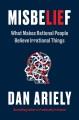 Includes bibliographical references and index."The renowned social scientist, professor, and bestselling author of Predictably Irrational delivers his most urgent and compelling book--an eye-opening exploration of the human side of the misinformation crisis--examining what drives otherwise rational people to adopt deeply irrational beliefs. Misinformation affects all of us on a daily basis--from social media to larger political challenges, from casual conversations in supermarkets, to even our closest relationships. While we recognize the dangers that misinformation poses, the problem is complex--far beyond what policing social media alone can achieve--and too often our limited solutions are shaped by partisan politics and individual interpretations of truth. In Misbelief, preeminent social scientist Dan Ariely argues that to understand the irrational appeal of misinformation, we must first understand the behavior of "misbelief'--the psychological and social journey that leads people to mistrust accepted truths, entertain alternative facts, and even embrace full-blown conspiracy theories. Misinformation, it turns out, appeals to something innate in all of us--on the right and the left--and it is only by understanding this psychology that we can blunt its effects. Grounded in years of study as well as Ariely's own experience as a target of disinformation, Misbelief is an eye-opening and comprehensive analysis of the psychological drivers that cause otherwise rational people to adopt deeply irrational beliefs. Utilizing the latest research, Ariely reveals the key elements--emotional, cognitive, personality, and social--that drive people down the funnel of false information and mistrust, showing how under the right circumstances, anyone can become a misbeliever. Yet Ariely also offers hope. Even as advanced artificial intelligence has become capable of generating convincing fake news stories at an unprecedented scale, he shows that awareness of these forces fueling misbelief make us, as individuals and as a society, more resilient to its allure. Combating misbelief requires a strategy rooted not in conflict, but in empathy. The sooner we recognize that misbelief is above all else a human problem, the sooner we can become the solution ourselves."--
- Subjects: Belief and doubt; Disinformation.; Misinformation.; Online manipulation.;
- Available copies: 1 / Total copies: 1
-
unAPI
- The year of the puppy : how dogs become themselves / by Horowitz, Alexandra,author.;
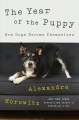 Includes bibliographical references and index."What is it like to be a puppy? Author of the classic Inside of a Dog, Alexandra Horowitz tries to find out, spending a year scrutinizing her puppy's daily existence, and poring over the science of early dog development. Few of us meet our dogs at Day One. The dog who will, eventually, become an integral part of our family, our constant companion and best friend, is born without us into a family of her own. A puppy's critical early development into the dog we come to know is usually missed entirely. Dog researcher Alexandra Horowitz aimed to change that with her family's new pup, Quiddity (Quid). In this scientific memoir she charts Quid's growth from wee grub to boisterous sprite, from her birth to her first birthday. Horowitz follows Quid's first weeks with her mother and ten roly-poly littermates, and then each week after the puppy joins her household of three humans, two large dogs, and a wary cat. She documents the social and cognitive milestones that so many of us miss in our puppies' lives, when caught up in the housetraining and behavioral training that easily overwhelms the first months of a dog's life with a new family. In focusing on training a dog to behave, we mostly miss the radical development of a puppy into themselves--through the equivalent of infancy, childhood, young adolescence, and teenagehood. By slowing down to observe Quid from week to week, The Year of the Puppy makes new sense of a dog's behavior in a way that is missed in a focus only on training. Horowitz keeps a lens on the puppy's point of view--how they (begin to) see and smell the world, make meaning of it, and become an individual personality. She's there when the puppies first open their eyes, first start to recognize each other and learn about cats, sheep, and people; she sees them from their first play bows to puberty. Horowitz also draws from the ample research in the fields of dog and human development to draw analogies between a dog's first year and the growing child -and to note where they diverge. The Year of the Puppy is indispensable for anyone navigating their way through the frustrating, amusing, and ultimately delightful first year of a puppy's life"--
- Subjects: Dogs; Puppies; Puppies.;
- Available copies: 1 / Total copies: 1
-
unAPI
- Our dogs, ourselves : the story of a singular bond / by Horowitz, Alexandra,author.;
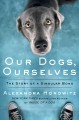 Includes bibliographical references and index.We keep dogs and are kept by them. We love dogs and (we assume) we are loved by them. We buy them sweaters, toys, shoes; we are concerned with their social lives, their food, and their health. The story of humans and dogs is thousands of years old but is far from understood. In Our Dogs, Ourselves, Alexandra Horowitz explores all aspects of this unique and complex interspecies pairing. As Horowitz considers the current culture of dogdom, she reveals the odd, surprising, and contradictory ways we live with dogs. We celebrate their individuality but breed them for sameness. Despite our deep emotional relationships with dogs, legally they are property to be bought, sold, abandoned, or euthanized as we wish. Even the way we speak to our dogs is at once perplexing and delightful. In thirteen thoughtful and charming chapters, Our Dogs, Ourselves affirms our profound affection for this most charismatic of animals-- and opens our eyes to the companions at our sides as never before.
- Subjects: Dog owners.; Dogs.; Human-animal relationships.;
- Available copies: 1 / Total copies: 1
-
unAPI
- Outlive The Science and Art of Longevity [electronic resource] : by Attia, Peter.aut; Gifford, Bill.; CloudLibrary;
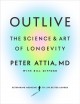 #1 NEW YORK TIMES BESTSELLER • OVER TWO MILLION COPIES SOLD • A groundbreaking manifesto on living better and longer that challenges the conventional medical thinking on aging and reveals a new approach to preventing chronic disease and extending long-term health, from a visionary physician and leading longevity expert   “One of the most important books you’ll ever read.”—Steven D. Levitt, New York Times bestselling author of Freakonomics AN ECONOMIST AND BLOOMBERG BEST BOOK OF THE YEAR Wouldn’t you like to live longer? And better? In this operating manual for longevity, Dr. Peter Attia draws on the latest science to deliver innovative nutritional interventions, techniques for optimizing exercise and sleep, and tools for addressing emotional and mental health.   For all its successes, mainstream medicine has failed to make much progress against the diseases of aging that kill most people: heart disease, cancer, Alzheimer’s disease, and type 2 diabetes. Too often, it intervenes with treatments too late to help, prolonging lifespan at the expense of healthspan, or quality of life. Dr. Attia believes we must replace this outdated framework with a personalized, proactive strategy for longevity, one where we take action now, rather than waiting.   This is not “biohacking,” it’s science: a well-founded strategic and tactical approach to extending lifespan while also improving our physical, cognitive, and emotional health. Dr. Attia’s aim is less to tell you what to do and more to help you learn how to think about long-term health, in order to create the best plan for you as an individual. In Outlive, readers will discover:   • Why the cholesterol test at your annual physical doesn’t tell you enough about your actual risk of dying from a heart attack. • That you may already suffer from an extremely common yet underdiagnosed liver condition that could be a precursor to the chronic diseases of aging. • Why exercise is the most potent pro-longevity “drug”—and how to begin training for the “Centenarian Decathlon.” • Why you should forget about diets, and focus instead on nutritional biochemistry, using technology and data to personalize your eating pattern. • Why striving for physical health and longevity, but ignoring emotional health, could be the ultimate curse of all.   Aging and longevity are far more malleable than we think; our fate is not set in stone. With the right roadmap, you can plot a different path for your life, one that lets you outlive your genes to make each decade better than the one before.
- Subjects: Electronic books.; Longevity; Aging; Human Anatomy & Physiology;
- © 2023., Harmony/Rodale/Convergent,
-
unAPI
- The big bang theory. [videorecording] / by Bialik, Mayim,actor.; Cuoco, Kaley,actor.; Galecki, Johnny,actor.; Helberg, Simon,actor.; Lorre, Chuck,creator.; Nayyar, Kunal,actor.; Parsons, Jim,1973-actor.; Prady, Bill,creator.; Rauch, Melissa,1980-actor.; Chuck Lorre Productions (Firm),production company.; Warner Bros. Television,production company.; Warner Home Video (Firm),publisher.;
 Johnny Galecki, Kaley Cuoco, Jim Parsons, Mayim Bialik, Simon Helberg, Kunal Nayyar, Melissa Rauch.The Leonard and Penny went from next-door neighbors to next-door newlyweds with a nuptial excursion to Vegas. This season, they find themselves in a repeating paradigm as they re-create their wedding, this time with family including Penny's mother and brother and Leonard's parents. Meanwhile, the Relationship Agreement between Sheldon and Amy added an entirely new subsection with their annual coitus clause.Canadian Home Video Rating: 14A.DVD ; widescreen presentation ; Dolby Digital 5.1.
- Subjects: Television comedies.; Apartment dwellers; Man-woman relationships; Neighbors; Physicists;
- For private home use only.
- Available copies: 1 / Total copies: 1
-
unAPI
- The genius of dogs : how dogs are smarter than you think / by Hare, Brian,1976-; Woods, Vanessa,1977-;
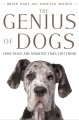 Includes bibliographical references and index."Brian Hare, dog researcher, evolutionary anthropologist, and founder of the Duke Canine Cognition Center, and Vanessa Woods offer revolutionary new insights into dog intelligence and the interior lives of our smartest pets. In the past decade, we have learned more about how dogs think than in the last century. Breakthroughs in cognitive science, pioneered by Brian Hare have proven dogs have a kind of genius for getting along with people that is unique in the animal kingdom. Brian Hare's stunning discovery is that when dogs domesticated themselves around 40,000 years ago they became far more like human infants than their wolf ancestors. Domestication gave dogs a whole new kind of social intelligence. This finding will change the way we think about dogs and dog training--indeed, the revolution has already begun. Hare's seminal research has led him to work with every kind of dog from the tiniest shelter puppy to the exotic New Guinea singing dog, from his own childhood dog, Oreo, to the most fashionable schnoodle. The Genius of Dogs is nothing less than the definitive dog book of our time by the researcher who started a revolution. "--Provided by publisher.
- Subjects: Dogs; Evolution (Biology);
- © c2013., Dutton,
- Available copies: 1 / Total copies: 1
-
unAPI
- Younger next year for women : live strong, fit, sexy, and smart--until you're 80 and beyond / by Crowley, Chris,author.; Lodge, Henry S.,author.; Hamilton, Allan J.,author.; Sheehy, Gail,writer of foreword.;
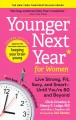 Includes bibliographical references.Smart women don't grow older. They grow younger. A book of hope, Younger Next Year for Women shows you how to become functionally younger for the next five to ten years, and continue to live thereafter with newfound vitality. Learn how the Younger Next Year plan of following "Harry's Rules" - a program of exercise, diet, and maintaining emotional connections - will not only help you turn back your physical biological clock, but will improve memory, cognition, mood, and more. In two new chapters, prominent neurologist Allan Hamilton explains how the program directly affects your brain - all the way down to the cellular level - while Chris Crowley, in his inimitable voice, gives the personal side of the story. In other words, how to live brilliantly for the three decades or more after menopause. The results will be amazing.
- Subjects: Older women; Longevity.; Rejuvenation.;
- Available copies: 1 / Total copies: 1
-
unAPI
- The microbiome master key : harness your microbes to unlock whole-body health and lifelong vitality / by Finlay, B. Brett,author.; Finlay, Jessica M.,author.;
 Includes bibliographical references and index.Hand sanitizer. Social distancing. Antibiotics. Even before the COVID pandemic, fending off germs has long been considered one of the cornerstones of good health. But what if better health actually went hand-in-hand with embracing the invisible microbes living on, in, and all around us? Our bodies are teeming with microbes. They impact everything from sleep, cognition, mood, heart health, and energy to likelihood of developing dementia, diabetes and some cancers. As groundbreaking new studies are showing, taking care of the microbiome -- inside and out -- can help improve day-to-day health and even help prevent or reverse some of the most common age-related diseases. In this eye-opening and evidence-based book, father-daughter team Dr. Brett Finlay (a microbiologist) and Dr. Jessica Finlay (a specialist in aging) break down what the latest research says about how the microbiome affects not just gut health, but all aspects of physical and mental well-being -- and what readers can do about it.
- Subjects: Bacteria.; Human body; Medical microbiology.; Microbiology.; Microorganisms.;
- Available copies: 1 / Total copies: 1
-
unAPI
- Mayo Clinic on Alzheimer's disease and other dementias, revised and updated : a guide for people with dementia and those who care for them / by Graff-Radford, Jonathan,editor.; Lunde, Angela M.,editor.;
 "Dementia is a serious health challenge, and by some estimates the number of people living with dementia could more than double by 2050. While Alzheimer's disease is the most common type of dementia, other types also affect adults worldwide, causing loss of cognitive functions such as memory, reasoning and judgment. The diseases that cause dementia have long been considered difficult and unrelenting, but recent advances offer hope. Are there ways you can lower your risk of Alzheimer's Disease and other dementias? Can they be prevented? Can you live well with dementia? If so, how? This fully revised and updated third edition of Mayo Clinic on Alzheimer's Disease and Other Dementias provides answers to these important questions and more: How do sleeplessness, hearing loss, social isolation, and other risk factors contribute to cognitive decline? How can exercise and healthy foods preserve brain function? What are the neurological changes that can occur in the brain, and how is normal aging different from aging with dementia? How are blood and genetic biomarker tests breaking new ground in diagnosing dementia? Why is it increasingly important to identify dementia in its early stages? What are the unique signs and symptoms of Lewy body dementia, frontotemporal degeneration, vascular cognitive impairment, and other dementias? What are the stages of Alzheimer's disease? Can new and emerging medications slow the progression of Alzheimer's disease? What day-to-day coping strategies can help people live well with dementia? How can caregivers care for themselves?"--
- Subjects: Handbooks and manuals.; Alzheimer's disease.; Alzheimer's disease; Dementia.; Dementia;
- Available copies: 0 / Total copies: 1
-
unAPI
- Clearing the fog : from surviving to thriving with Long COVID : a practical guide / by Jackson, James C.,author.;
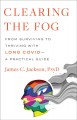 Includes bibliographical references and index.""An essential guide" (Mark Hyman, author of Young Forever) to navigating life with the cognitive and mental health impairments that often accompany Long Covid. Early in the Covid-19 pandemic, the shocking mortality figures obscured the fact that death is not the only adverse outcome of the virus. Today, as many as 30 percent of Covid-19 survivors still experience symptoms long after their acute illness has passed, with cognitive and mental health problems especially prominent. For long haulers, this struggle with Long Covid has irrevocably changed their lives. Many have lost their ability to work, attend school, and look after their children. They often feel misunderstood and dismissed by others. Their once-full lives are now filled only with doctors' appointments that seem more and more futile. In Clearing the Fog, neuropsychologist Dr. James C. Jackson offers people suffering from Long Covid and their families a roadmap to help them manage their "new normal." Focusing on cognitive impairment and mental health issues, he shows readers: The ways in which they can manifest and disrupt; Suggestions for how and when to seek professional evaluations; Science-based treatment options and strategies; Information on navigating health care systems and disability insurance; Validation and hope as patients wrestle with their new diagnosis. In addition, Dr. Jackson shares his own experience with chronic illness, relating to long haulers with vulnerability and compassion. Through moving stories as well as hands-on guidance, Clearing the Fog will help long haulers understand their current situation while offering multiple ways to address it, make sense of it, and move through it with the goal of thriving instead of merely surviving."--
- Subjects: Post COVID-19 condition (Disease);
- Available copies: 1 / Total copies: 1
-
unAPI
Results 111 to 120 of 121 | « previous | next »