Results 211 to 218 of 218 | « previous
- Good Things Recipes and Rituals to Share with People You Love: A Cookbook [electronic resource] : by Nosrat, Samin.aut; Brackett, Aya.; CloudLibrary;
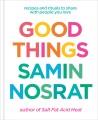 From the bestselling author of Salt, Fat, Acid, Heat—and one of America’s most beloved chefs and teachers—125 meticulously tested, flavor-forward, soul-nourishing recipes that bring joy and a sense of communion With all the generosity of spirit that has endeared her to millions of fans, Samin Nosrat offers more than 125 of her favorite recipes—simply put, the things she most loves to cook for herself and for friends—and infuses them with all the beauty and care you would expect from the person Alice Waters called “America’s next great cooking teacher.” As Samin says, "Recipes, like rituals, endure because they’re passed down to us—whether by ancestors, neighbors, friends, strangers on the internet, or me to you. A written recipe is just a shimmering decoy for the true inheritance: the thread of connection that cooking it will unspool." Good Things is an essential, joyful guide to cooking and living, whether you’re looking for a comforting tomato soup to console a struggling friend, seeking a deeper sense of connection in your life, or hosting a dinner for ten in your too-small dining room. Here you’ll find go-to recipes for ricotta custard pancakes, a showstopping roast chicken burnished with saffron, a crunchy, tingly Calabrian chili crisp, super-chewy sky-high focaccia, and a decades-in-the-making, childhood-evoking yellow cake with chocolate frosting. Along the way, you’ll also find plenty of tips, techniques, and lessons, from how to buy olive oil (check the harvest date) to when to splurge (salad dressing is where you want to use your best ingredients) to the best uses for your pressure cooker (chicken stock and dulce de leche, naturally). Good Things captures, with Samin’s trademark blend of warmth, creativity, and precision, what has made cooking such an important source of delight and comfort in her life.
- Subjects: Electronic books.; Reference; Entertaining; Courses & Dishes;
- © 2025., Random House Publishing Group,
-
unAPI
- Madness : race and insanity in a Jim Crow asylum / by Hylton, Antonia,author.;
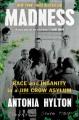 Includes bibliographical references and index."On a cold day in March of 1911, officials marched twelve Black men into the heart of a forest in Maryland. Under the supervision of a doctor, the men were forced to clear the land, pour cement, lay bricks, and harvest tobacco. When construction finished, they became the first twelve patients of the state's Hospital for the Negro Insane. For centuries, Black patients have been absent from our history books. Madness transports readers behind the brick walls of a Jim Crow asylum. In Madness, Peabody and Emmy award-winning journalist Antonia Hylton tells the 93-year-old history of Crownsville Hospital, one of the last segregated asylums with surviving records and a campus that still stands to this day in Anne Arundel County, Maryland. She blends the intimate tales of patients and employees whose lives were shaped by Crownsville with a decade-worth of investigative research and archival documents. Madness chronicles the stories of Black families whose mental health suffered as they tried, and sometimes failed, to find safety and dignity. Hylton also grapples with her own family's experiences with mental illness, and the secrecy and shame that it reproduced for generations. As Crownsville Hospital grew from an antebellum-style work camp to a tiny city sitting on 1,500 acres, the institution became a microcosm of America's evolving battles over slavery, racial integration, and civil rights. During its peak years, the hospital's wards were overflowing with almost 2,700 patients. By the end of the 20th-century, the asylum faded from view as prisons and jails became America's new focus. In Madness, Hylton traces the legacy of slavery to the treatment of Black people's bodies and minds in our current mental healthcare system. It is a captivating and heartbreaking meditation on how America decides who is sick or criminal, and who is worthy of our care or irredeemable"--
- Subjects: Biographies.; Personal narratives.; Crownsville State Hospital; African Americans; African Americans; Mentally ill; Psychiatric hospitals; Racism in medicine.;
- Available copies: 1 / Total copies: 1
-
unAPI
- Admiral / by Stockwin, Julian,author.;
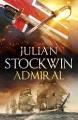 1814: Ashore on leave, Captain Sir Thomas Kydd learns of a dismal harvest and general hardship among the population. In Germany, Napoleon Bonaparte is celebrating victories that once again make his name feared throughout Europe. An armistice is signed and while the Allies lick their wounds Bonaparte sets to preparing for a grand advance. And, in a fragile peace, and saddled with huge war debts, the government has no choice but to place HMS Thunderer, along with many other Royal Navy ships, in reserve, until the Navy can decide what to do with their great fleets. Meanwhile, Kydd is offered an admiral's flag but this is the West Africa station and the anti-slavery operations set in fever-ridden swamps. Despite the obvious dangers and hardships, Kydd sees this as the realisation of his life's ambition and readies for sea in his beloved Thunderer as his flagship. In a turn of the tide Bonaparte is defeated by the Allies and exiled to the tiny island of Elba. Then electrifying news breaks out -- the tyrant has escaped and is marching on Paris, the citizens flocking to join him. The British government as well is rocked by a realisation that Napoleon's invasion fleet is still in being and if the French navy declares for him they can sail from the ports now free of blockade and make the invasion of England a reality. The Channel Fleet has been stood down, its ships in various stages of repair, its commander on leave in the country. There's one man in active service who happens to be on the spot -- Admiral Sir Thomas Kydd. With frantic haste he's appointed temporary commander-in-chief to sail with all the men-o'-war that can be scraped together to stand athwart the French. Kydd knows this will probably mean the sacrifice of not only his ships but himself and his men. He calls on subterfuge and daring to flaunt defiance and resolution until the Battle of Waterloo settles the matter. Then, he has the satisfaction of seeing Napoleon Bonaparte carried off to St Helena, from whence he can never return.
- Subjects: Historical fiction.; Novels.; Sea fiction.; War fiction.; Napoleon I, Emperor of the French, 1769-1821; Admirals; Battleships; Kydd, Thomas (Fictitious character); Seafaring life;
- Available copies: 1 / Total copies: 1
-
unAPI
- Sideways : the city Google couldn't buy / by O'Kane, Josh,author.;
 Includes bibliographical references and index."From the Globe and Mail tech reporter who revealed countless controversies while following the Sidewalk Labs fiasco in Toronto, an uncompromising investigation into the bigger story and what the Google sister company's failure there reveals about Big Tech, data privacy and the monetization of everything. When former New York deputy mayor Dan Doctoroff landed in Toronto, promising a revolution in better living through technology, the locals were starstruck. In 2017 a small parcel of land on the city's woefully underdeveloped lakeshore was available for development, and with Google co-founder Larry Page and his trusted chairman Eric Schmidt leaning into Sidewalk Labs' pitch for the long-forsaken property--with Doctoroff as the urban-planning company's CEO--Sidewalk's bid crushed the competition. But as soon as the bid was won, cracks appeared in the partnership between Doctoroff's team and Waterfront Toronto, the government-sponsored organization behind the contest. There were hundreds more acres of undeveloped former port lands nearby that kept creeping into conversation with Sidewalk, and more questions were emerging than answers about how much the public would actually benefit from the Alphabet-owned company's vision for the high-tech neighbourhood--and the data it could harvest from the people living there. Alarm bells began ringing in the city's corridors of power and activism. To Torontonians accustomed to big promises with little follow-through, the fiasco that unfolded seemed at first like just another city-building sideshow. But the pained battle to reel in the power of Sidewalk Labs became a crucible moment in the worldwide battle for privacy rights and against the extension of Big Tech's digital might into the physical world around us. With extensive contacts on all sides of the debacle, O'Kane tells a story of global consequence fought over a small, forgotten parcel of mud and pavement, taking readers from California to New York to Toronto to Berlin and back again. In the tradition of extraordinary boardroom dramas like Bad Blood and Super Pumped, Sideways vividly recreates the corporate drama and epic personalities in this David-and-Goliath battle that signalled to the world that all may not be lost in the effort to contain the rapidly growing power of Big Tech"--
- Subjects: Google (Firm); City planning; Data privacy; Privacy, Right of; Technology; Waterfronts; Technology;
- Available copies: 1 / Total copies: 1
-
unAPI
- Ten birds that changed the world / by Moss, Stephen,1960-author.;
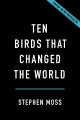 Includes bibliographical references and index."For the whole of human history, we have shared our world with birds. We have hunted and domesticated them for food, fuel and feathers; placed them at the heart of our rituals, religions, myths and legends; poisoned, persecuted and often demonized them; and celebrated them in our music, art and poetry. Even today, despite a growing disconnect between humanity and the rest of nature, birds continue to play an integral role in our lives. Ten Birds that Changed the World tells the story of this long and intricate relationship, spanning the whole of human history, and featuring birds from all seven of the world's continents. It does so through those species whose lives, and their interactions with us, have - in one way or another - changed the course of human history. From when Noah sent out the Raven from the Ark, birds have been central to our superstitions, mythology and folklore. Once humans switched from hunter-gathering to settled societies they began to domesticate wild birds: first the Rock Dove - now the domestic or feral Pigeon - used to communicate over long distances; and then the Wild Turkey and other species for food - later, they became the centerpiece of the annual family festivals of Thanksgiving and Christmas. The Dodo of the Indian Ocean is the icon of extinction, while Darwin's Finches changed the way we look at life on our planet, and the droppings of the Guanay Cormorant provided vast amounts of phosphates, kickstarting a global agricultural revolution. In North America, the Snowy Egret almost disappeared when its plumes were used for fashion; this led to the modern bird protection and conservation movement. The Bald Eagle is the proud symbol of the USA, but eagles have a checkered history, especially in Roman and Nazi propaganda. In China, Mao's 'Great Leap Forward' turned out to be the exact opposite. His call to kill millions of Tree Sparrows meant the insects they ate destroyed the grain harvest - leading to a famine in which thirty million people died. Finally, the Emperor Penguin of Antarctica stands as a potent symbol of how humanity's future is now in the balance, as it heads towards becoming the first global casualty of the Climate Emergency. It is an urgent sign, warning us about our own survival on the planet? Ten Birds that Changed the World is a 'big picture' view of global human history, seen through a unique and original viewpoint: our relationship with birds, as crucial to our lives today as is has ever been"--
- Subjects: Birds; Human-animal relationships;
- Available copies: 1 / Total copies: 1
-
unAPI
- Peppa va aux pommes / by Rusu, Meredith.; Allard, Isabelle.;
 LSC
LSC- Subjects: Téléromans.; Radio and television novels.; Peppa Pig (Personnage fictif); Peppa Pig (Fictitious character); Porcs; Pomme; Pomme; Swine; Apples; Apples;
- Available copies: 1 / Total copies: 1
-
unAPI
- La gallinita roja / by Jones, Christianne C.; Magnuson, Natalie.; Abello, Patricia.;
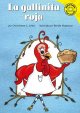 The little red hen finds none of the lazy barnyard animals willing to help her plant, harvest, or grind wheat into flour, but all are eager to eat the bread she makes from it.LSC
- Subjects: Hens; Self-reliance;
- © c2006., Picture Window Books,
- Available copies: 1 / Total copies: 1
-
unAPI
- Woolly. by Nystabakk, Rebekka,film director.; Magnet Film (Firm),dst; Kanopy (Firm),dst;
 Originally produced by Magnet Film in 2024.In WOOLLY, director Rebekka Nystabakk follows her sister Rakel as she becomes the 4th generation to run the family farm. Together with her wife Ida, Rakel is enthusiastic, but aware that they have a lot to learn. Rakel’s father, a farmer for 40 years, knows what lies ahead: years when spring never arrives, summers of significant losses to predators, poor harvests, and sheep on the run. Every day is full of surprises, both frustrating and awe-inspiring, as they navigate their way in this new life.Many would probably claim that this way of farming belongs to a bygone time. Parts of the hayfield are too steep for tractors. Consequently, these parts of the field are still mowed with a scythe. But when we ask our main character, Rakel, if she could really see this kind of farming as a part of the future, she said: “This is the future. Because I know how to make food by using the resources I have around me. That will never be old fashion."Mode of access: World Wide Web.
- Subjects: Documentary films.; Science.; Agriculture.; Documentary films.; Women's studies.; LGBTQ.; Families.; Rural conditions.; Farmers.; Sustainable agriculture.; Norway.;
-
unAPI
Results 211 to 218 of 218 | « previous