Results 111 to 120 of 277 | « previous | next »
- A boy in winter / by Seiffert, Rachel,author.;
 "From the award-winning author of the Booker Prize-short-listed The dark room, a startling portrait of the Nazis' arrival in Ukraine as they move to implement the final solution. Otto Pohl, an engineer overseeing construction of a German road in Ukraine, awakens to the unexpected sight of SS men herding hundreds of Jews into an old brick factory. Inside the factory, Ephraim anxiously scans the growing crowd, looking for his two sons. As anxious questions swirl around him -- 'Where are they taking us? How long will we be gone?' -- he can't quell the suspicion that it would be just like his oldest son to hole up somewhere instead of lining up for the Germans, and just like his youngest to follow. Yasia, a farmer's daughter who has come into town to sell produce, sees two young boys slinking through the shadows of the deserted streets and decides to offer them shelter. As these lives become more and more intertwined -- Rachel Seiffert's prose rich with a rare compassion, courage, and emotional depth, an unflinching story is told: of survival, of conflicting senses of duty, of the oppressive power of fear and the possibility of courage in the face of terror"--
- Subjects: War fiction.; Historical fiction.; Holocaust, Jewish (1939-1945); Jews; World War, 1939-1945;
- Available copies: 1 / Total copies: 1
-
unAPI
- Me & Issy : a Four Seasons romance / by Sharp, Rosalie,author,illustrator.;
 The rags to riches tale of a larger-than-life romance of over seven decades. 'Me & Issy' is a love story about how a troubled and deprived child chanced to meet a man who worshipped her, brought her a fantasy life of four boys and extraordinary opulence - and banished her self-doubt. She in turn was awestruck and mystified by his acumen and daring during his founding of the Four Seasons Hotels. Rosalie Wise Sharp lives in Toronto, ON.
- Subjects: Biographies.; Autobiographies.; Sharp, Rosalie; Sharp, Rosalie; Sharp, Rosalie.; Sharp, Isadore.; Four Seasons Hotels & Resorts.; Jewish women; Jews;
- Available copies: 1 / Total copies: 1
-
unAPI
- In the darkroom / by Faludi, Susan,author.;
 "'In the summer of 2004 I set out to investigate someone I scarcely knew, my father. The project began with a grievance, the grievance of a daughter whose parent had absconded from her life. I was in pursuit of a scofflaw, an artful dodger who had skipped out on so many things--obligation, affection, culpability, contrition. I was preparing an indictment, amassing discovery for a trial. But somewhere along the line, the prosecutor became a witness.' So begins Susan Faludi's extraordinary inquiry into the meaning of identity in the modern world and in her own haunted family saga. When the feminist writer learned that her 76-year-old father--long estranged and living in Hungary--had undergone sex reassignment surgery, that investigation would turn personal and urgent. How was this new parent who claimed to be "a complete woman now" connected to the silent, explosive, and ultimately violent father she had known? Faludi chases that mystery into the recesses of her suburban childhood and her father's many previous incarnations: American dad, Alpine mountaineer, swashbuckling adventurer in the Amazon outback, Jewish fugitive in Holocaust Budapest. When the author travels to Hungary to reunite with her father, she drops into a labyrinth of dark histories and dangerous politics in a country hell-bent on repressing its past and constructing a fanciful--and virulent--nationhood. The search for identity that has transfixed our century was proving as treacherous for nations as for individuals. Faludi's struggle to come to grips with her father's reinvented self takes her across borders--historical, political, religious, sexual--to bring her face to face with the question of the age: Is identity something you "choose," or is it the very thing you can't escape?"--
- Subjects: Biographies.; Faludi, Susan; Authors, American; Women journalists; Fathers and daughters.; Identity (Psychology); Sex change; Male-to-female transsexuals;
- Available copies: 1 / Total copies: 1
-
unAPI
- The light in hidden places : a novel based on the true story of Stefania Podgórska / by Cameron, Sharon,1970-;
 Sixteen-year-old Catholic Stefania Podgórska has worked in the Diamant family's grocery store for four years, even falling in love with one of their sons, Izio; but when the Nazis came to Przemyâsl, Poland, the Jewish Diamants are forced into the ghetto (and worse) but Izio's brother Max manages to escape, and Stefania embarks on a dangerous course--protecting thirteen Jews in her attic, caring for her younger sister, Helena, and keeping everything secret from the two Nazi officers who are living in her house.LSC
- Subjects: Biographical fiction.; Historical fiction.; Burzminski, Stefania Podgórska; Righteous Gentiles in the Holocaust; Jews; Holocaust, Jewish (1939-1945); World War, 1939-1945;
- Available copies: 1 / Total copies: 1
-
unAPI
- Children of radium : a buried inheritance / by Dunthorne, Joe,author.;
 Includes bibliographic key to online citations and index."In the tradition of When Time Stopped and The Hare with Amber Eyes, this extraordinary family memoir investigates the dark legacy of the author's great-grandfather, a talented German-Jewish chemist specializing in radioactive household products who wound up developing chemical weapons and gas mask filters for the Nazis. When novelist and poet Joe Dunthorne began researching his family history, he expected to write the account of their heroic escape from Nazi Germany in 1935. Instead, what he found in his great-grandfather's voluminous, unpublished, partially translated memoir was a much darker, more complicated story. "I confess to my descendants who will read these lines that I made a grave error. I betrayed myself, my most sacred principles," he wrote. "I cannot shake off the great debt on my conscience." Siegfried Merzbacher was a German-Jewish chemist living in Oranienburg, a small town north of Berlin, where he developed various household items, including a radioactive toothpaste called Doramad. But then he was asked by the government to work on products with a strong military connection -- first he made and tested gas-mask filters, and then he was invited to establish a chemical weapons laboratory. Between 1933 and 1935, he was a Jewish chemist making chemical weapons for the Nazis. While he and his nuclear family escaped safely to Turkey before the war, Siegfried never got over his complicity, particularly after learning that members of his extended family were murdered in Auschwitz. Armed only with his great-grandfather's rambling, 2,000-page deathbed memoir and a handful of archival clues, Dunthorne traveled to Munich, Ammendorf, Berlin, Ankara, and Oranienburg -- a place where hundreds of unexploded bombs remain hidden in the irradiated soil -- to reckon with the remarkable, unsettling legacy of his family's past"--
- Subjects: Biographies.; Family histories.; Personal narratives.; Merzbacher, Siegfried, 1883-1971; Merzbacher, Siegfried, 1883-1971.; Chemical weapons; Chemists; Gases, Asphyxiating and poisonous; Jews;
- Available copies: 1 / Total copies: 1
-
unAPI
- Milena and Margarete : a love story in Ravensbrück / by Strauss, Gwen,author.;
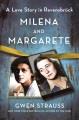 Includes bibliographical references and index."A profoundly moving celebration of love under the darkest of circumstances. From the moment they met in 1940 in Ravensbrück concentration camp, Milena Jesenska and Margarete Buber-Neumann were inseparable. Czech Milena was Kafka's first translator and epistolary lover, and a journalist opposed to fascism. A non-conformist, bi-sexual feminist, she was way ahead of her time. With the German occupation of Czechoslovakia, her home became a central meeting place for Jewish refugees. German Margarete, born to a middle-class family, married the son of the Jewish philosopher Martin Buber. But soon swept up in the fervor of the Bolshevik Revolution, she met her second partner, the Communist Heinz Neumann. Called to Moscow for his "political deviations," he fell victim to Stalin's purges while Margarete was exiled to the hell of the Soviet gulag. Two years later, traded by Stalin to Hitler, she ended up outside Berlin in Ravensbrück, the only concentration camp built for women. Milena and Margarete loved each other at the risk of their lives. But in the post-war survivors' accounts, lesbians were stigmatized, and survivors kept silent. This book explores those silences, and finally celebrates two strong women who never gave up and continue to inspire. As Margaret wrote: "I was thankful for having been sent to Ravensbrück, because it was there I met Milena.""--
- Subjects: Biographies.; Personal narratives.; Buber-Neumann, Margarete, 1901-1989.; Jesenská, Milena, 1896-1944.; Ravensbrück (Concentration camp); Lesbians; Women Nazi concentration camp inmates; World War, 1939-1945;
- Available copies: 1 / Total copies: 1
-
unAPI
- The last million : Europe's displaced persons from World War to Cold War / by Nasaw, David,author.;
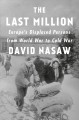 Includes bibliographical references and index."In May of 1945, German forces surrendered to the Allied powers, effectively putting an end to World War II in Europe. But the aftershocks of this global military conflict did not cease with the signing of truces and peace treaties. Millions of lost and homeless POWs, slave laborers, political prisoners, and concentration camp survivors overwhelmed Germany, a country in complete disarray. British and American soldiers gathered the malnourished and desperate foreigners, and attempted to repatriate them to Poland, Estonia, Latvia, Lithuania, Ukraine, and the USSR. But after exhaustive efforts, there remained over a million displaced persons who either refused to go home or, in the case of many, had no home to which to return. They would spend the next three to five years in displaced persons camps, divided by nationalities, temporary homelands in exile, with their own police forces, churches, schools, newspapers, and medical facilities. The international community couldn't agree on the fate of the Last Million, and after a year of fruitless debate and inaction, an International Refugee Organization was created to resettle them in lands suffering from labor shortages. But no nations were willing to accept the 200,000 to 250,000 Jewish men, women, and children who remained trapped in Germany. In 1948, the United States, among the last countries to accept anyone for resettlement, finally passed a Displaced Persons Bill - but as Cold War fears supplanted memories of WWII atrocities, the bill only granted visas to those who were reliably anti-communist, including thousands of former Nazi collaborators, Waffen-SS members, and war criminals, while barring the Jews who were suspected of being Communist sympathizers or agents because they had been recent residents of Soviet-dominated Poland. Only after the passage of the controversial UN resolution for the partition of Palestine and Israel's declaration of independence were the remaining Jewish survivors finally able to leave their displaced persons camps in Germany."--
- Subjects: United Nations Relief and Rehabilitation Administration.; International Refugee Organization.; World War, 1939-1945; Refugees; Refugees; Jewish refugees; Political refugees; Jews; Humanitarianism; World War, 1939-1945;
- Available copies: 1 / Total copies: 1
-
unAPI
- The forest of vanishing stars / by Harmel, Kristin,author.;
 "The New York Times bestselling author of the "heart-stopping tale of survival and heroism" (People) The Book of Lost Names returns with an evocative coming-of-age World War II story about a young woman who uses her knowledge of the wilderness to help Jewish refugees escape the Nazis-until a secret from her past threatens everything. After being stolen from her wealthy German parents and raised in the unforgiving wilderness of eastern Europe, a young woman finds herself alone in 1941 after her kidnapper dies. Her solitary existence is interrupted, however, when she happens upon a group of Jews fleeing the Nazi terror. Stunned to learn what's happening in the outside world, she vows to teach the group all she can about surviving in the forest-and in turn, they teach her some surprising lessons about opening her heart after years of isolation. But when she is betrayed and escapes into a German-occupied village, her past and present come together in a shocking collision that could change everything."--
- Subjects: Historical fiction.; Bildungsromans.; World War, 1939-1945; Holocaust, Jewish (1939-1945); Underground movements, War;
- Available copies: 1 / Total copies: 1
-
unAPI
- The Goddess of Warsaw : a novel / by Barr, Lisa,author.;
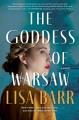 "From the New York Times bestselling author of Woman on Fire, the harrowing and ultimately triumphant tale of a Jewish WWII assassin turned Hollywood star. In 2005, Siena Hayes is Hollywood's latest It Girl, but she has her sights set higher than the screen, she wants to be behind the camera. So when Siena meets Lena Browning, the enormously mysterious and famous actor from decades past, Siena sees her big break. Siena wants to direct Lena's biopic-but Lena's past may turn out to be more than Siena bargained for. Before she was a "Living Legend," Lena Browning was Bina Blonski, a member of Warsaw's Jewish elite whose life and family were destroyed by the Nazis. In 1943, in the ghettos of Warsaw, Bina lives with her husband, Jakub. Determined to fight back against Nazi rule, beautiful, blonde Bina acts as a spy on the Aryan side fearlessly protecting the remaining Warsaw Jews, gaining intel, and stealing weapons. Along the way, her feelings grow more complicated as she falls in love with Aleksander, an ally to her in resistance ... and Jakub's brother. But the cause prevails-and Lena accomplishes amazing feats of bravery, though she can't help but sacrifice so much in the process ... Over a decade after escaping the ghetto, Bina, who now goes by Lena, has risen to fame in Hollywood. She sees her old life at every turn and hungers for revenge against the Nazis who are still everywhere around her. This is Lena's chance to right the past's wrongs and perhaps even find the happy ending she never had."--
- Subjects: Thrillers (Fiction); Novels.; Actresses; Man-woman relationships; Nazis; Revenge; Secrecy; World War, 1939-1945;
- Available copies: 2 / Total copies: 2
-
unAPI
- Vera, or faith : a novel / by Shteyngart, Gary,1972-author.;
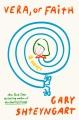 "The Bradford-Shmulkin family is falling apart. A very modern blend of Russian, Jewish, Korean, and New England WASP, they love one another deeply but the pressures of life in an unstable America are fraying their bonds. There's Daddy, a struggling, cash-thirsty editor whose Russian heritage gives him a surprising new currency in the upside-down world of twenty-first-century geopolitics; his wife, Anne Mom, a progressive, underfunded blue blood from Boston who's barely holding the household together; their son, Dylan, whose blond hair and Mayflower lineage provide him pride of place in the newly forming American political order; and, above all, the young Vera, half-Jewish, half-Korean, and wholly original. Observant, sensitive, and always writing down new vocabulary words, Vera wants only three things in life: to make a friend at school; Daddy and Anne Mom to stay together; and to meet her birth mother, Mom Mom, who will at last tell Vera the secret of who she really is and how to ensure love's survival in this great, mad, imploding world"--
- Subjects: Domestic fiction.; Novels.; Adopted children; Families; Multiracial families; Preteen girls; Geopolitics;
- Available copies: 1 / Total copies: 1
-
unAPI
Results 111 to 120 of 277 | « previous | next »